
Atlanta’s Tabernacle, a venue steeped in history and imbued with a gothic grandeur, proved an impeccable setting for Japanese Breakfast and their recent performance of their “Melancholy Tour.” Nestled in the heart of downtown, this former church has become a haven for artists seeking an atmosphere both majestic and intimate. The wooden pews of the balcony, the ornately carved columns, and the reverberant acoustics coalesced perfectly with the melancholic yet effervescent spirit of the night. Against this backdrop, the band unveiled a meticulously crafted stage design reminiscent of a mythological seascape — undulating wave-shaped structures framed the ensemble while a massive pearlescent clam shell crowned the center of the dais like an offering from Poseidon himself. From the first breath of sound to the final note, Japanese Breakfast held the near-capacity crowd in rapturous attention.

Michelle Zauner, a magnetic frontwoman and creative force, commanded the stage with audacious charm and fearless energy. Her outfit — a cunning blend of boldness and whimsy — featured sleek ankle boots, vintage-inspired bloomer shorts, fishnet stockings, a cropped leather jacket, and a stylish cap that cast occasional shadows across her expressive face. Every element of her ensemble reflected the duality embedded in her music: defiant yet vulnerable, sharp yet ethereal. Her voice, silken in timbre and full of emotional nuance, glided effortlessly over complex lyrical terrain. Whether delivering introspective ballads or more driving anthems, her tone remained pristine, her articulation crisp, and her phrasing deeply resonant. With each passing track, Zauner seemed to reach deep into the marrow of lived experience, summoning reflections on loss, identity, and renewal with haunting clarity.
The performance opened on a restrained yet profoundly emotive note with “Here Is Someone,” the first track from Japanese Breakfast’s latest LP, For Melancholy Brunettes (& Sad Women). The acoustic arrangement — sparse, deliberate, and imbued with palpable sincerity — set an introspective tone for the evening. A lone spotlight bathed Zauner in golden light as she plucked delicate harmonics from a classical guitar, each note falling like rain on a hushed congregation. As the composition unfolded, the audience was drawn into an atmosphere of hushed reverence, captivated by the tenderness of the moment. This inaugural song served not only as a gateway to the new material but also as a declaration of the tour’s ethos: unflinching introspection enveloped in sonic elegance.
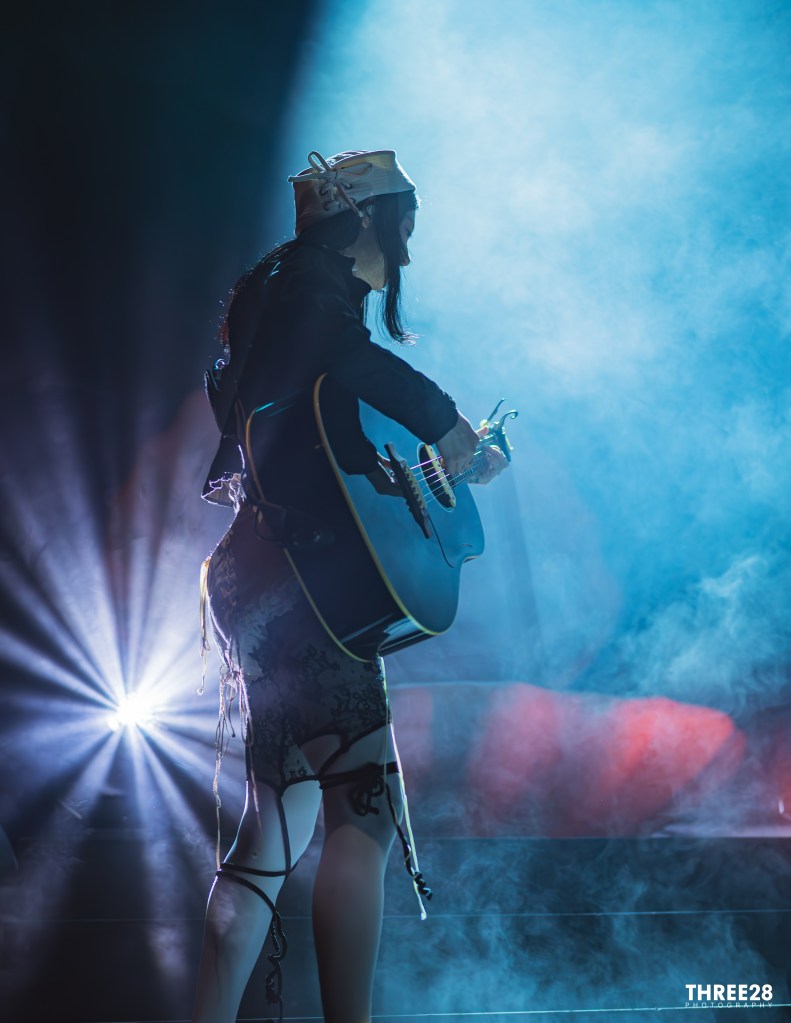

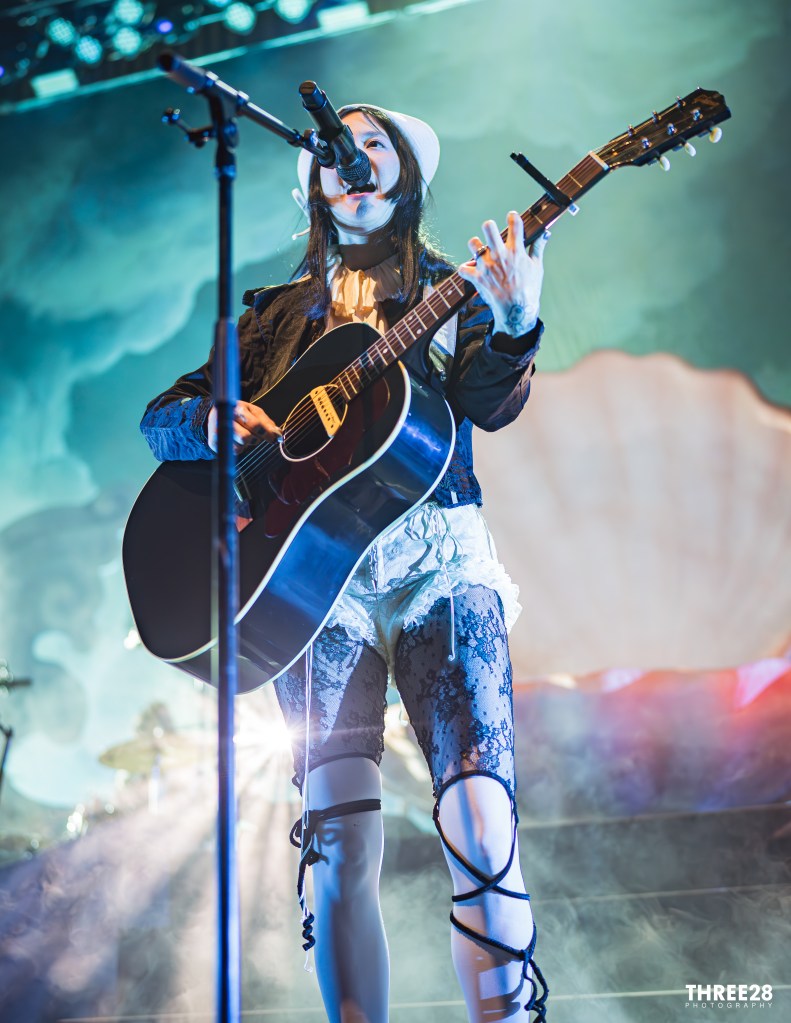
Throughout the evening, the ensemble traversed a robust catalogue of twenty songs spanning nearly two hours. The setlist wove together selections from earlier albums with highlights from the most recent project, forming a rich narrative arc that was as cathartic as it was celebratory. Highlights included the wistful resonance of “Boyish,” the radiant melancholy of “Be Sweet,” and the percussive mysticism of “Paprika.” Notably, the group delivered the first ever live rendition of “Posing For Cars,” a track that soared with sweeping crescendos and cinematic layering. Visually and audibly, Zauner’s virtuosic command of both acoustic and electric guitar throughout the performance imbued the arrangements with orchestral weight and dramatic texture. Wisps of stage fog curled around her silhouette in moments of intensity, creating an almost spectral aura that heightened the show’s emotional stakes.
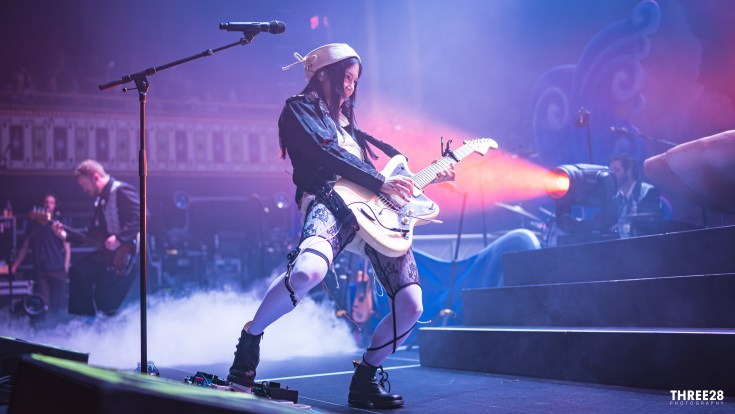
Integral to the performance was the tightly coordinated musicianship of Zauner’s bandmates, each of whom contributed a distinct hue to the evening’s sonic palette. Craig Hendrix, a percussive alchemist, exhibited deft control across a wide range of dynamics, his rhythmic precision anchoring the band through both minimalist ballads and maximalist climaxes. Deven Craige and his bass work, simultaneously grounded and exploratory, provided a supple undercurrent that reinforced the emotional contours of each composition. His stage presence, understated yet resolute, mirrored the essential subtlety of his musical contributions. Peter Bradley, handling guitars and ambient textures, painted sonic landscapes that enveloped the audience in waves of layered harmony, his interplay with Zauner often resulting in moments of transcendent beauty. Each musician’s performance demonstrated a deep attunement to the ensemble’s shared vision, creating an atmosphere of communal storytelling.
The technical production of the evening added an additional layer of immersion. Lighting effects were timed with narrative precision, with hues shifting from cool oceanic blues to fiery oranges in sync with the emotional tides of the music. Strobe pulses punctuated moments of climax, bathing the audience in bursts of intensity without ever overwhelming the music itself. The use of low-hanging fog, when combined with carefully placed backlighting, produced a series of evocative tableaus, particularly during quieter segments. These visual choices amplified the dreamlike quality of the performance, underscoring the thematic tension between beauty and sorrow that lies at the heart of Japanese Breakfast’s oeuvre. The synergy between sound and light rendered the performance not merely a concert, but a cinematic experience sculpted in real time.

As the evening drew to a close, Zauner addressed the crowd with candor and warmth, sharing that this show marked an early stop of the tour. She acknowledged that the band had used the initial performances to refine transitions and adapt arrangements, a process that seemed to have yielded remarkable results. There was a palpable confidence in their delivery—each transition seamless, each flourish intentional. The audience responded with unrestrained enthusiasm, their energy feeding back into the performers with escalating intensity. By the time the final notes rang out and the stage dimmed to a soft twilight glow, it was evident that something rare had transpired. Japanese Breakfast had not merely performed — they had curated an immersive odyssey through longing, joy, and rebirth. The Tabernacle, for one night, became an ocean of shared memory and catharsis.
 LoudSound Magazine
Leave a comment