
In the dim, sweat-soaked cavern of Atlanta’s Masquerade, a monolith of noise erupted as the Melvins took the stage for their co-headlining set on the aptly titled “Savage Imperial Death Tour.” Sharing the bill with the equally pulverizing Napalm Death, Melvins needed no spectacle, pyrotechnics, or elaborate stagecraft to command the attention of a capacity crowd. Instead, they delivered a relentless, tightly coiled sonic assault rooted in over four decades of uncompromising experimentation and genre-defying heaviness. For a band whose importance to the evolution of sludge metal, grunge, and experimental rock cannot be overstated, this performance felt less like a nostalgic victory lap and more like a reaffirmation of their perpetual forward momentum.


Emerging under minimal lighting and devoid of any stage decoration — no banners, projections, or even band logos — the trio-turned-quartet relied entirely on their chemistry and raw musicianship. The current tour bears a surprise that long-time fans are relishing: the unexpected but glorious return of drummer Coady Willis, transforming the rhythm section into a thunderous dual-drummer configuration alongside the ever-dependable Dale Crover. This twin-percussion attack brought a muscular complexity to the performance, particularly during songs like “Honey Bucket” and “The Bloated Pope,” where interlocked polyrhythms and tribal pulses elevated the material to towering intensity. Willis’ comeback was greeted with roaring approval and, from a technical perspective, the added layers of rhythm gave the performance a broader sonic palette.
Leading the charge was the indomitable Buzz Osborne, whose towering mass of silver curls and severe gaze radiated an aura of arcane authority. Clad in a long, flowing tunic emblazoned with surreal, eyeball-themed designs, Osborne cut an imposing figure — half mystic, half warlord. His guitar tone remained as dense and textured as ever, bridging industrial noise, psychedelic drift, and bottom-heavy sludge with seamless mastery. Next to him, the irrepressible Steven Shane McDonald provided a jolt of theatrical contrast. Known for his tenure in Redd Kross and his flamboyant stage presence, McDonald did not disappoint. Sporting a similarly eye-inspired ensemble, he was a constant source of visual energy — grimacing, gurning, striking poses, and interacting with the crowd with wide-eyed glee. His bass work was agile and harmonically rich, adding melodic contour beneath the band’s typically monolithic arrangements.
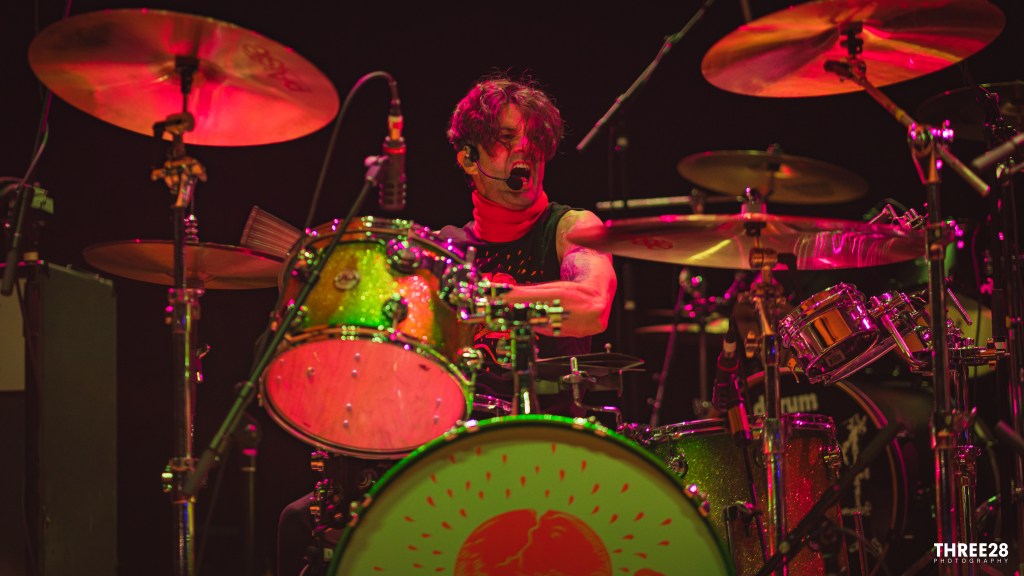


Though the band did not directly reference their forthcoming album Thunderball, they recently unveiled its lead single, “Victory of the Pyramids” for the masses. The new song an instant revelation: an angular, slow-burning epic laced with Middle Eastern scales and war-march cadence. It has hinted at even more esoteric directions for the band’s evolving sound.
What has always set the Melvins apart from their peers is their refusal to stagnate. Since their early days in the 1980s Pacific Northwest underground, they have relentlessly redefined the parameters of heavy music. From their critical role in influencing the grunge explosion — famously mentoring a young Kurt Cobain — to their many collaborations with avant-garde and metal artists alike, the Melvins have remained provocateurs in a scene that often celebrates predictability. Albums such as Houdini, Stoner Witch, and A Senile Animal represent high points not just in their career, but in the broader tapestry of alternative music. Now, with Thunderball on the horizon, the band seems once again poised to rewrite their own narrative.
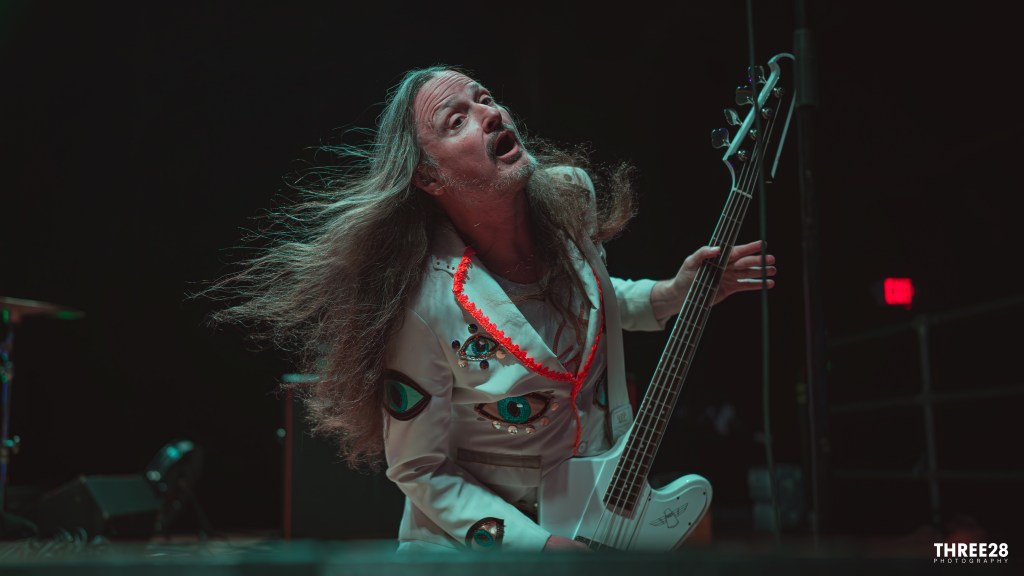
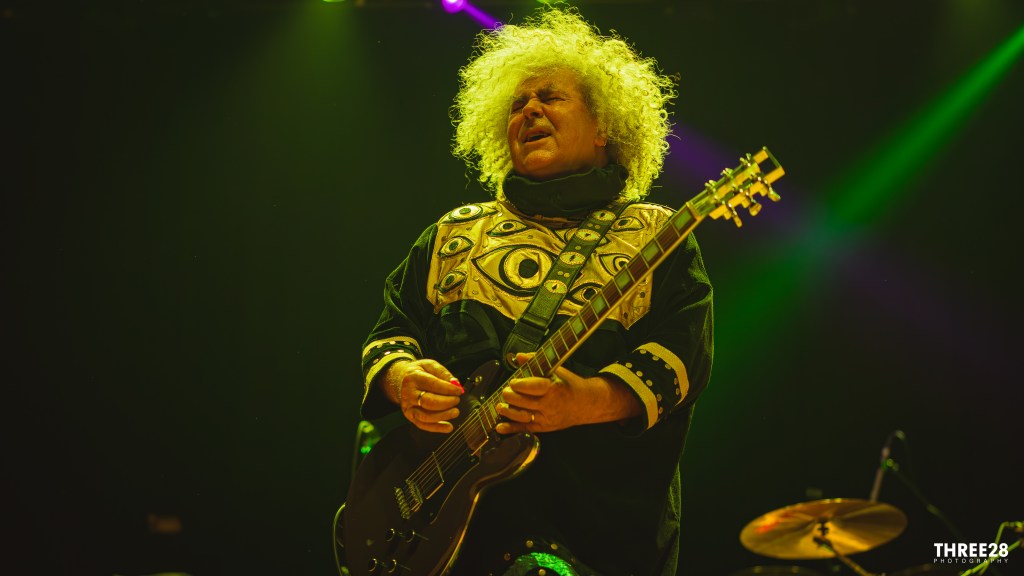
There was a notable absence of performative pomp throughout the evening. The lighting was stark and minimal, casting long shadows and emphasizing silhouette over spectacle. Yet, it was precisely this absence of distraction that heightened the experience. With no props to lean on, the musicianship came to the fore — Crover’s fluid transitions, Osborne’s nuanced phrasings, McDonald’s theatrical low-end flourishes, and Willis’ thunderous counter-rhythms all became the night’s central spectacle. The show reached its climax with the nightmarish crawl of “Night Goat,” a track that remains one of the band’s most iconic. Its ominous bass intro and lurching tempo brought the house down and served as a devastating conclusion before the baton was passed to Napalm Death.
In an era where live shows often rely on high-budget visual production, the Melvins’ performance at The Masquerade proved that a band armed with nothing but their instruments — and a fearless commitment to their vision — can still reduce a venue to rubble. Their legacy remains untarnished, their trajectory ever forward, and their sound as unpredictable as it is devastating. The return of Coady Willis has added a fresh spark, and with Thunderball looming, the Melvins show no signs of surrendering their role as heavy music’s most indefinable force. More than a concert, this was a declaration.
 LoudSound Magazine
Leave a comment