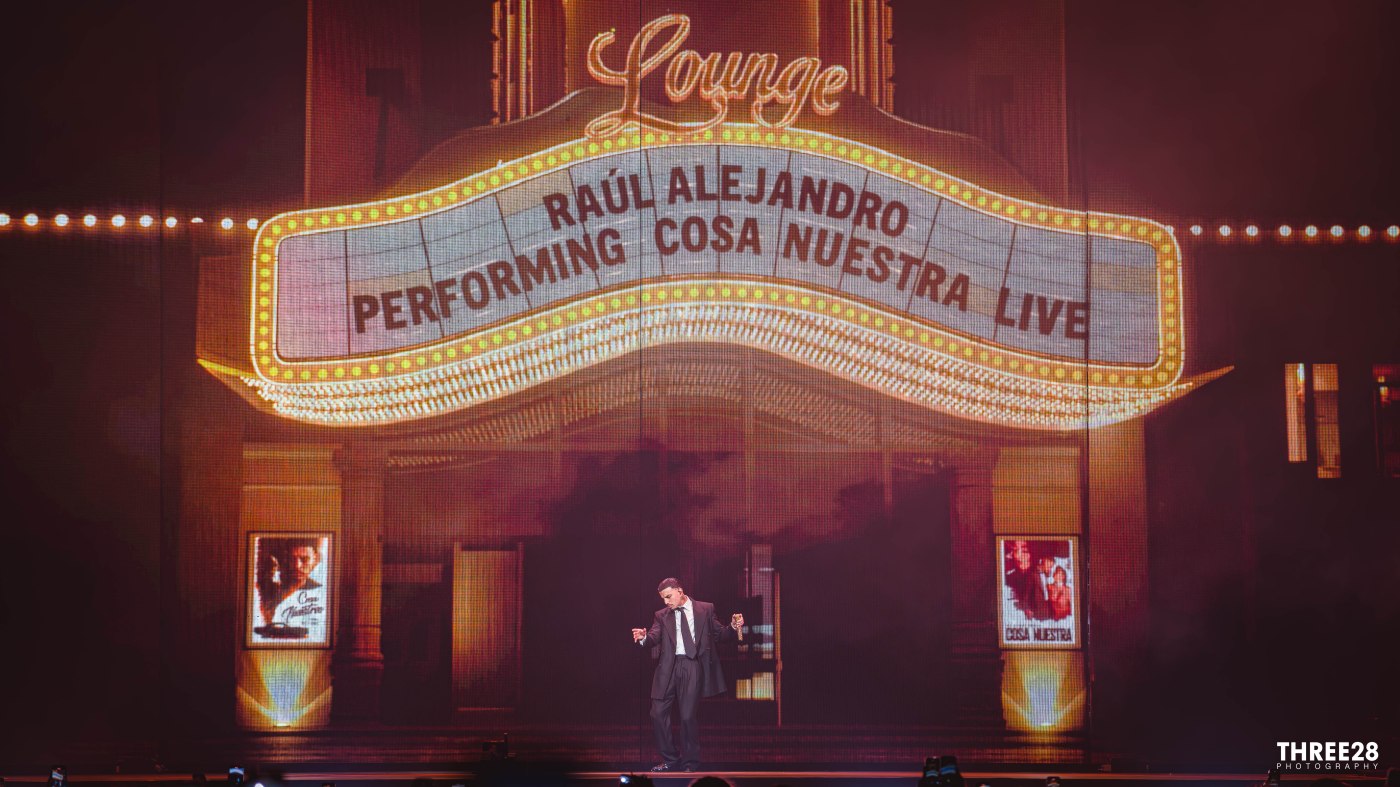
On a crisp Atlanta evening, Rauw Alejandro transformed State Farm Arena into a smoldering theater of lights, motion, and music — a spectacle that fused the grandeur of Broadway with the intensity of a Martin Scorsese epic. With the launch of his “Cosa Nuestra Tour,” Rauw isn’t just presenting a concert; he’s directing an opera of identity, love, betrayal, and redemption. This wasn’t merely a performance — it was a multi-sensory immersion where narrative met choreography, and fashion wove through fire.
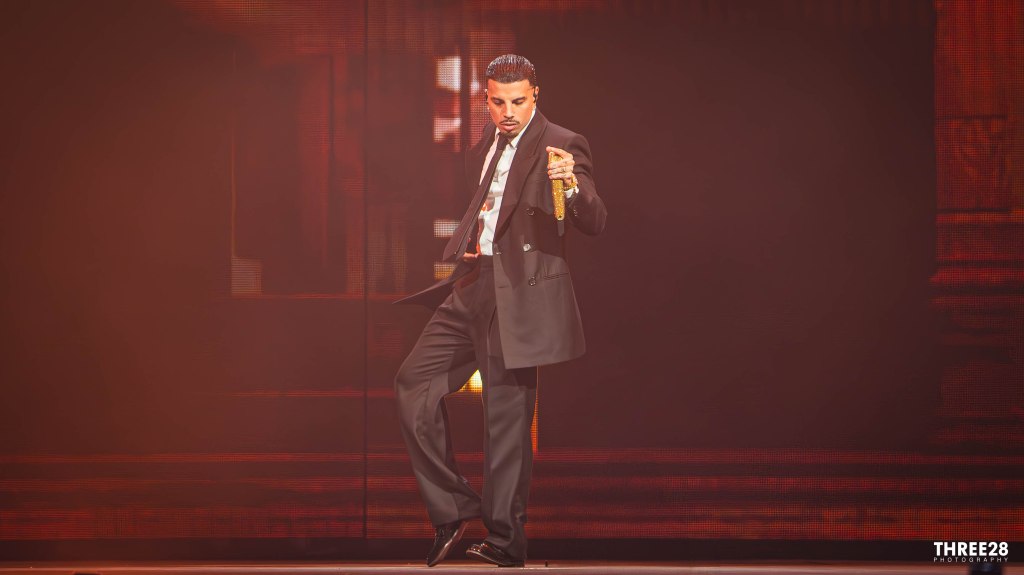
Since breaking into the scene in 2016, Rauw Alejandro has emerged as one of Latin music’s most magnetic forces. Seamlessly blending reggaeton with pop, R&B, and experimental electronic textures, his ascent has felt both inevitable and deserved. Early collaborations with the likes of Rosalía, Anuel AA, and Bad Bunny catalyzed his popularity, but it’s his genre-bending solo projects— “Afrodisíaco,” “Vice Versa,” and “Saturno” — that secured his status as a global innovator. As reggaeton evolved beyond its Caribbean roots, Rauw helped shepherd it into a more theatrical, melodically adventurous age. “Cosa Nuestra” represents the culmination of that artistic evolution — a tour not just meant to entertain, but to declare artistic sovereignty.
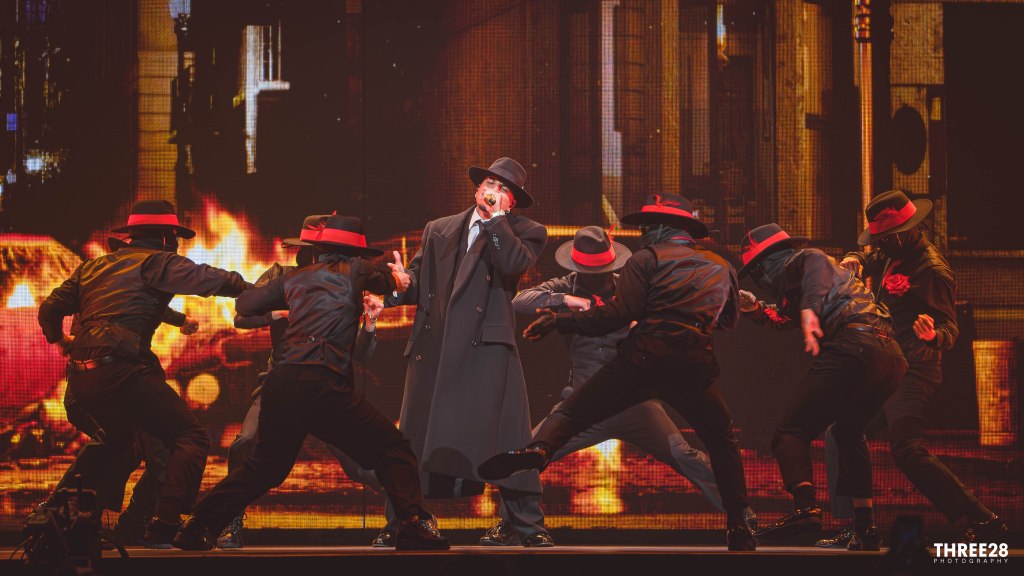
The show unfolded over four acts, with a narrator amongst the crowd meticulously delivering a brief explanation of the craft to support the overarching narrative. Act I: Trust No One, Love Anyway, opened with Rauw stepping onto a fog-drenched stage clad in a tailored zoot suit, flanked by dancers dressed as 1950s gangsters. The backdrop resembled a noir version of Brooklyn’s brownstones, awash in dim amber hues and stylized shadowplay. Through the smoky atmosphere, bursts of choreographed pyro simulated gunfire, each flash echoing against the pulsing bass lines. As he launched into “PUNTO 40” and “El Efecto,” it became clear that this wasn’t a conventional reggaeton show. Every gesture, prop, and lighting cue was narratively driven, laying the groundwork for a story of a Puerto Rican streetwise dreamer navigating crime and romance.
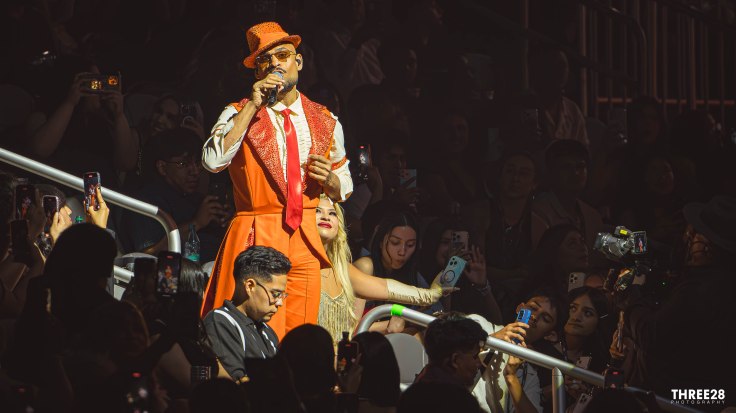
Act II: Leap of Faith transitioned seamlessly, the backdrop shifting from dusky alleyways to the neon haze of downtown Manhattan. The tone softened — still shadowed by tension, but streaked with longing. Here, Rauw slipped into a sleeker silhouette—satin shirts left provocatively unbuttoned, tailored slacks, and shimmering loafers. Songs like “Carita Linda” and “Amar de Nuevo’” were rendered with aching intimacy, made more vivid by an interpretive pas de deux with one of his female dancers. Their bodies moved in sync — fluid, sensual, magnetic. The chemistry was palpable, and fans responded by raising their voices in chorus, their smartphones casting starlight from every corner of the arena.
The energy surged again in Act III: When the Lights Go Down — the dark night of the soul. Now shirtless, adorned with metallic harnesses and glistening sweat, Rauw became both protagonist and martyr. The imagery turned brutal and chaotic: projected flames, shattered glass, and a cathedral of crimson light. Tracks like “Khé?” and “DILUVIO” took on an almost religious gravity. Pyrotechnics exploded at timed intervals, underscoring narrative beats with theatrical precision. Dancers emerged as antagonists or allies, flipping between roles with kinetic flair. The gold-plated microphone in Rauw’s hand wasn’t just a tool — it was a scepter, an extension of his voice that oscillated between honeyed falsetto and guttural pleas.
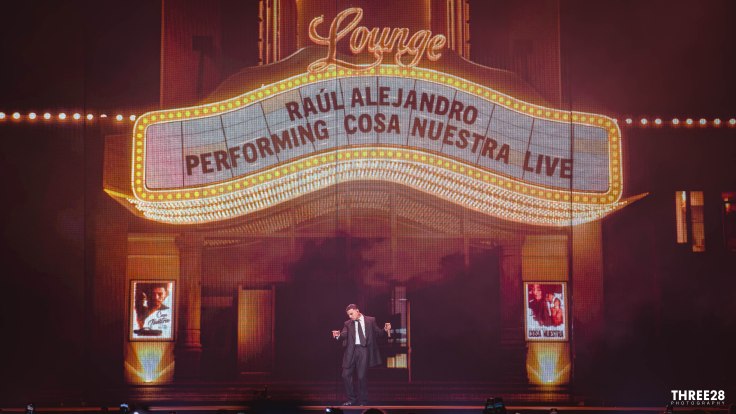
By Act IV: Between Love and War, the stage transformed into a dreamlike battlefield — half ballroom, half warzone. Rauw donned a final ensemble: an opulent velvet trench coat, embroidered with gold threads, trailing behind him like royalty stepping into legend. The final act oscillated between vengeance and absolution, punctuated by the thunder of fireworks overhead and the eerie quiet between notes. Songs like “LOKERA” and “Cosa Nuestra” soared above the chaos, offering catharsis. The crowd, which had been vocally engaged all night, reached its emotional peak —screaming lyrics, weeping, embracing. It was collective catharsis, as though thousands had lived this story with him.
A key highlight was the audience’s participation not just vocally, but visually. Fans arrived dressed to match the show’s aesthetic: women in vintage gowns adorned with sequins, opera gloves, and feathered headpieces; men in pinstripe suits, suspenders, and polished fedoras. It was a communal act of homage, blurring the line between performer and spectator. The ambiance was immersive, enhanced by the arena’s transformation into a cinematic mise-en-scène, where time felt suspended between eras.
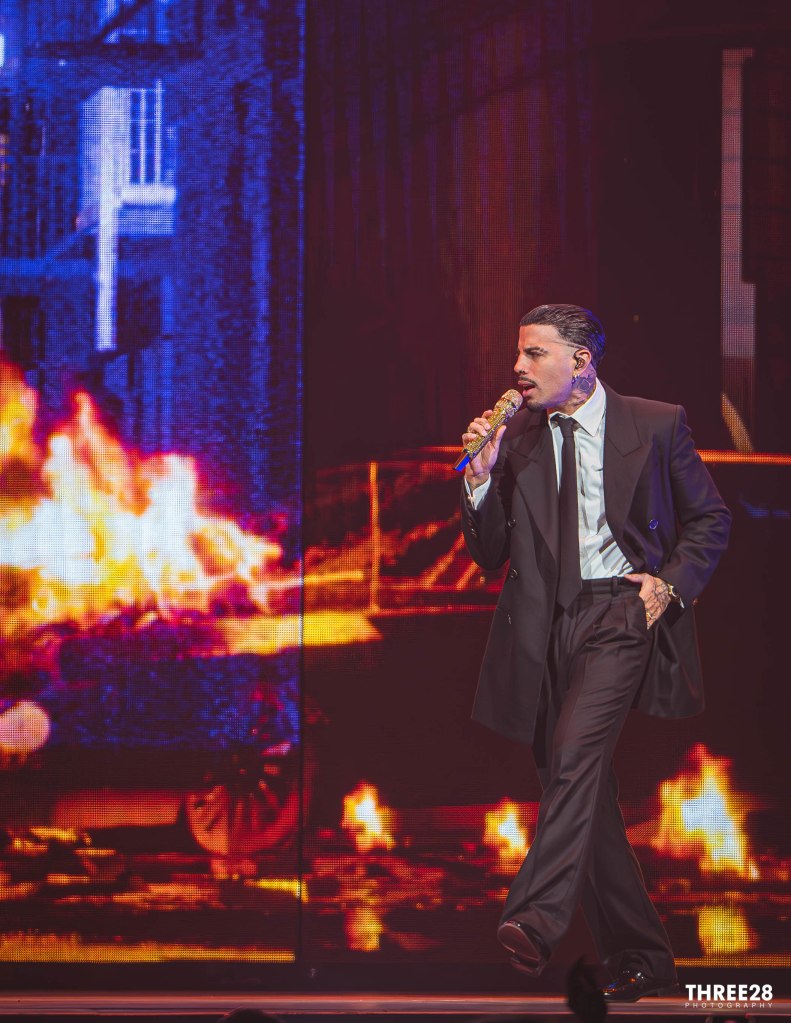
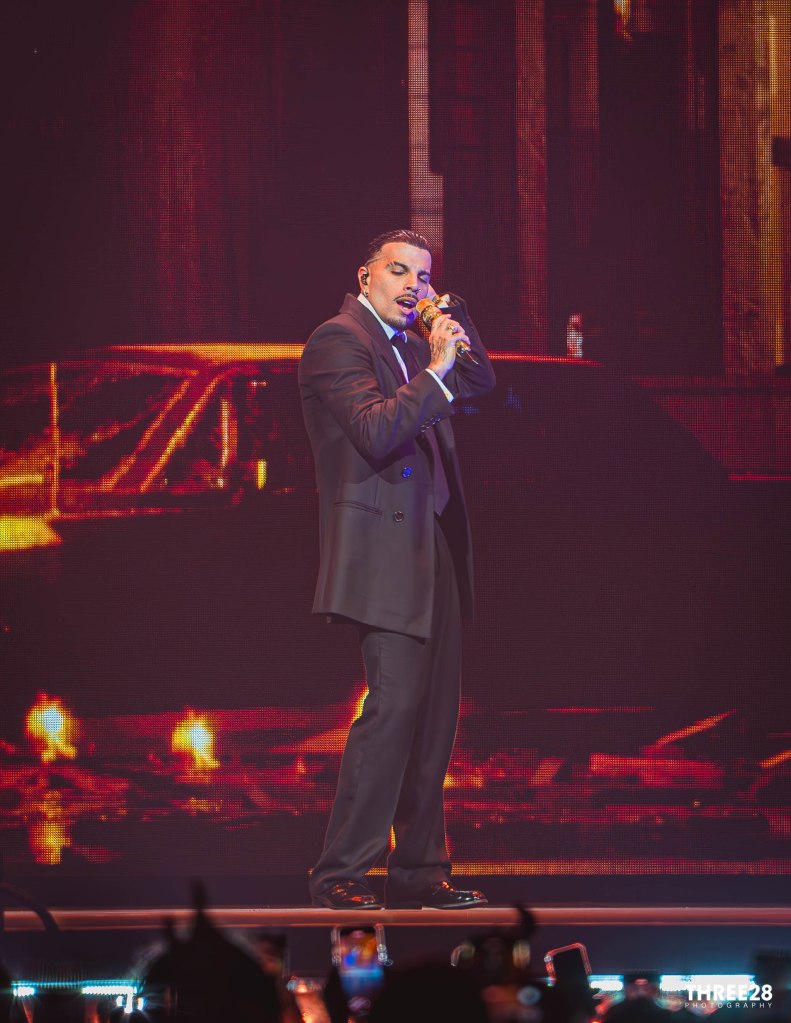
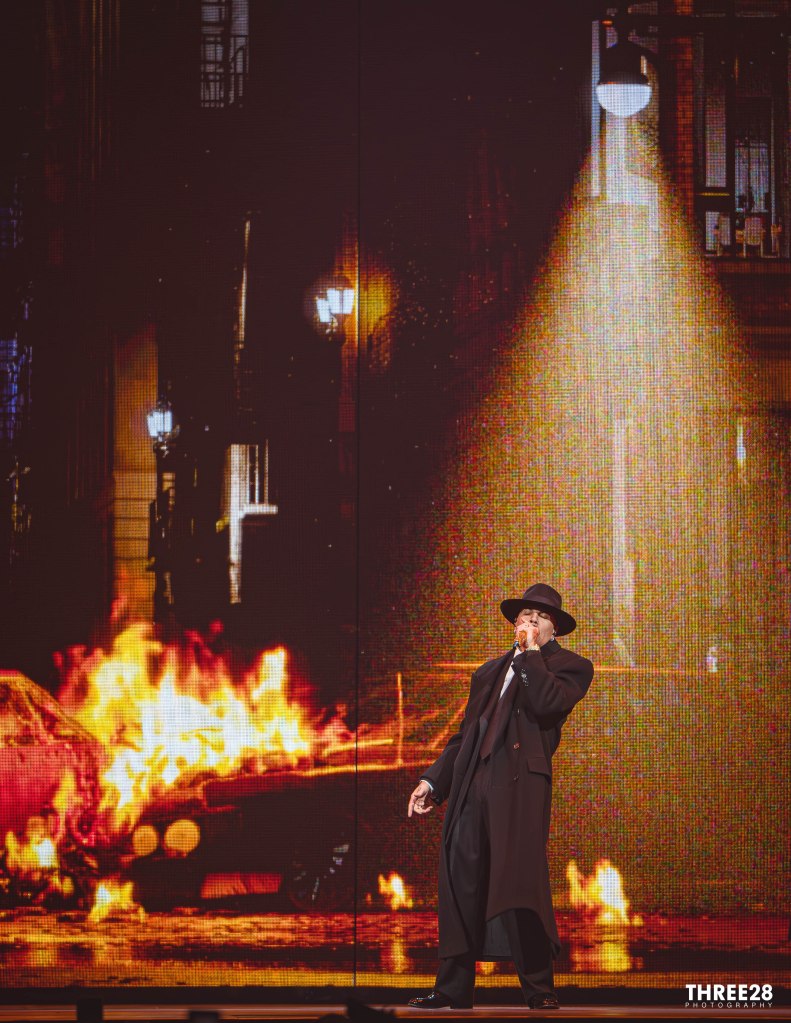
Rauw’s command of the stage never wavered across the two-hour, 30+ track marathon. Whether bathed in spotlight or lost in strobe, he displayed versatility not just as a vocalist, but as a consummate performer. Every movement was intentional — from slow-burning thrusts during ballads to explosive breakdance-inspired spins in high-octane moments. He wasn’t just dancing; he was embodying rhythm, contorting his body into every beat. His ensemble of dancers, costumed in ever-shifting identities, provided a mirror to his own transformation — fluid, bold, enigmatic.
By the time the curtain metaphorically fell, the arena was alight with applause, tears, and a lingering sense of awe. “Cosa Nuestra” was more than a show — it was a declaration. In an era where many artists tour to replay hits, Rauw Alejandro has chosen to tell stories, merging sonic innovation with visual narrative. He doesn’t simply ride the wave of Latin pop; he choreographs its future, one act at a time.
 LoudSound Magazine
Leave a comment