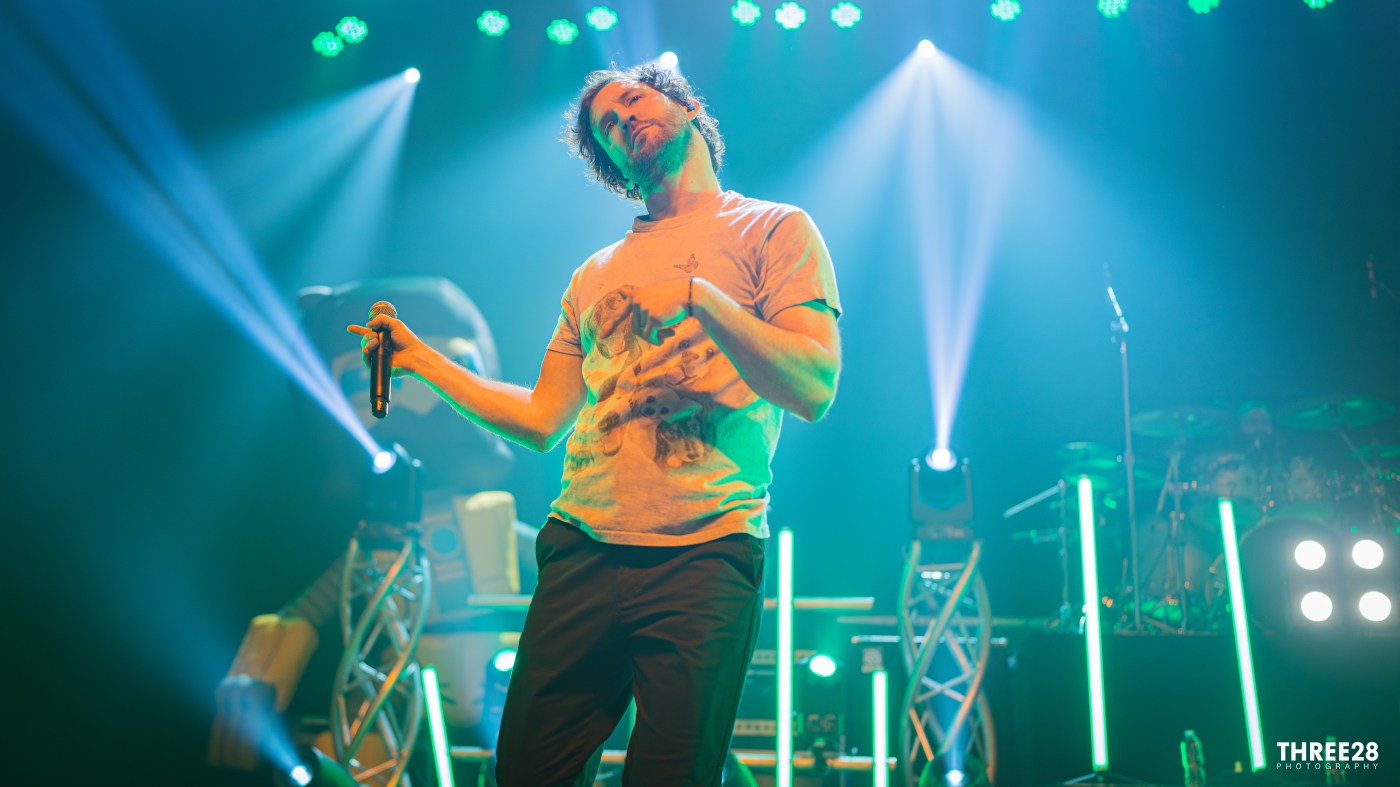
“You can’t kill DGD, bitch. We’re back and bigger than ever. And whoever says no can go fuck themselves!” That was the thunderous proclamation made by Andrew Wells as Dance Gavin Dance tore through their masterful set at the Coca-Cola Roxy. The line echoed like a war cry, equal parts defiant and triumphant, and the venue — packed shoulder-to-shoulder with diehards — erupted in response. After a tumultuous period marked by the departure of longtime vocalist Tilian Pearson, some speculated the band’s forward momentum might falter. But those doubts were obliterated within minutes. The “Return of the Robot Tour” wasn’t just a continuation — it was a reinvention. And Dance Gavin Dance is marching confidently into a new era with Andrew Wells at the helm, not missing a single beat.
Leading up to the show, anticipation buzzed like electricity. Fans queued early, discussing setlist theories, trading memories, and repping merch that spanned over a decade of releases. Once inside the venue, the mood was celebratory — less like a comeback show and more like a welcome-home party. As soon as the house lights dimmed and the stage lit up in a kaleidoscope of color, a collective exhale swept the crowd. The animosity from months past dissolved instantly. In its place? Pure elation.
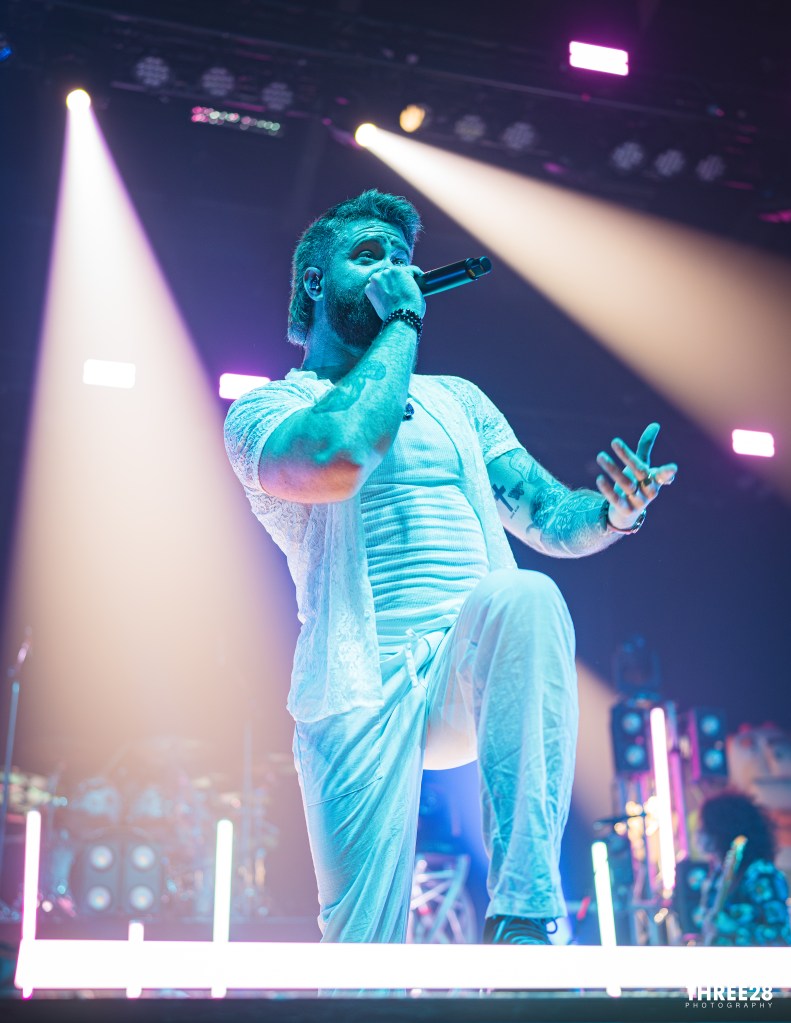
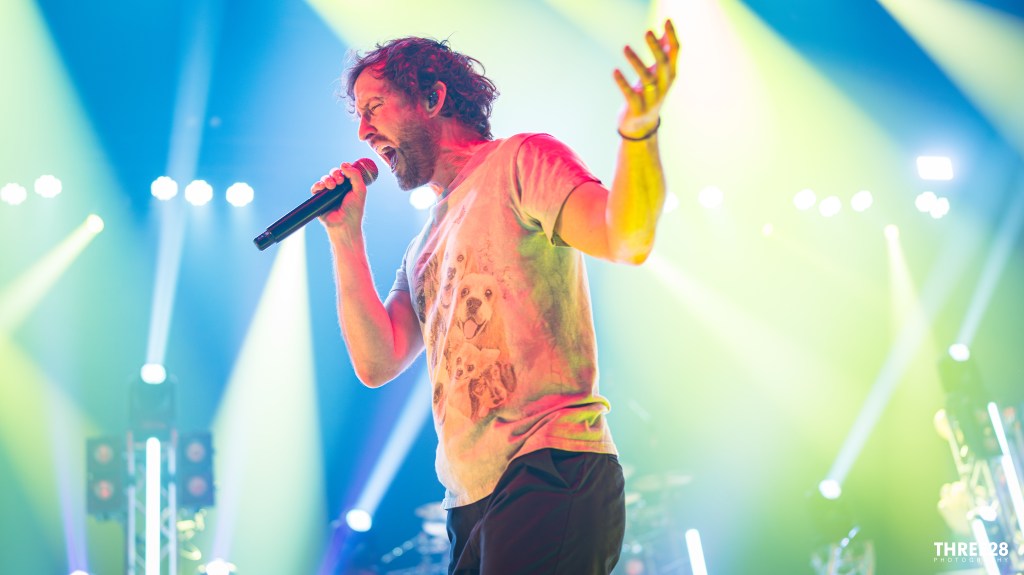
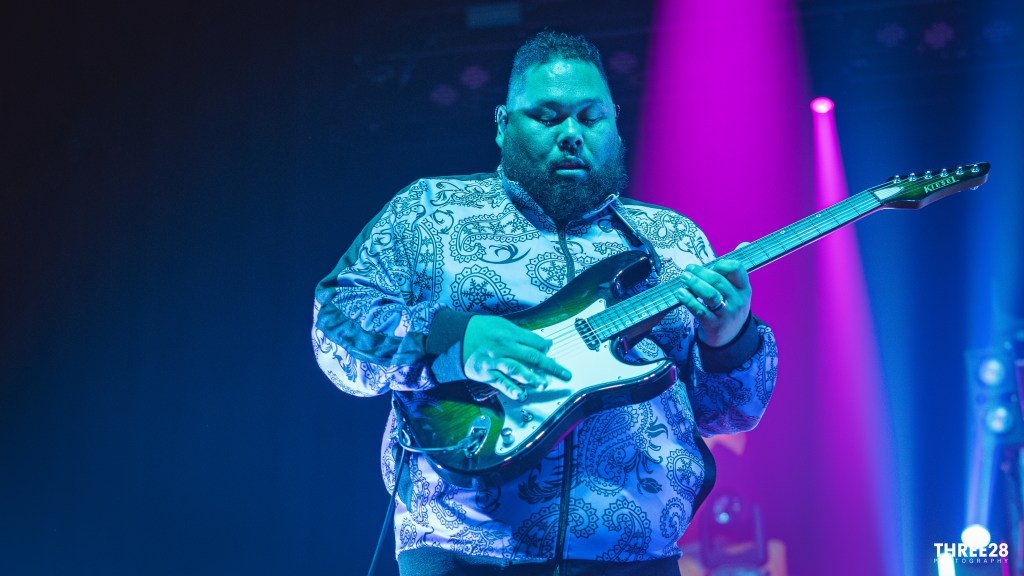
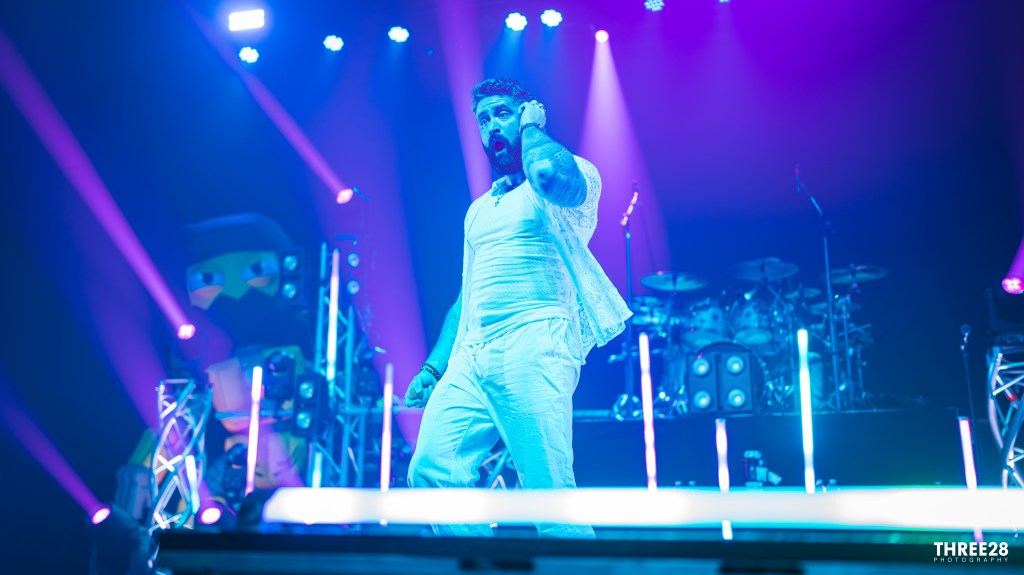
Wells, now stepping into the lead vocalist role full-time, brought a striking physical and musical presence. Towering with an imposing physique that suggested he could double as a pro wrestler on WWE, he oozed charisma without ever overreaching. His clean vocals slid in seamlessly, injecting freshness into the band’s catalog while honoring the melodic lineage that made their name. Beside him, Jon Mess and his feral stage persona provided perfect contrast. Sporting a puppy-covered t-shirt with the swagger of a guy who knows it’s ironic but also genuinely thinks it’s awesome, Mess whipped his mic and flailed with abandon, barking lyrics like a man possessed.
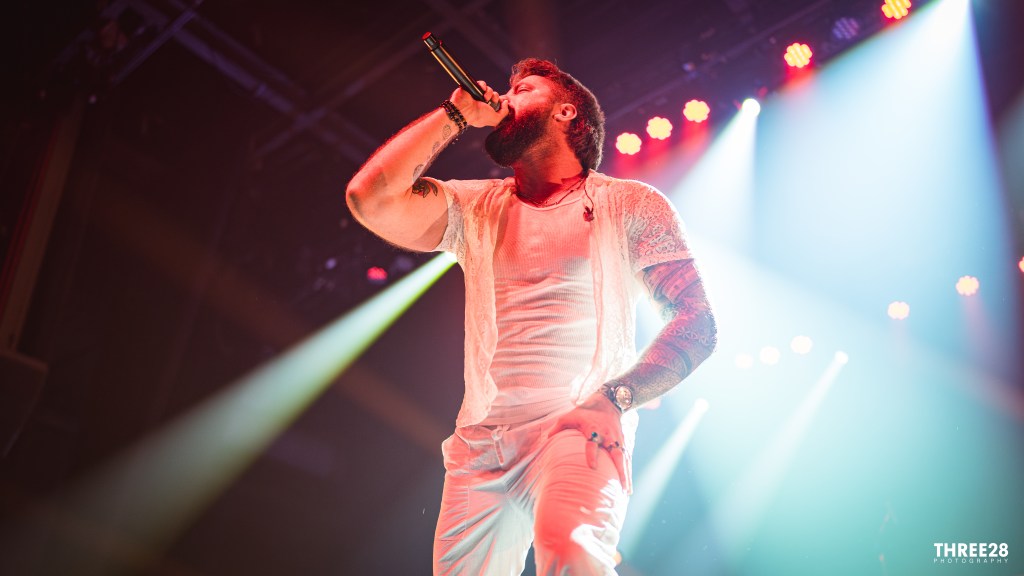
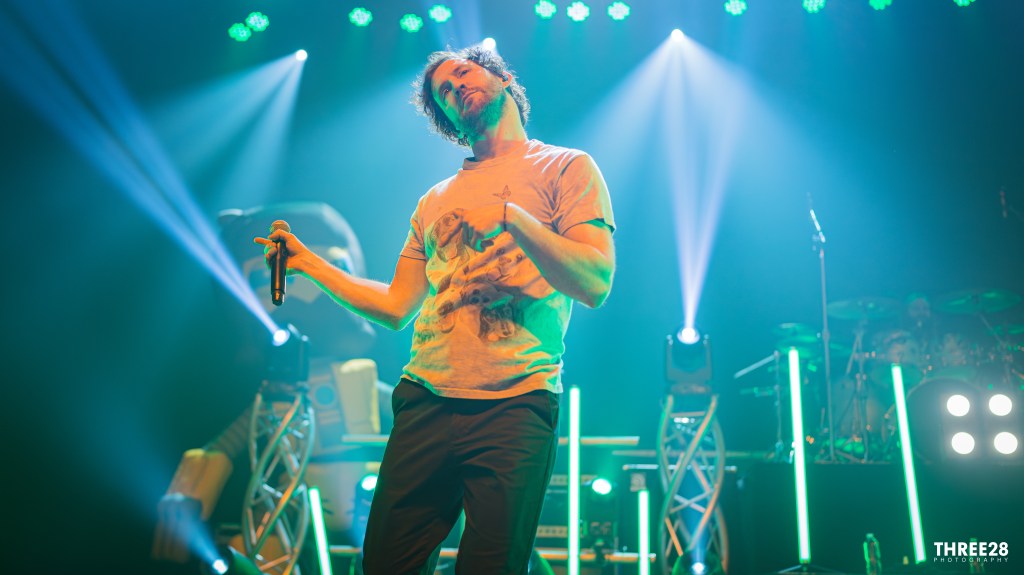
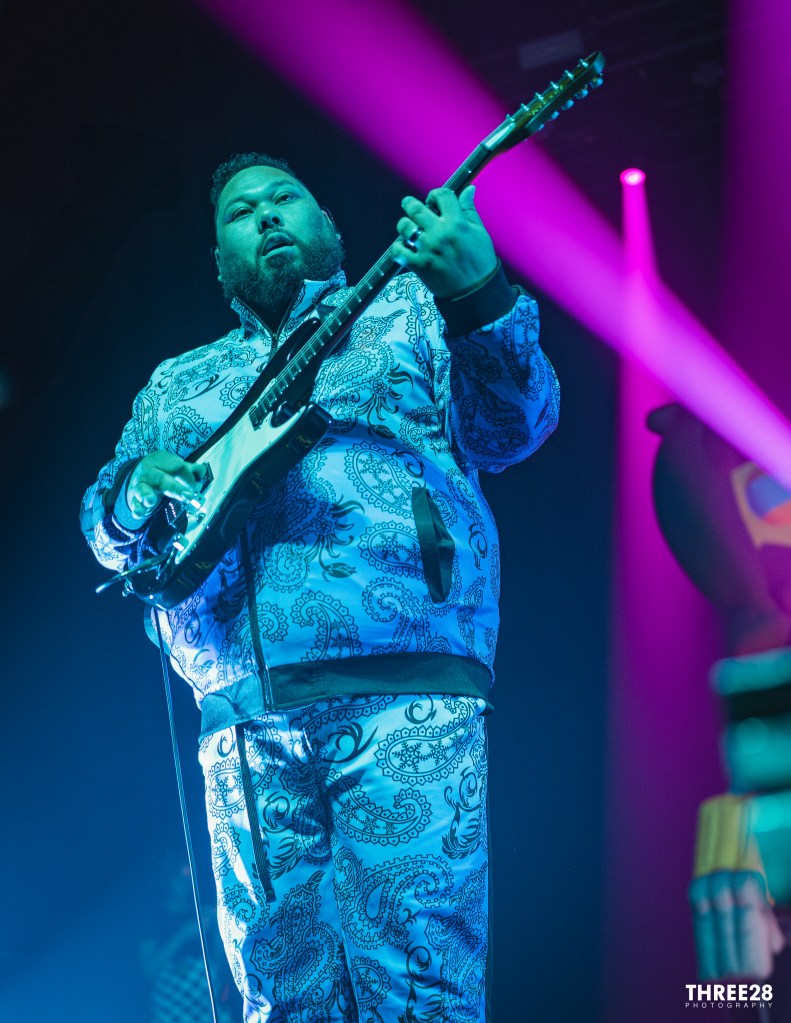
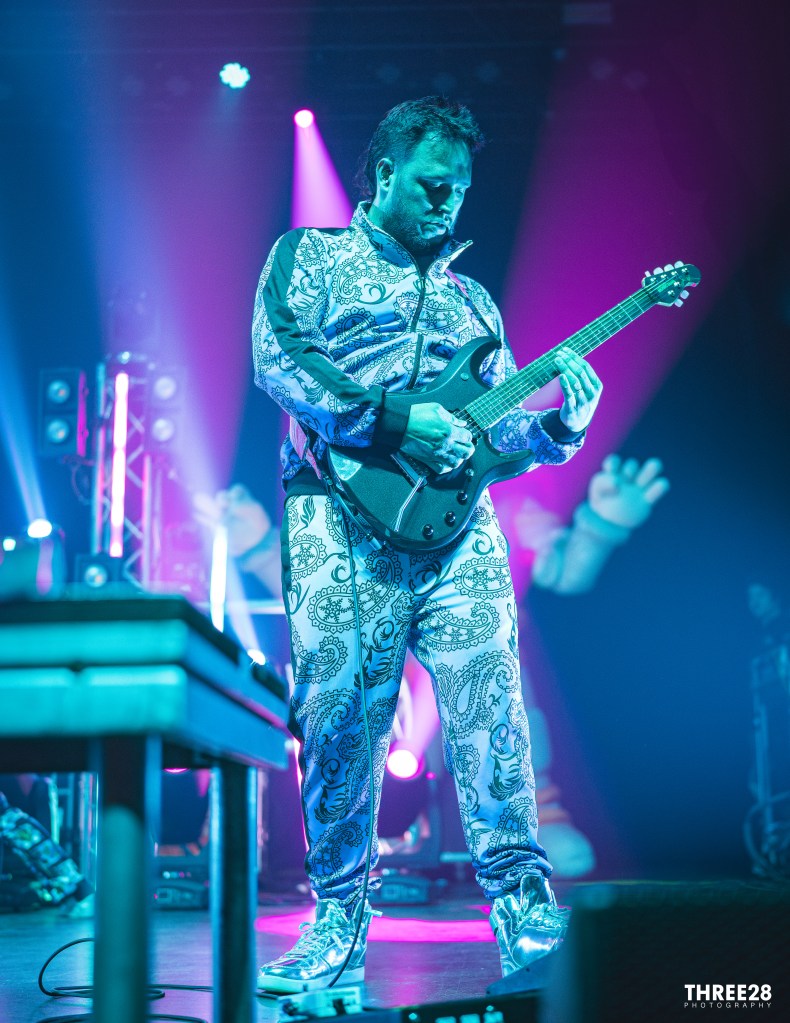
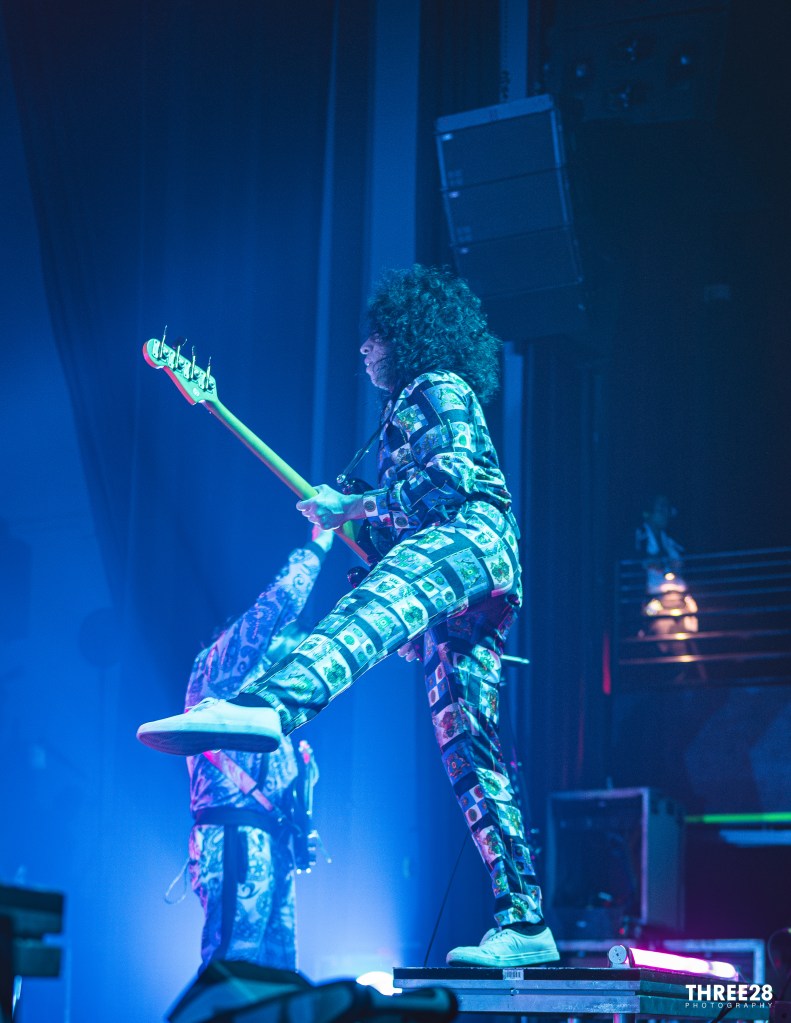
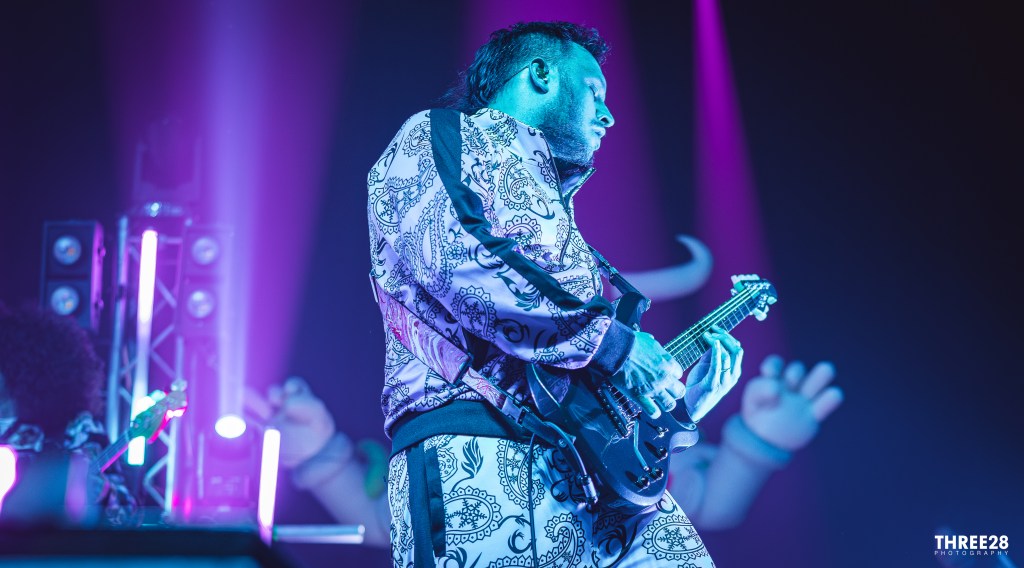
Instrumentally, the band’s triple-guitar arsenal stood in polished synchronization. Will Swan — stoic and unfazed — anchored the chaos with his signature style, while Martin Bianchini held his own with subtle flair, rarely breaking his cool demeanor. Then there was Sergio Medina, who was an entire performance onto himself. Jumping, spinning, and at one point balancing his guitar on his chin mid-riff, his antics pushed the visual energy into the stratosphere. The three axemen even sported matching track suits, a move that added both comedic charm and an air of team unity. Behind them all, Matt Mingus sat elevated on a central riser, a percussive engine flailing with precision. His controlled frenzy drove the band with metronomic fury, grounding the madness without once dimming its edge.
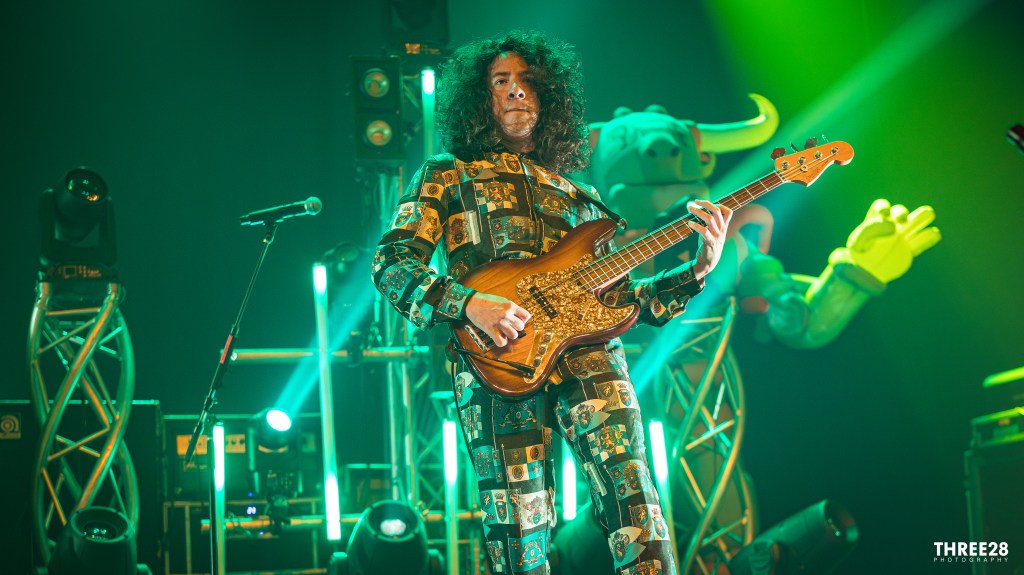
The stage setup was a spectacle unto itself. A barrage of LED stick-towers flashed in rhythm, blinding and beckoning in alternating pulses. Towers of smoke erupted at climactic moments while inflatables of the band’s mythos-based characters — the iconic Gavin Bull and the Robot with Human Hair —flanked the stage in whimsical contrast to the show’s visceral intensity. It was a visual homage to their discography’s surrealist continuity, a physical manifestation of DGD and their strange and singular world.
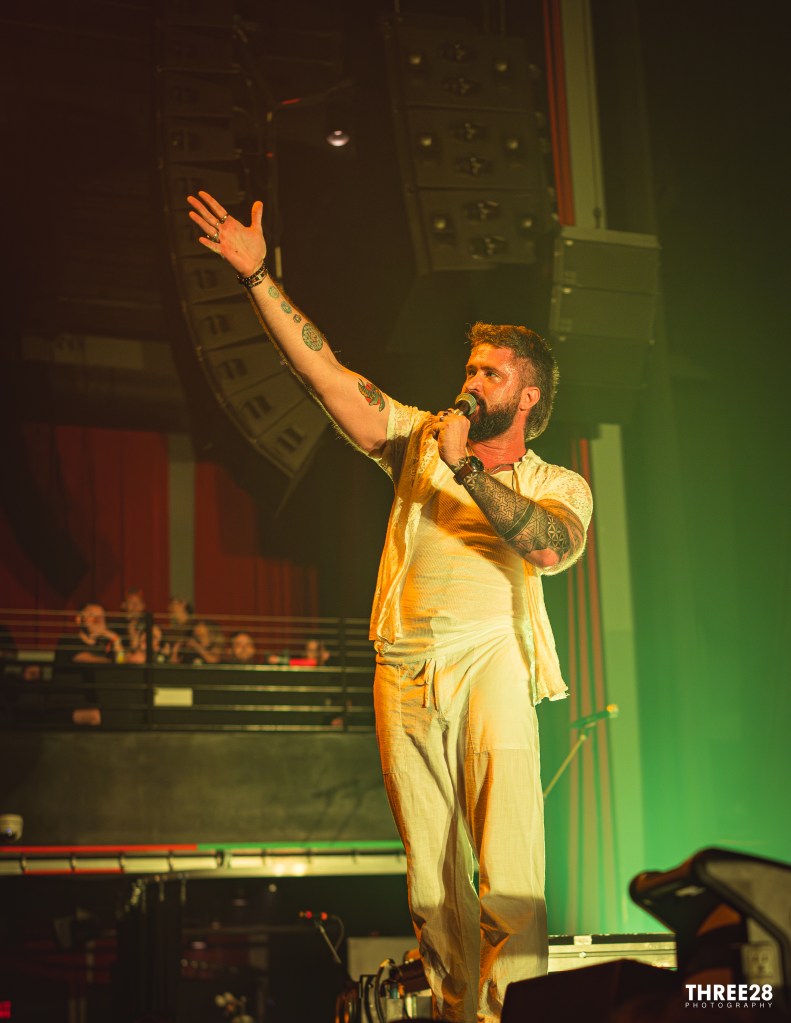
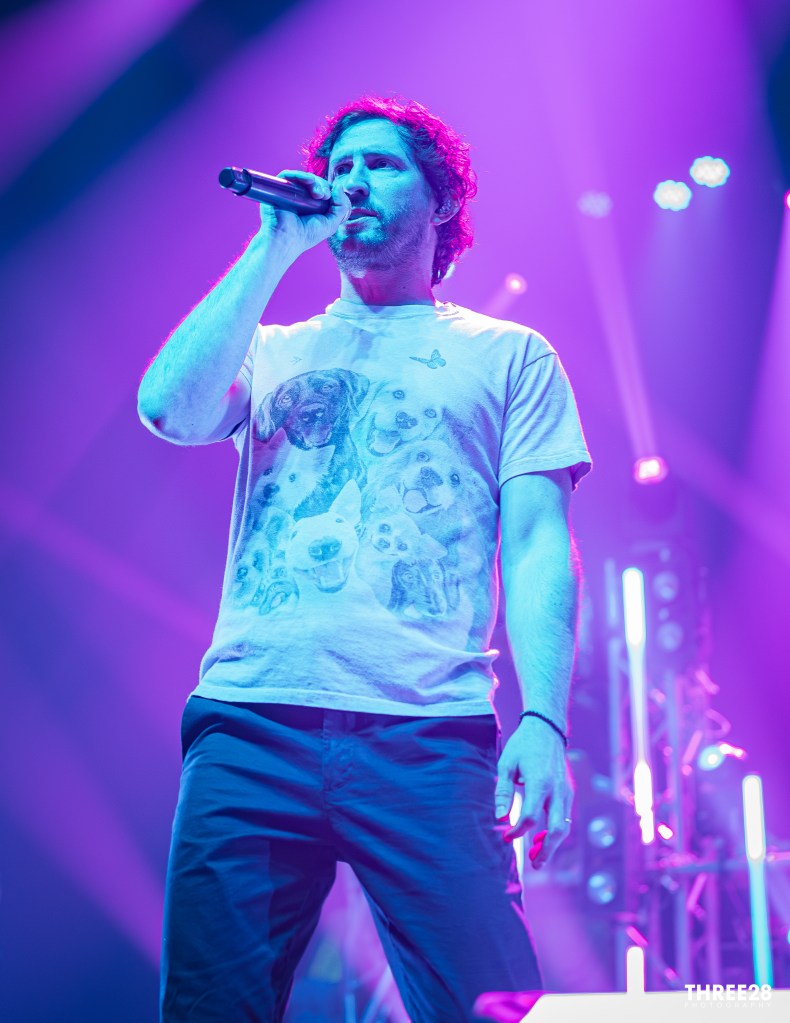
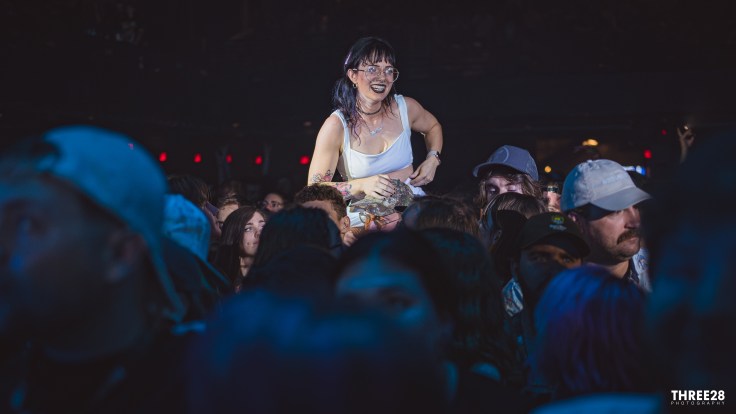
From the first downbeat, the crowd launched into a full-body euphoria. Every chorus became a communal chant, hands raised, voices unified. Crowd surfers launched like waves breaking in a relentless tide. At any moment, you could spot someone on a friend’s shoulders, beaming as they screamed lyrics into the humid haze. It wasn’t chaotic — it was celebratory, a shared experience rooted in years of fandom and catharsis.
The setlist was a curated odyssey. Rather than leaning solely on recent material, the band ventured deep into their vault, offering up rarities and beloved early tracks. “Blue Dream” brought an ocean of nostalgic cheers, its dreamy groove underscored by Wells’s vocals that managed to honor Kurt Travis’ original delivery while adding his own soulful inflection. “Burning Down the Nicotine Armoire” scorched with angular riffs and frenetic tempo changes, the kind of song that embodies the band’s controlled anarchy. The emotional centerpiece came during the encore, however. A massive banner unfurled behind the band revealing the cover art for their upcoming album, Pantheon, as the opening notes of its lead single “All the Way Down” rang out. A perfect blend of soaring melody and discordant technicality, the track cemented the sense that DGD isn’t just surviving — they’re thriving.
Throughout the hour-long set, there was a sense of cohesion and renewed purpose. Wells, though new to the frontman position, exuded a calm confidence that balanced the madness surrounding him. His command of the stage was undeniable, and his chemistry with Mess — part Dr. Jekyll and Mr. Hyde, part Batman and The Joker — created an electric push-pull that held the audience spellbound. Each band member played not just with technical prowess, but with a joyful aggression, a sense of release that radiated into the crowd.
The finale, “The Ghost of Billy Royalton,” was both tribute and triumph. Named in honor of the band’s late bassist Tim Feerick (whose pseudonym was Billy Royalton), the track’s powerful closing riff became a rallying cry. The lights flared one last time, fog enveloped the stage, and the crowd surged as one. No words were needed. The moment spoke volumes.
When the house lights returned, fans filtered out drenched, breathless, and grinning. The Coca-Cola Roxy had been turned into a sanctuary—part rock show, part reunion, part spiritual revival. Dance Gavin Dance didn’t just return to the stage; they reclaimed it. If there were ever any doubts about their future, they were incinerated in that hour of spectacle, sweat, and soul.
“You can’t kill DGD,” Wells had said. After this performance, no one would dare try.
 LoudSound Magazine
Leave a comment