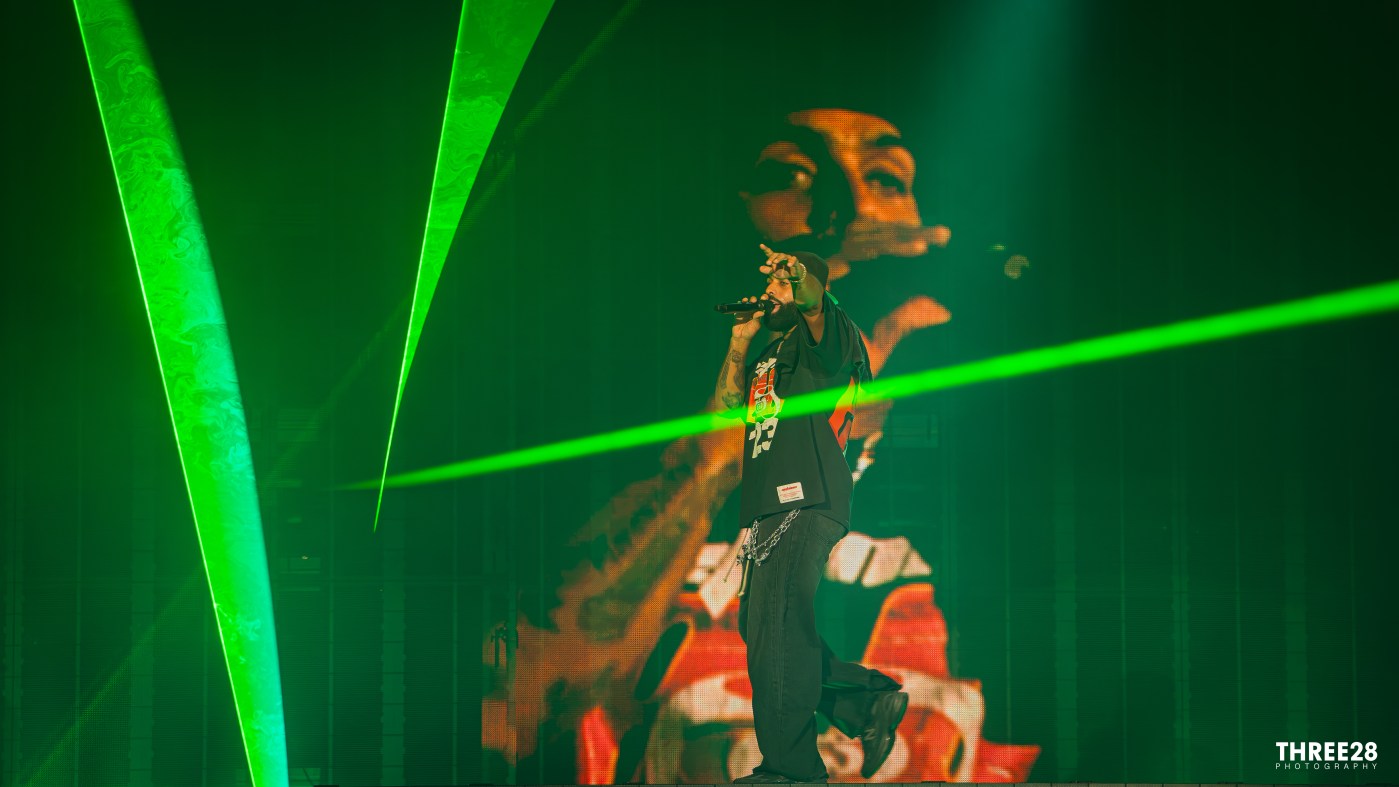
The night the Don KBRN Tour touched down at the Coca‑Cola Roxy will be remembered as a milestone — not just in the career of Eladio Carrión, but in the narrative of Latin trap itself. By the time the lights dimmed and the house music faded, the venue was packed beyond expectation; every seat, every corner, buzzing with electric anticipation. The crowd was a mosaic of people — young and younger, locals and travelers — an audience alive with loyalty, hunger, and pride. Cheers crescendoed, voices overlapping, as if Atlanta had become a nexus of all the streets and barrios Carrión has ever spoken of in his lyrics.


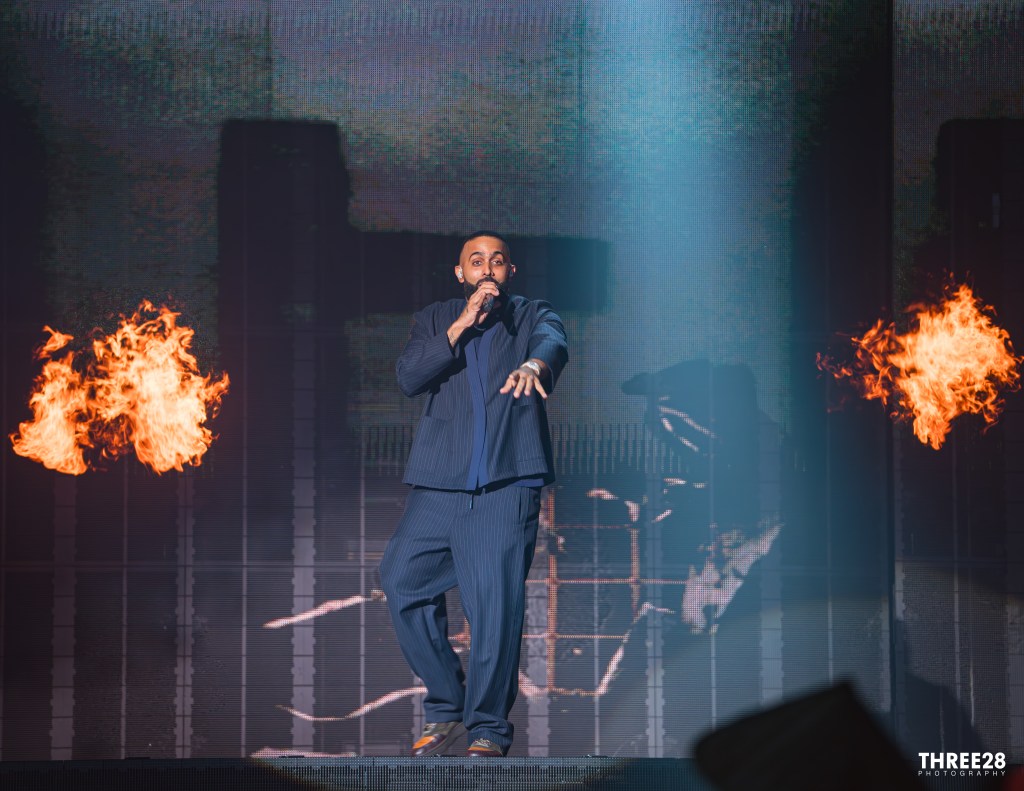
From the first moment, it was evident that this was not merely a concert. The stage opened with large cinematic graphics — imagery blending Asian and Hispanic symbolism: samurai, yakuza‑inspired shadows, Japanese fonts mingling with graffiti tags. It was a bold visual overture, a storytelling prelude, that conjured up tension and promise. When Eladio stepped onstage, the crowd roared; his entrance was framed by those graphics, as though he had emerged from that fusion of cultures, from that mythic world. It set the tone for the rest of the night: rooted in trap, yet expansive, cinematic, defiant.
Eladio’s ascension has been methodical yet relentless: from early underground tracks to viral hits, from mixtapes to full LPs, collaborations, stadiums. With Don KBRN, his latest and namesake album, he cements a phase, both completing a cycle (of the KBRN series) and pushing ahead, combining vulnerability and braggadocio, refinement and raw energy. Onstage, he demonstrated how he has grown — not just in vocal ability or in presence — but in his capacity to unite people through shared stories, shared struggle, and an unapologetic artistic vision. For many who stand where his music reaches, Carrión is far more than entertainer; he is a mirror, a motivator, a voice for those who straddle two worlds.


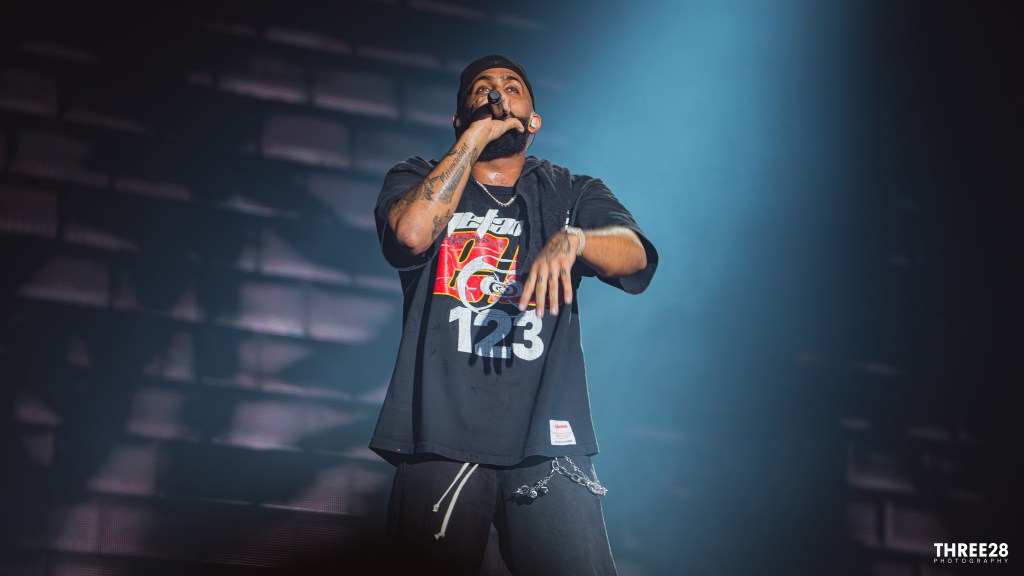
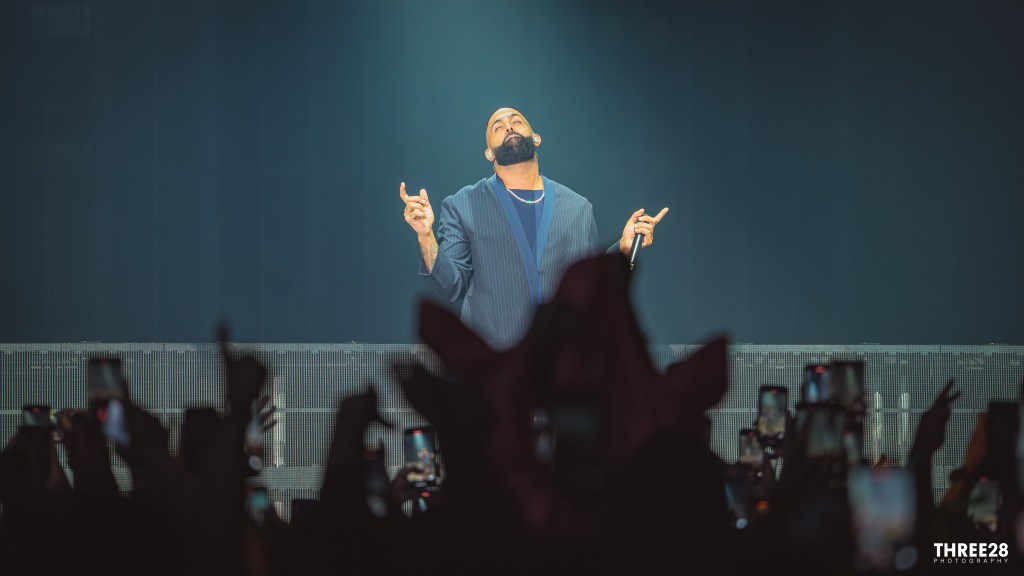
The setlist was expansive, seemingly never‑ending. He tore through stadium‑worthy hits: Thunder Y Lightening, Sigue Bailandome, the moment that stunned when he cued up BZRP Music Sessions #40 and all voices joined in. Each song carried its weight: some had bodies bouncing, others hands reaching upward, others tears glistening in the strobing lights. Between songs he paused; he addressed the crowd, letting the festive roar settle just enough to draw out his own words. His shout‑outs to Latin American countries were heartfelt; when he saw flags from Puerto Rico, the Dominican Republic, Colombia, Mexico, Guatemala, each got its moment. When he spoke of home, identity, perseverance, there was a hush, then an eruption, as if every person felt seen.
His wardrobe over the night was as much part of the storytelling as the sound and visuals. He began casually — grounded, relatable. As the night progressed, he switched: t‑shirts with bold graphics, caps turned backwards, layers that framed his movement. Each costume change felt intentional, a shift in energy, marking different arcs in the show — raw trap, high‑intensity collaborative tracks, reflective moments.
Perhaps the most theatrical surprise was the martial arts sequence. Backup dancers appeared, dressed in stylized fancy combat gear. Carrión engaged in a choreographed fight: swift kicks, dramatic poses, mock‑struggle, synchrony with his dancers. It was not literal but symbolic — a performance of struggle, resistance, discipline. The choreography, light design, and staging around this section elevated it beyond dance: it became drama, almost mythic, echoing the visual imagery of Don KBRN’s album aesthetic (which is known to have influences drawn from Japanese culture, samurai, yakuza etc.).


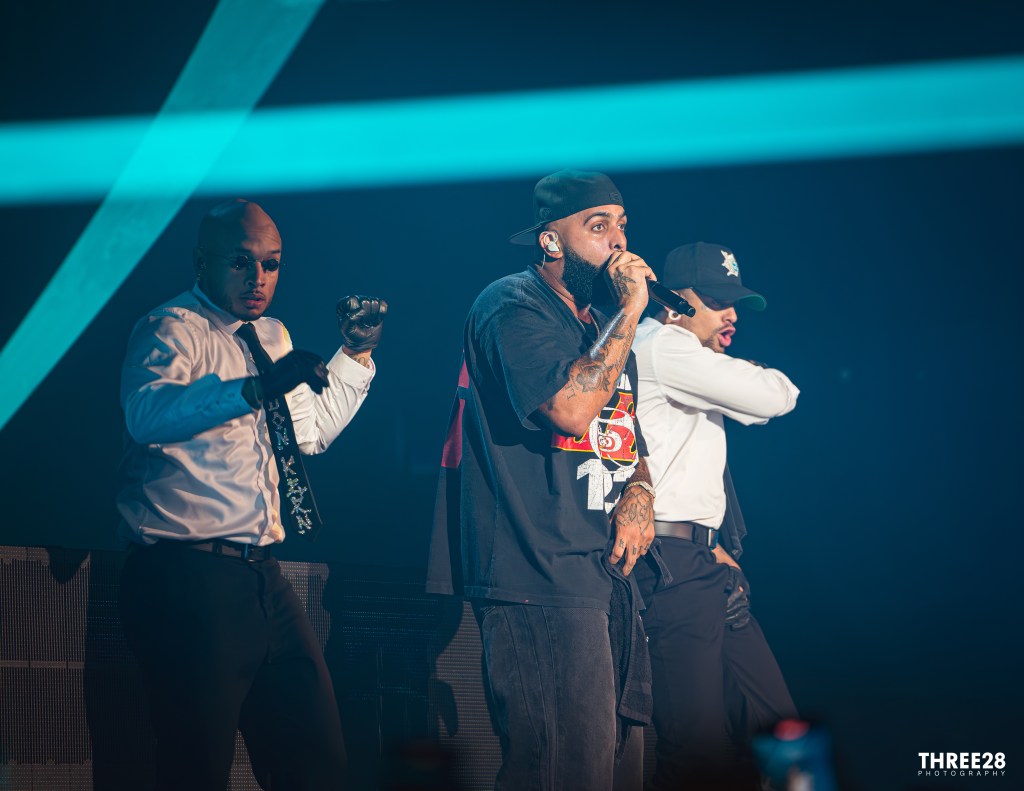
The lighting rig was impressive: lasers slicing through smoke, strobes pulsing in unison with bass drops, visual panels projecting samurai silhouettes, Japanese kanji, neon that shifted hue with each song’s mood. The choreography of his dancers — sometimes tight‑precision cohort moves, sometimes wild energy in sync with the beat — matched the scale. Carrión moved between center stage and to the sides, interacted with dancers, with the front rows; he was both larger‑than‑life and intimate.
One could feel the importance of Don KBRN not just as a new album, but as the capstone of a saga: Sen2 KBRN Vol.1, Sen2 KBRN Vol.2, 3MEN2 KBRN, and now Don KBRN. The LP’s 22 tracks are varied, grand, cinematic, lyrical. On this night, Carrión gave voice to many: old anthems, recent singles, collaborative bangers. The transitions felt seamless, whether the song was a collaboration with artists like Myke Towers, Peso Pluma, Jessie Reyez, or solo numbers meant to stir the crowd’s soul.
By the end, after more than two hours of performance, the audience was nearly spent, yet electric. Cheering, chanting, applause surging. The energy would not relent until the final encore, when Carrión returned to perform his biggest hits, giving the fans what they came for — and more. Flags remained aloft, phones capturing every moment, yet many people seemed to try to put the phones down for sections, just to live fully in the moment.
 LoudSound Magazine
Leave a comment