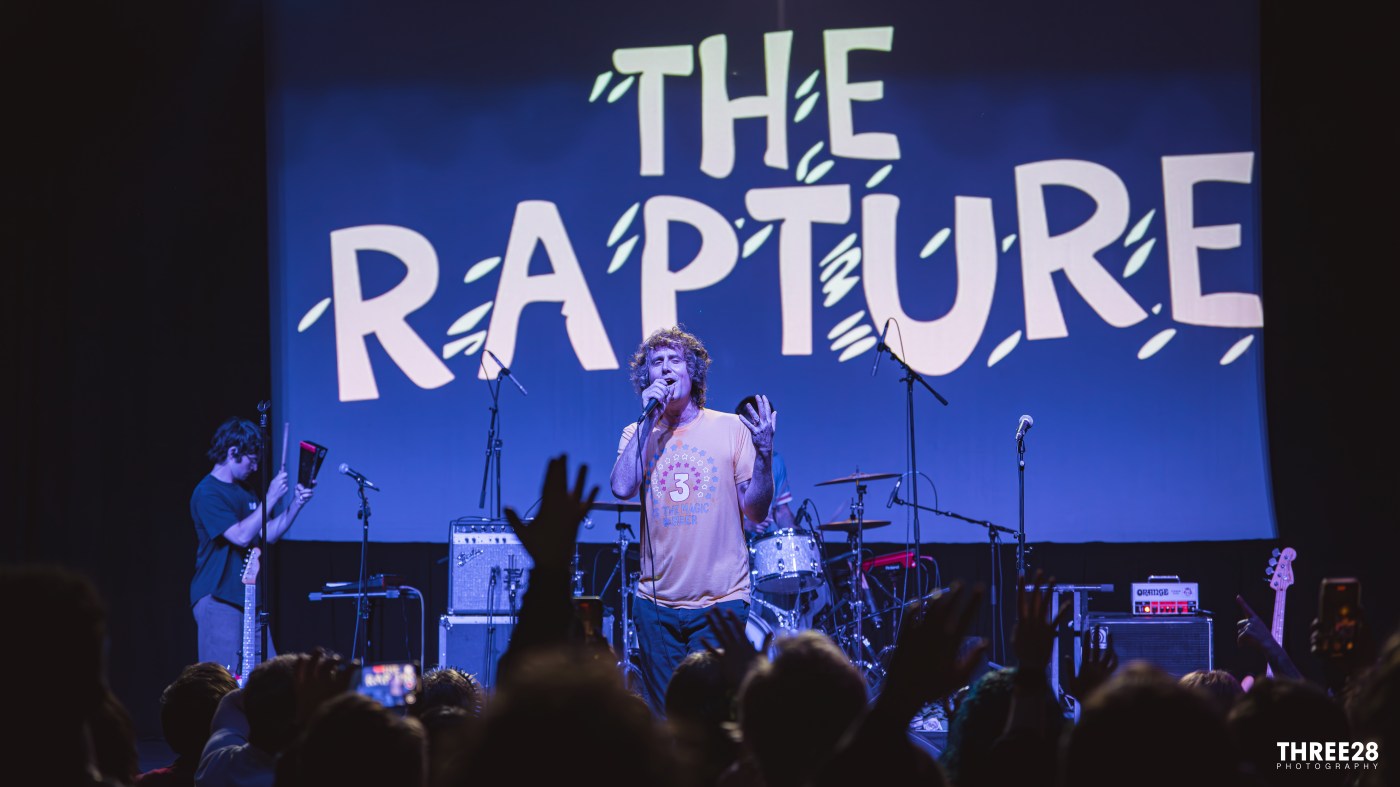
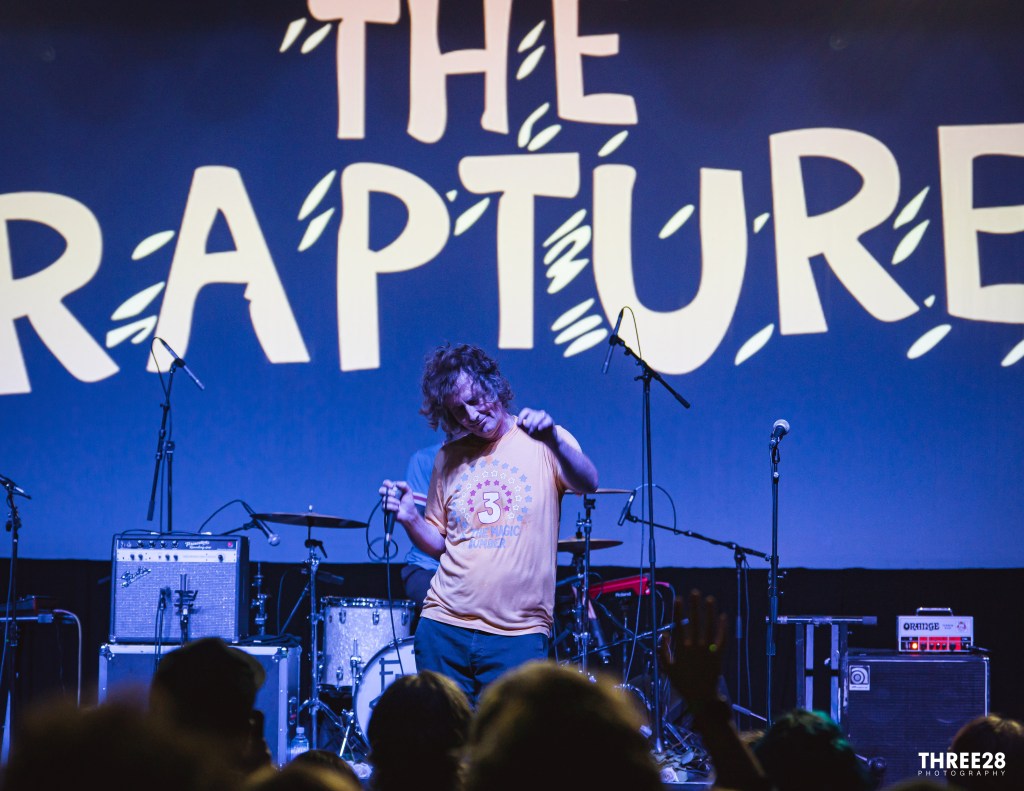
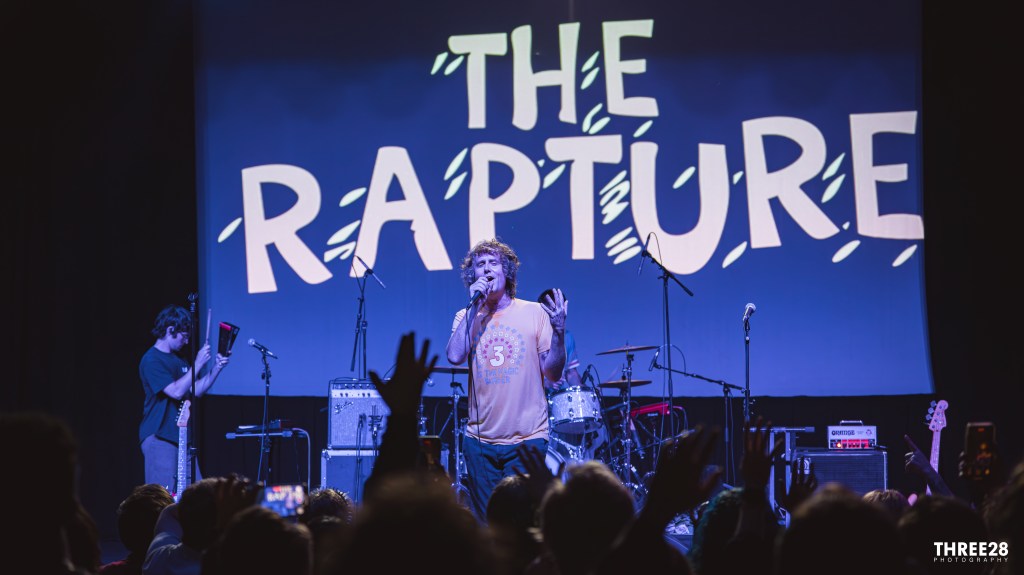
The room is intimate: a modest stage, a single cloth banner behind the band bearing “The Rapture,” and just enough rigging for minimal lighting rigs. No huge video screens, no pyrotechnics, no overwhelming stagecraft — the austerity felt purposeful. In that setting, every nuance of sound, every flicker of expression, becomes magnified. Luke Jenner and company are about to provide those on hand with quite a party.
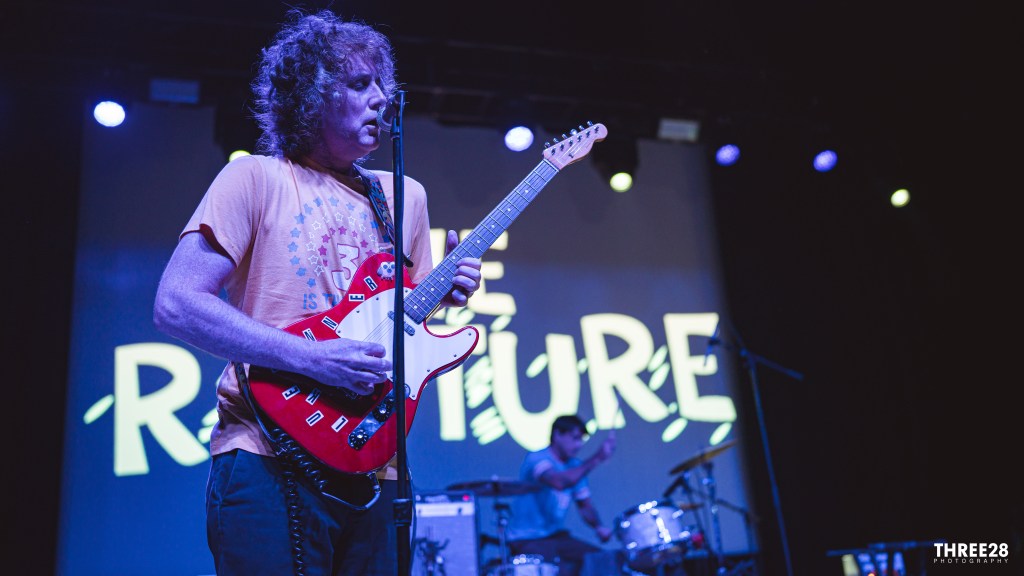
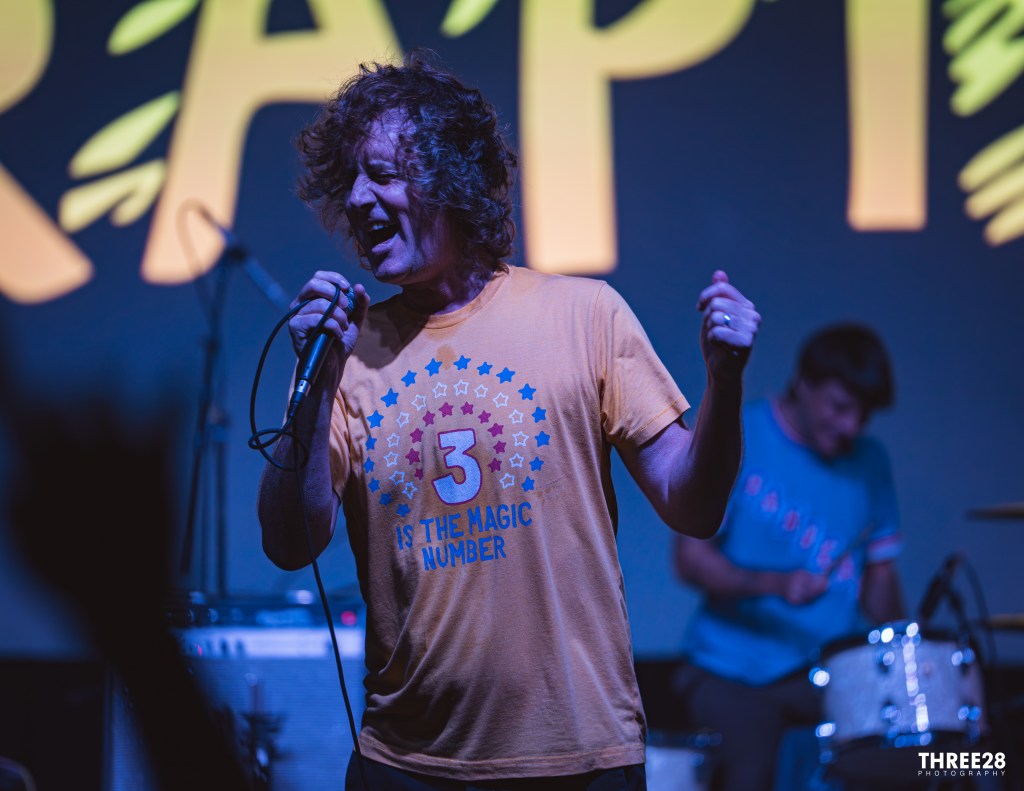
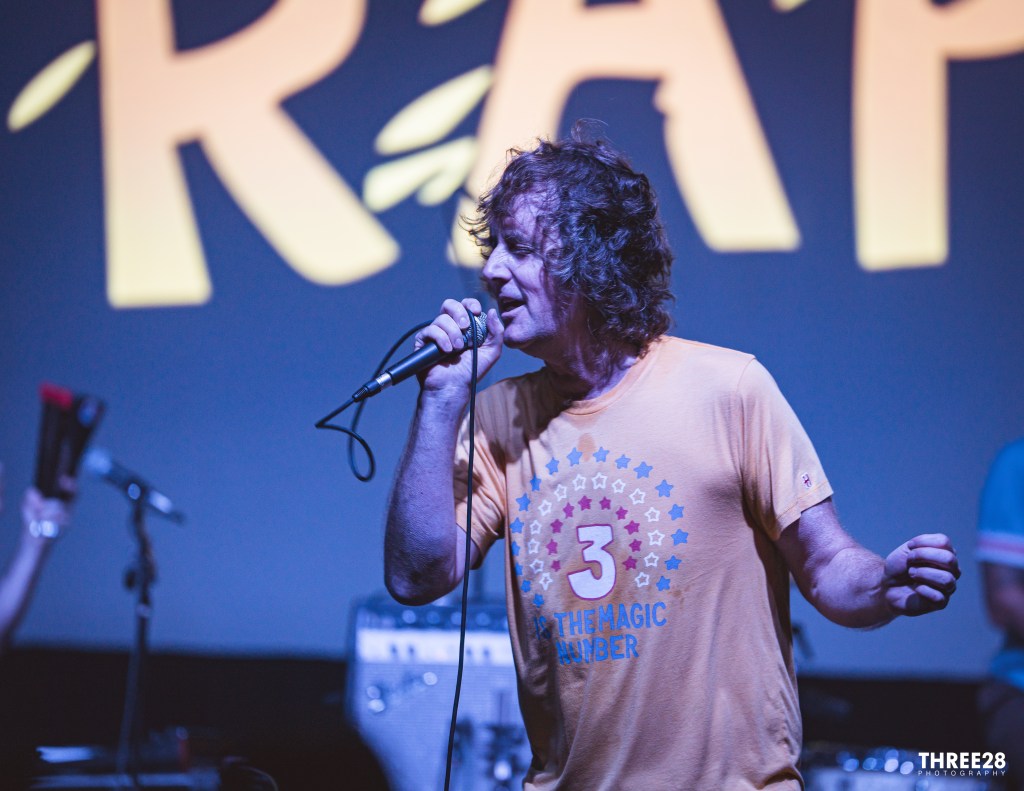
That bare-bones aesthetic set the tone: this wasn’t meant to be a nostalgic spectacle, but a chance to hear something raw, direct, and alive. As the new trio took the stage — Luke Jenner in the center, flanked by a touring drummer and a multi-instrumentalist who hopped between synth, bass, guitar, and percussion — a hush fell. Jenner’s voice, live and unembellished, cut through the darkened hall. His tone is at once delicate and urgent: slightly reedy, with a vulnerability that gives way to plea or shout when the music demands. Listening to him carry the melody live, you sense the tension between fragility and force. He rarely stretches into full belting, but he doesn’t need to — the emotional edges in his voice, the wavering pitch, the inflection of someone who’s living the words in real time, draw you in.
There were hints of nerves in between songs: a slight hesitation before addressing the crowd, a soft stutter of phrasing. His charisma is reserved, shy even — but when the music takes hold, he becomes something else. In several moments, his eyes closed, and he seemed to lose himself in the wave of sound, leaning into the accompaniment, letting his voice ride the currents the drummer and multi-instrumentalist were carving behind him.
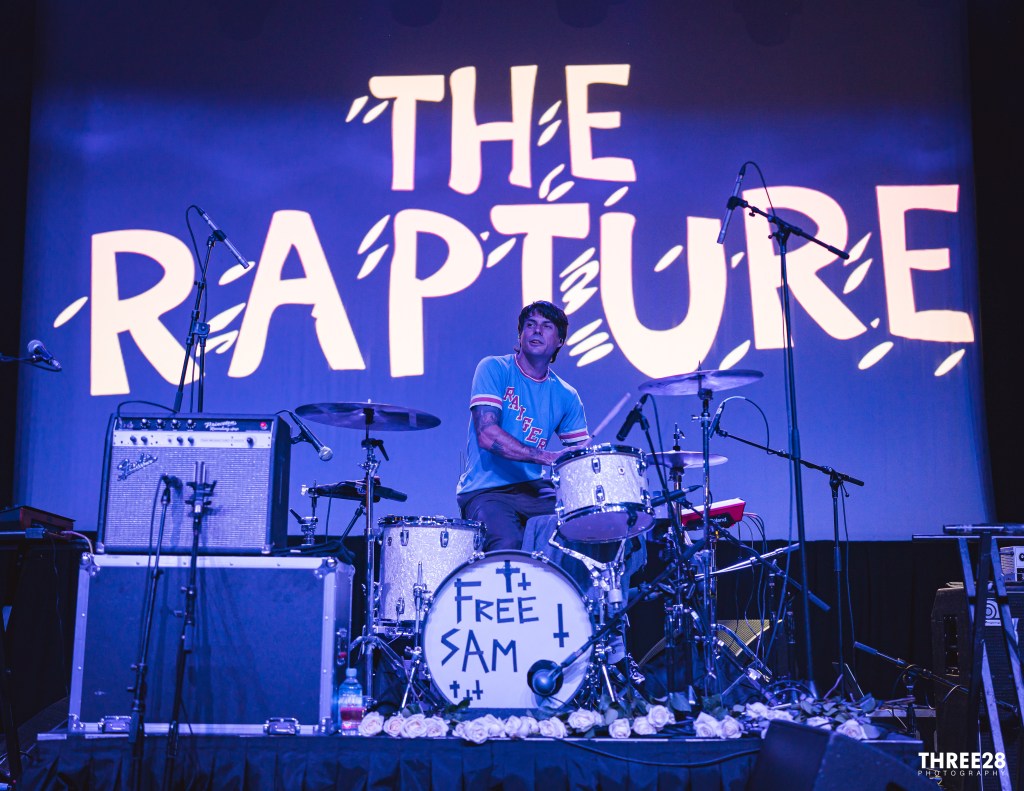
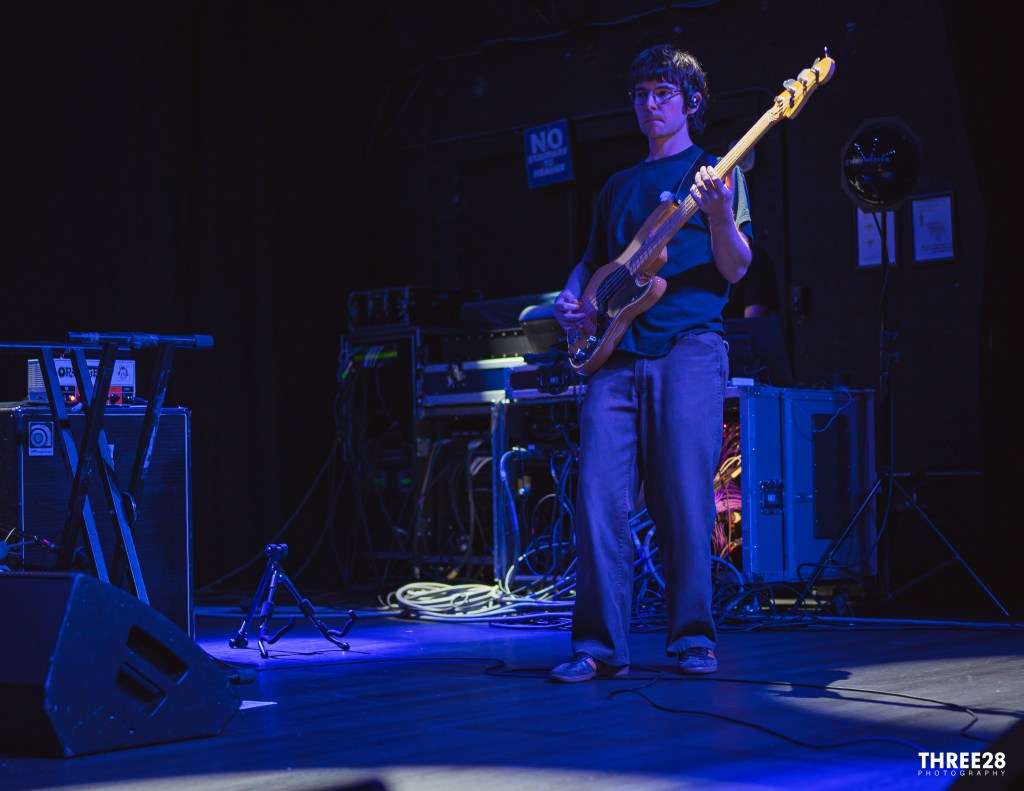
That touring rhythm section deserves special credit. The drummer provided both solidity and elasticity, shifting from tight grooves to loose fills without ever overshadowing. The multi-instrumentalist’s agility allowed the arrangements to breathe — moving from synth pads to guitar flourishes to bass stabs and back, filling space without clutter. The trio (though in spirit, a slimmed‑down version of a once-larger band) held together tightly, filling out what once felt like a four or five-piece sound with deliberate restraint.
Because The Rapture’s history always feels like more than biography — it’s part of a musical lineage and a story of tensions and fractures — the night carried weight beyond nostalgia. For fans who trace the band’s arc: the original lineup (Jenner, Vito Roccoforte, Gabriel Andruzzi, Mattie Safer) birthed a distinctive strain of dance-punk and indie disco in the early 2000s. Their 2003 Echoes is often regarded as crystallizing that style — angular guitars, propulsive rhythms, shimmering synths, and Jenner’s urgent, almost alien wail. Over time, tensions mounted: Jenner’s personal struggles, internal creative friction, and the eventual departure of Mattie Safer in 2009 reshaped the band’s trajectory. Their last studio record, In the Grace of Your Love (2011), emphasized more textural, patient, and emotionally mature work — less overt dance-punk bombast than introspection and space. By 2014, the band had quietly dissolved.
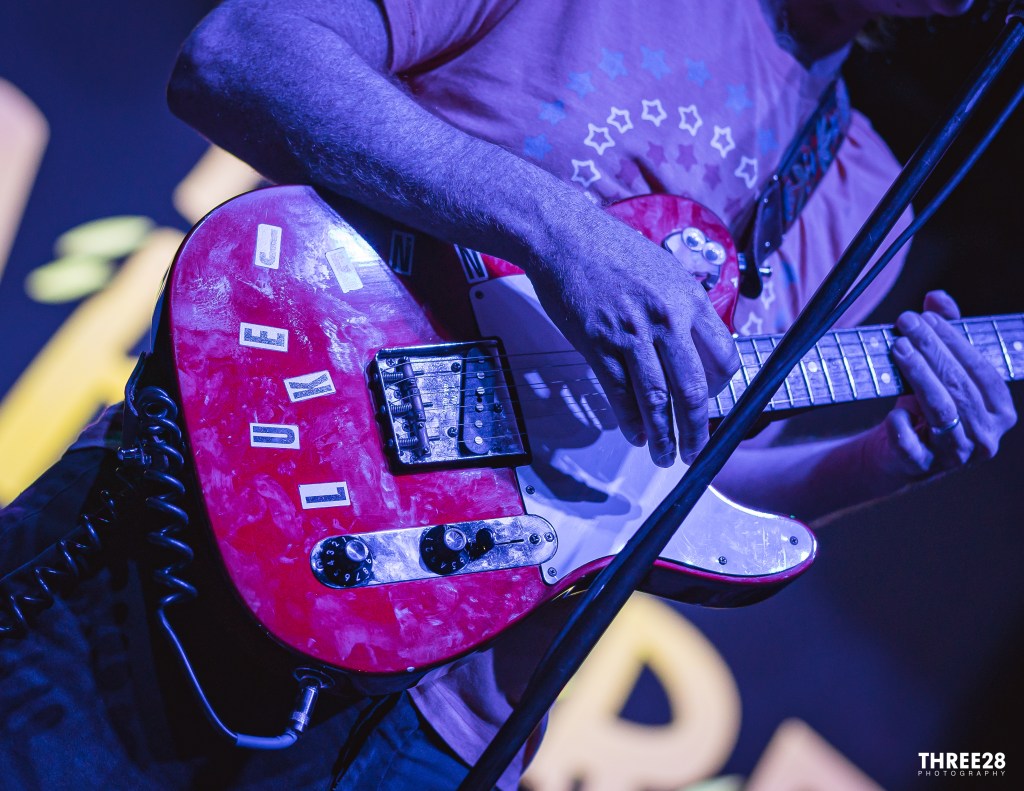
So, this 2025 tour — with only Jenner remaining from that classic core — is in many ways a reimagining. He is carrying forward the name, the memory, and certain signature songs, but in a leaner, more vulnerable formation. That decision is courageous: to ask fans to forgive (or forget) missing members, to accept a new sound, to embrace an imperfect yet sincere reinvention.
It felt right, then, that early in the set they played “Echoes” — one of their foundational songs — with renewed weight. The track, reframed through the subtle backing of two accompanying musicians rather than a full band, felt almost elegiac: more an invocation than a revival. Later in the night, the group surprised with a new live rendition of “How Deep Is Your Love?” — perhaps a nod to fans of In the Grace of Your Love, giving that record a shot at being present in the setlist as more than a memory. Hearing it live felt like a bridge: connecting the past’s euphoric charge to the present’s quieter intensity.
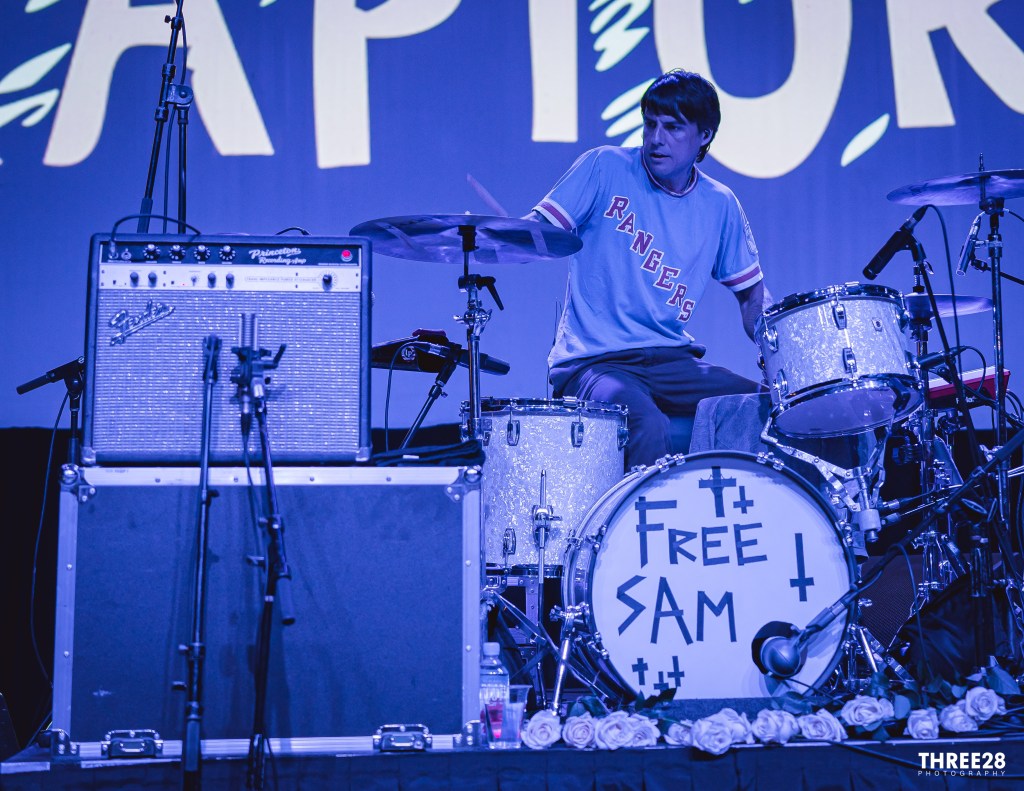
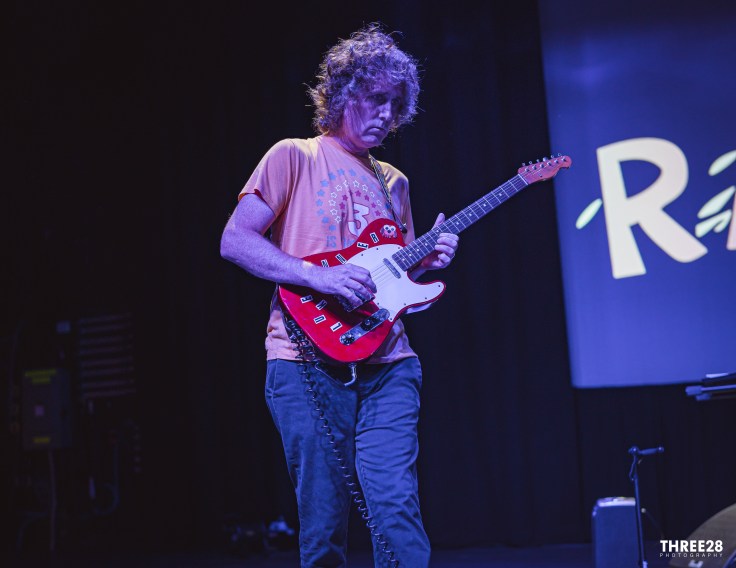
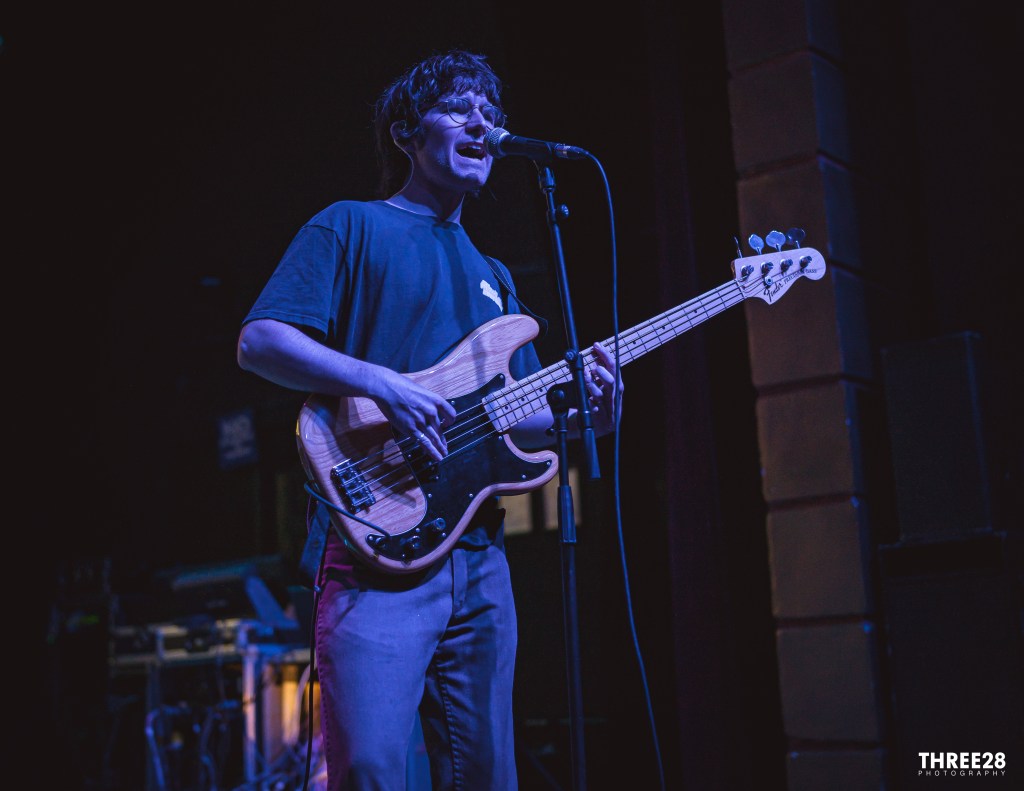
When the concert wound toward its close, they built up to the monumental “House of Jealous Lovers.” In that final stretch, Jenner’s voice took on more grit, more edges — he leaned into those high, strained notes, pushing against the limits of control, letting rawness enter. The crowd responded, body and voice, matched in devotion. When the last chord landed, the room held its breath; after a heartbeat, applause erupted.
In those closing moments, Jenner stepped forward, his expression open and grateful. He began tossing hand waves and roses — literal roses — out to lucky fans in the front rows. It was a delicate, poetic gesture: offering something fragile, ephemeral, as if matching the emotional tenor of the night. After the show ended and the lights came up, a handful of fans lingered by the stage door, and Jenkins joined them outside. He lingered long enough for selfies, brief exchanges, murmured thanks. The velvet barrier between artist and audience, for a moment, seemed porous.
What struck the most was how present Jenner was in that environment — imperfect, sometimes uncertain, but fearless in his vulnerability. The stripped-down setting, minimal visuals, constrained instrumentation — all of it allowed the voice, the emotion, the memory, and the fractures of the past to surface. This version of The Rapture is not a nostalgic revival but a meditation on what survives, what changes, and what can still be revealed.
In the arc from the early dance-punk underground, through lineup crises and stylistic evolutions, to tonight’s intimate show, the band’s importance lies in that tension: between energy and introspection, between communal dancefloor euphoria and solitary emotional exposure. In Buckhead, the night felt like witnessing a conversation with that tension — a breathing, pulsing, alive conversation — and Luke Jenner, alone (in title) but surrounded by collaborators, held it together with a voice that trembled even as it soared.
 LoudSound Magazine
Leave a comment