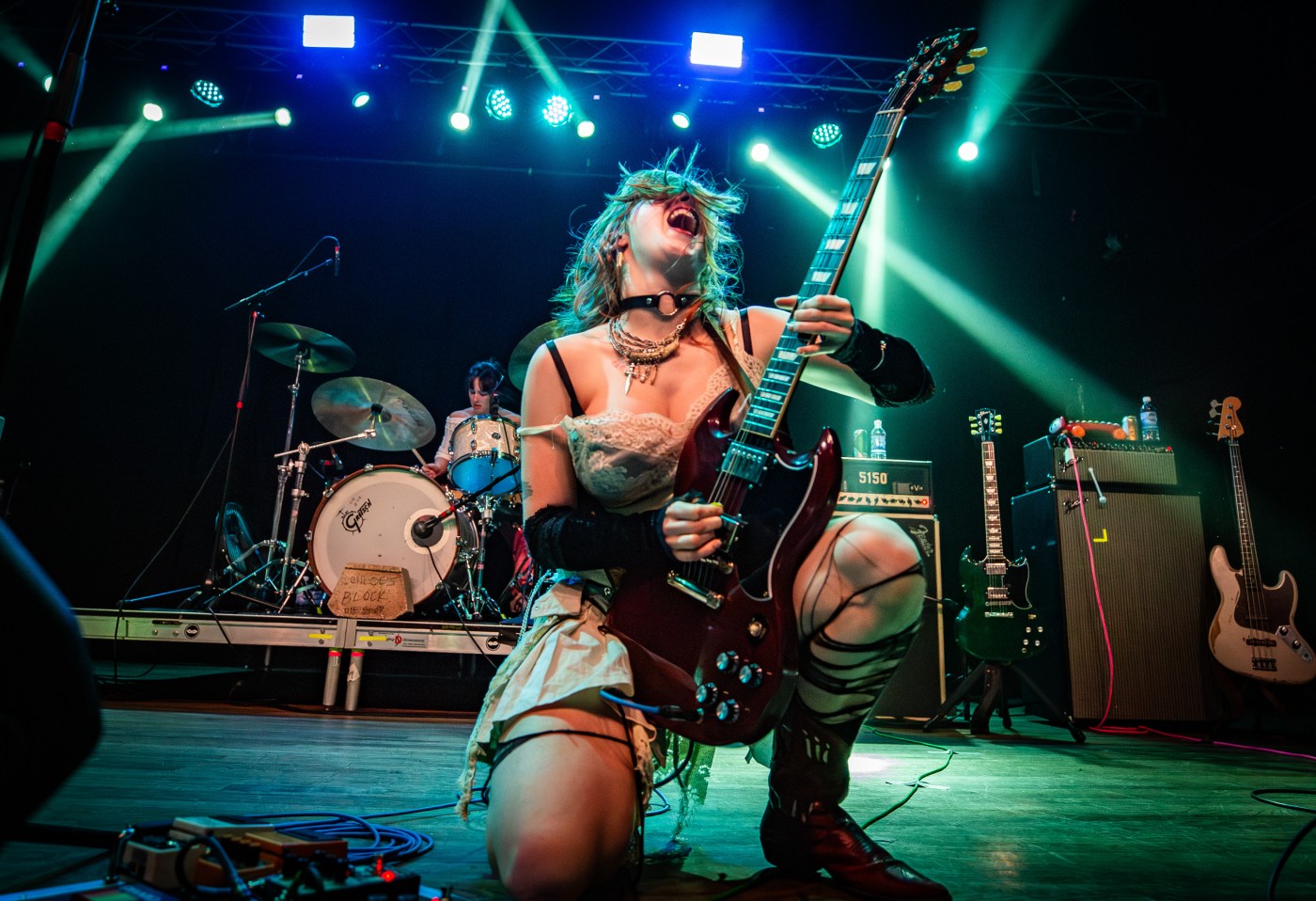
At The Masquerade, anticipation rarely simmers — it seethes. On the night Die Spitz arrived in Atlanta, the venue felt less like a concert hall and more like a pressure chamber. Bodies pressed toward the barricade long before the house lights dimmed, a dense congregation of devotees aware that they were about to witness not merely a performance, but a band in ascent. Since their formation in 2022, the Austin quartet has accelerated with improbable velocity, evolving from local insurgents into one of the most discussed live acts in contemporary heavy music, propelled by a debut album and relentless touring that has transformed curiosity into fervor.
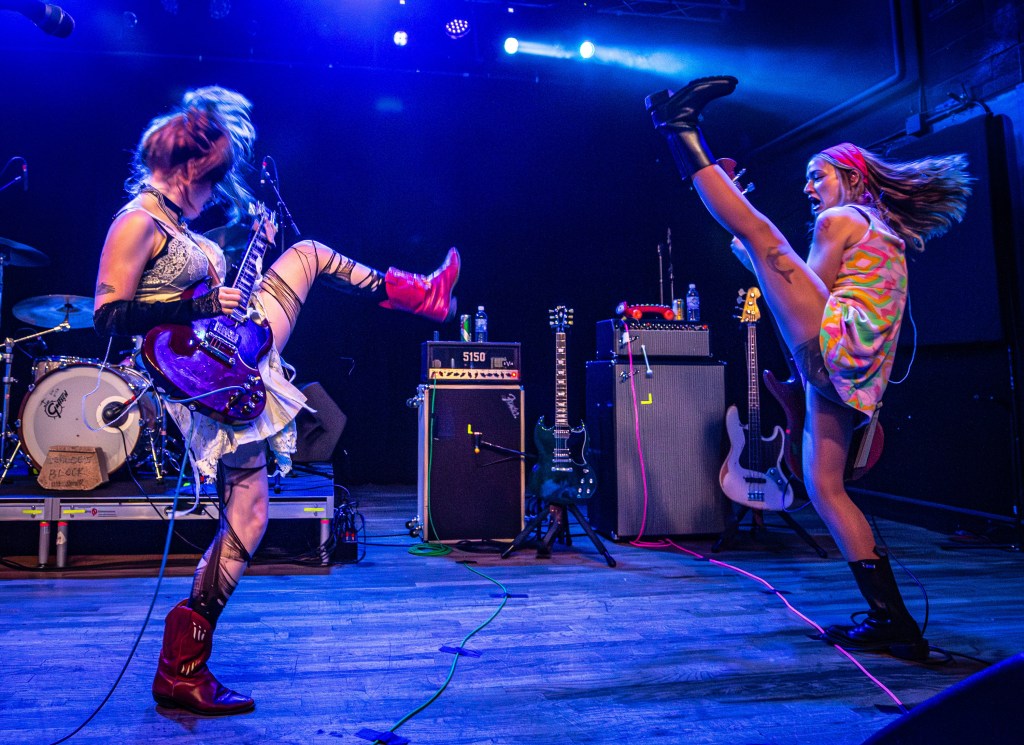
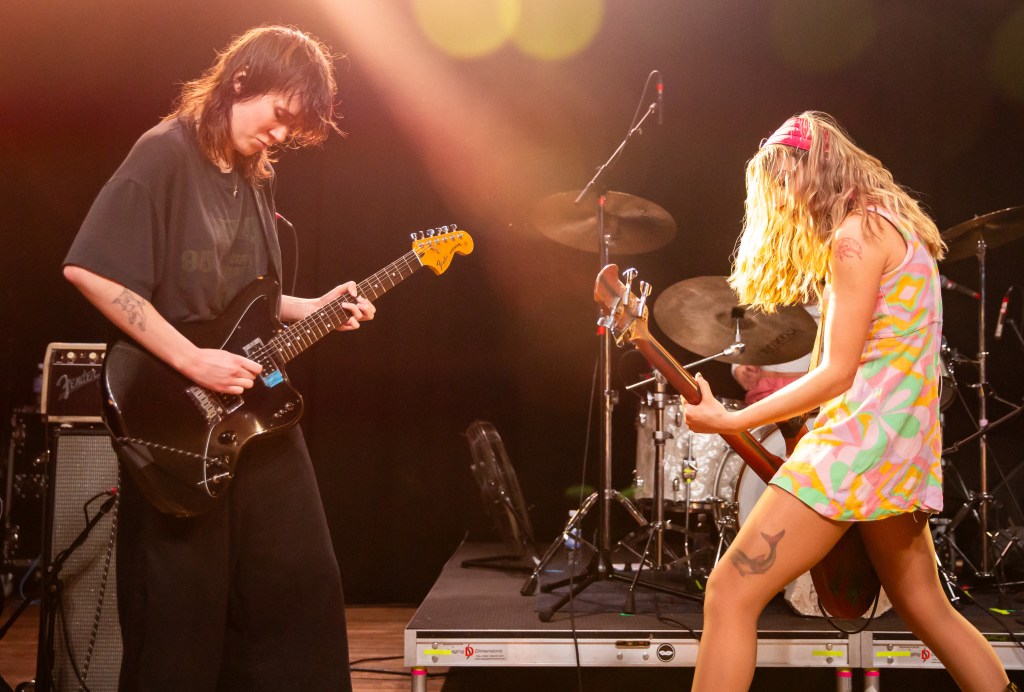
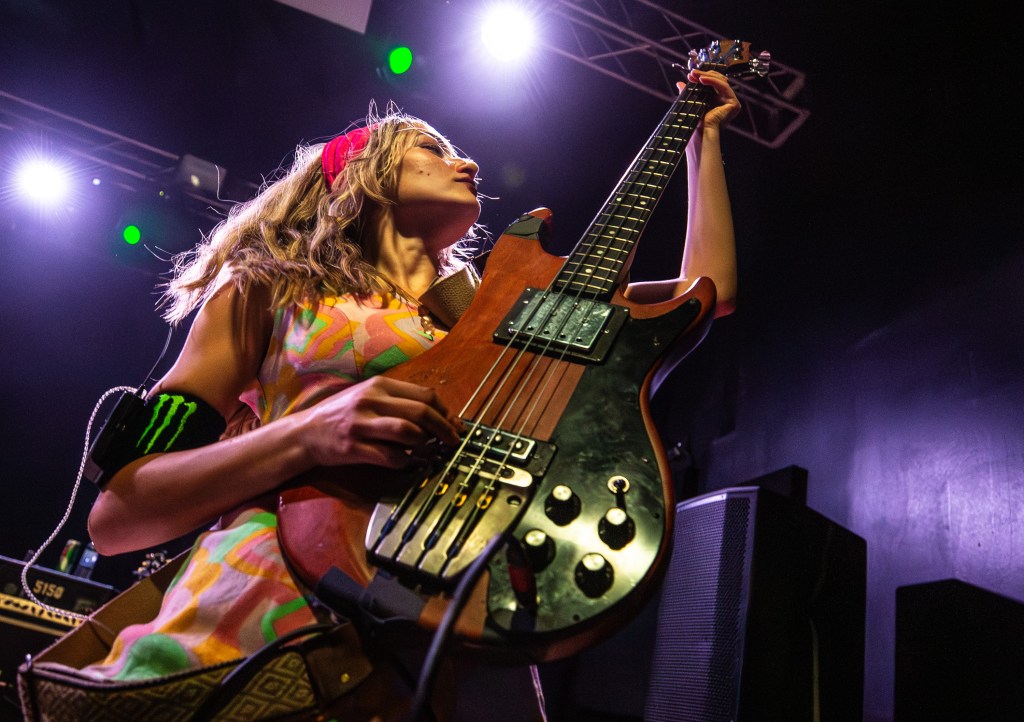
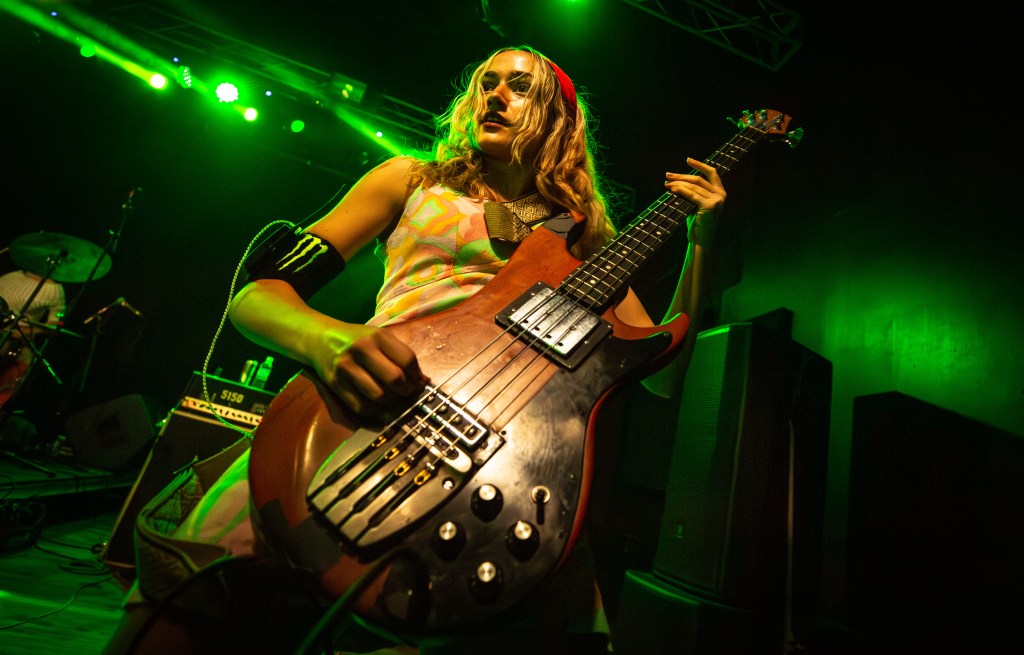
The group’s rise is not accidental; it is the product of a chemistry forged long before the stage lights found them. Ava Schrobilgen and Eleanor Livingston share a lifelong familiarity that manifests in a near-telepathic interplay, while Kate Halter anchors the low end with a muscular, unflinching presence. Behind them, Chloe de St. Aubin operates not merely as a timekeeper but as an instigator, her drumming pushing songs forward with volatile urgency. Their configuration—multiple vocalists, rotating roles, and a refusal to adhere to static positions — creates a dynamic that feels less like a conventional band and more like a constantly shifting organism.
Categorizing their sound proves elusive, though critics often reach for the blunt instruments of punk, grunge, and metal. Those descriptors are accurate yet insufficient. What emerges in practice is a serrated amalgam: distortion-heavy guitars that oscillate between sludge and melody, rhythms that veer from breakneck to deliberate, and vocals that alternate between sneer, howl, and chant. Their compositions carry an undercurrent of confrontation — political, emotional, and sonic — without sacrificing hooks or structural intention. The result is a sonic architecture that feels both chaotic and meticulously assembled, a contradiction that defines their identity.

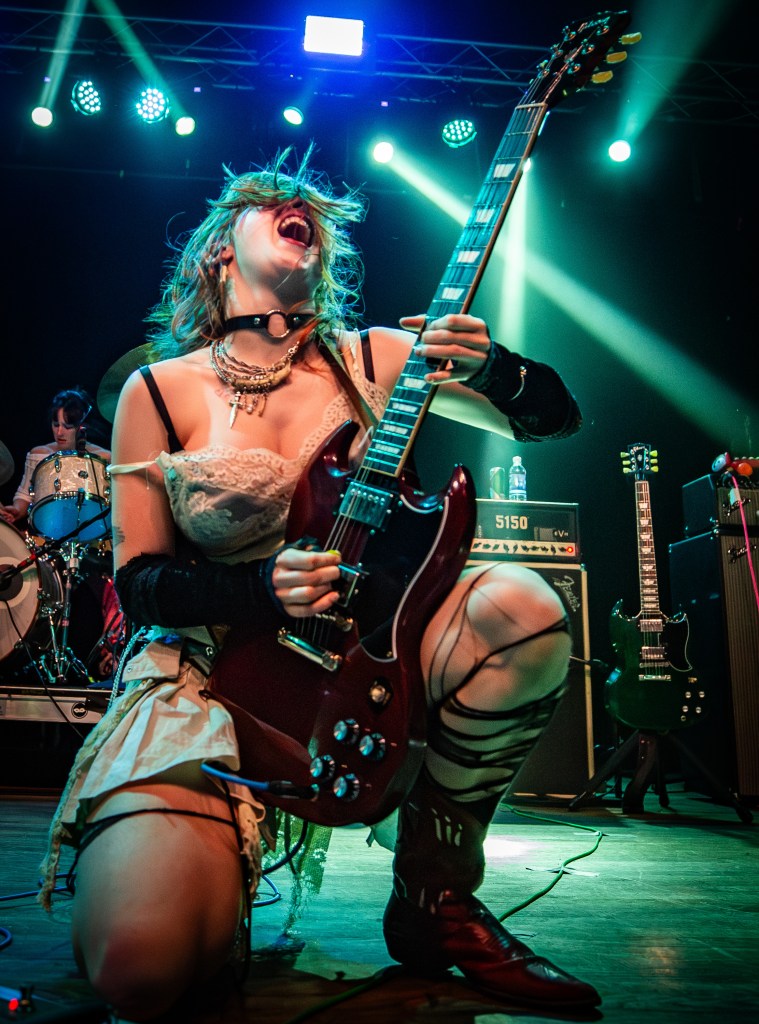
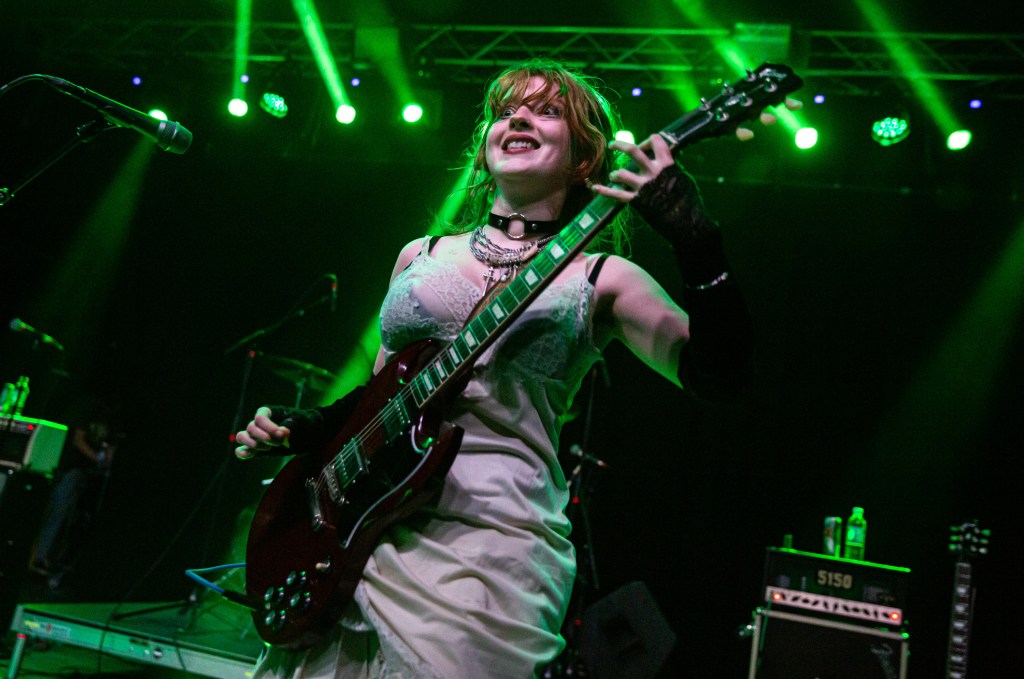
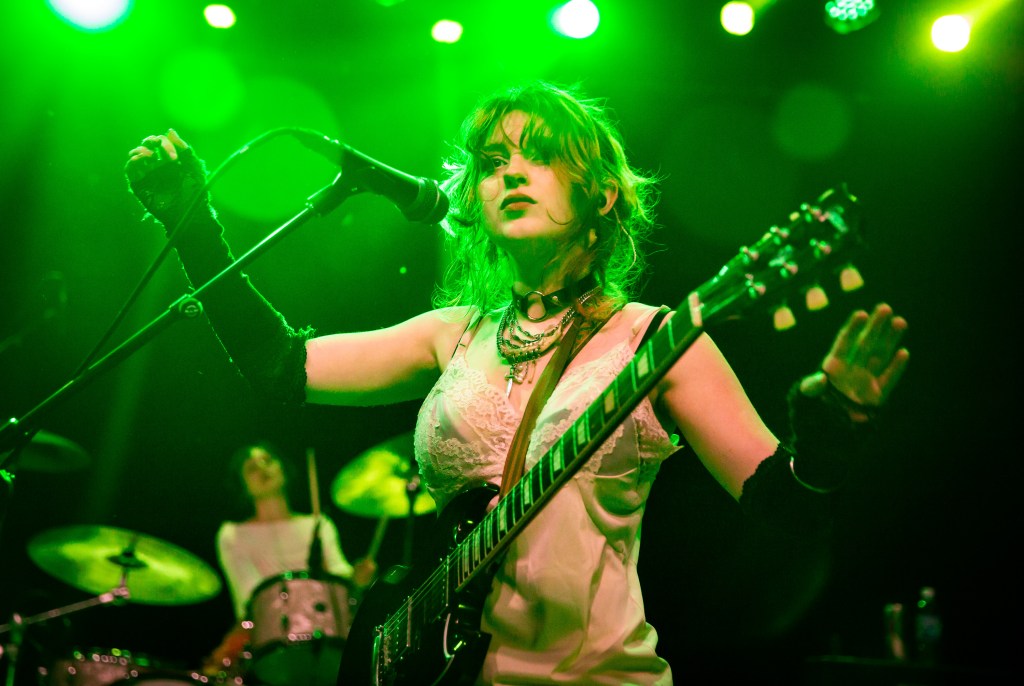
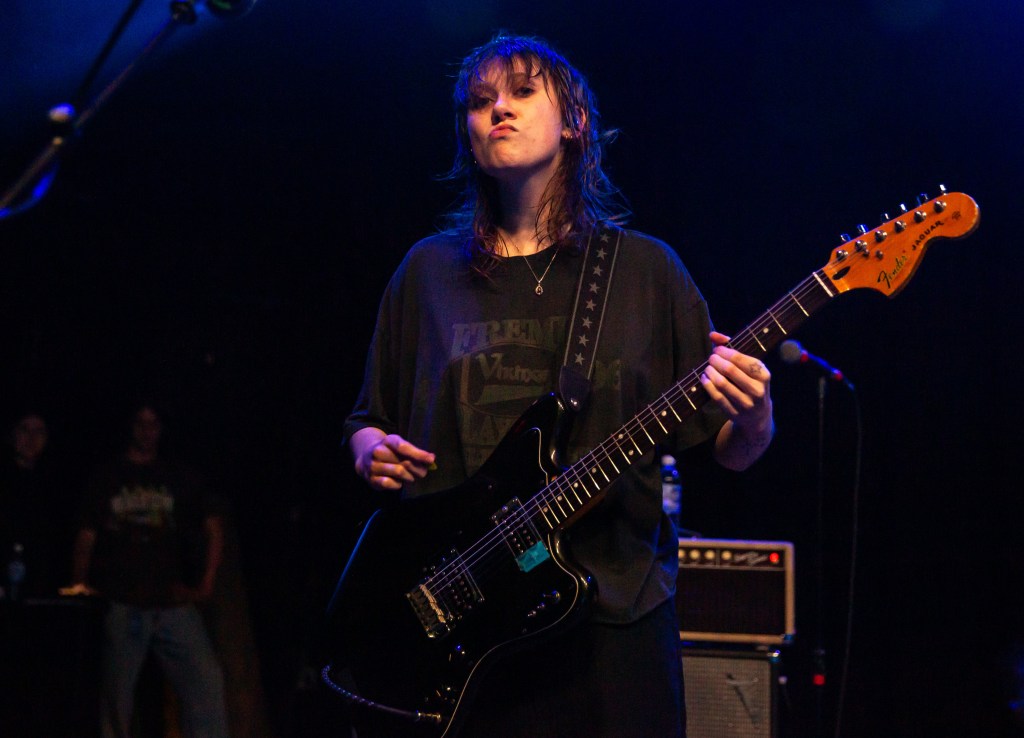
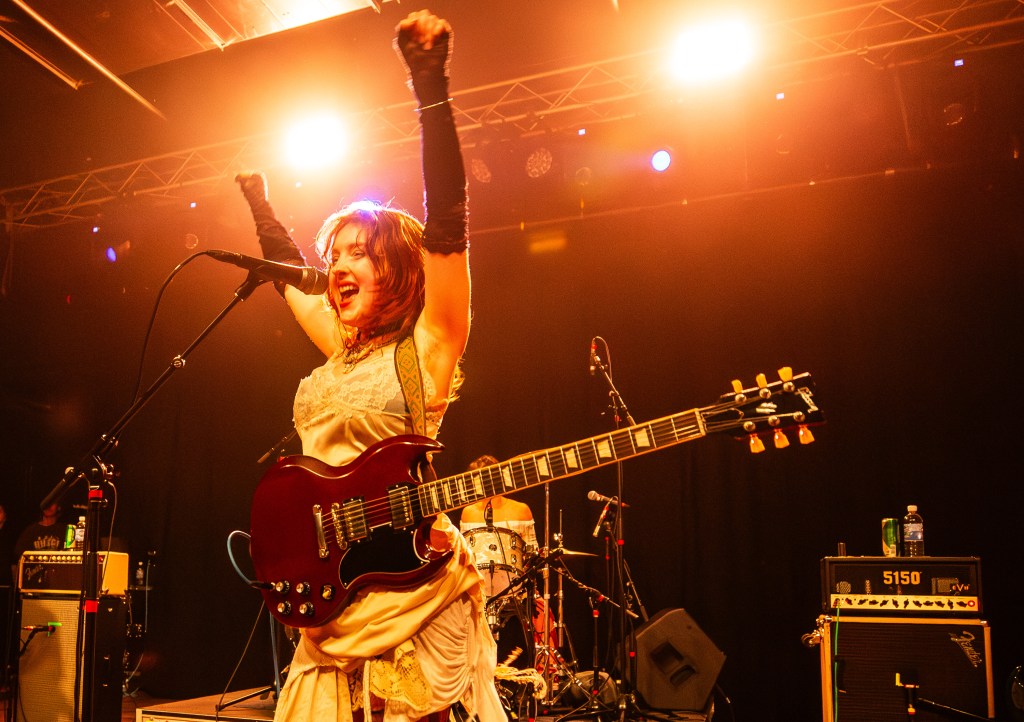
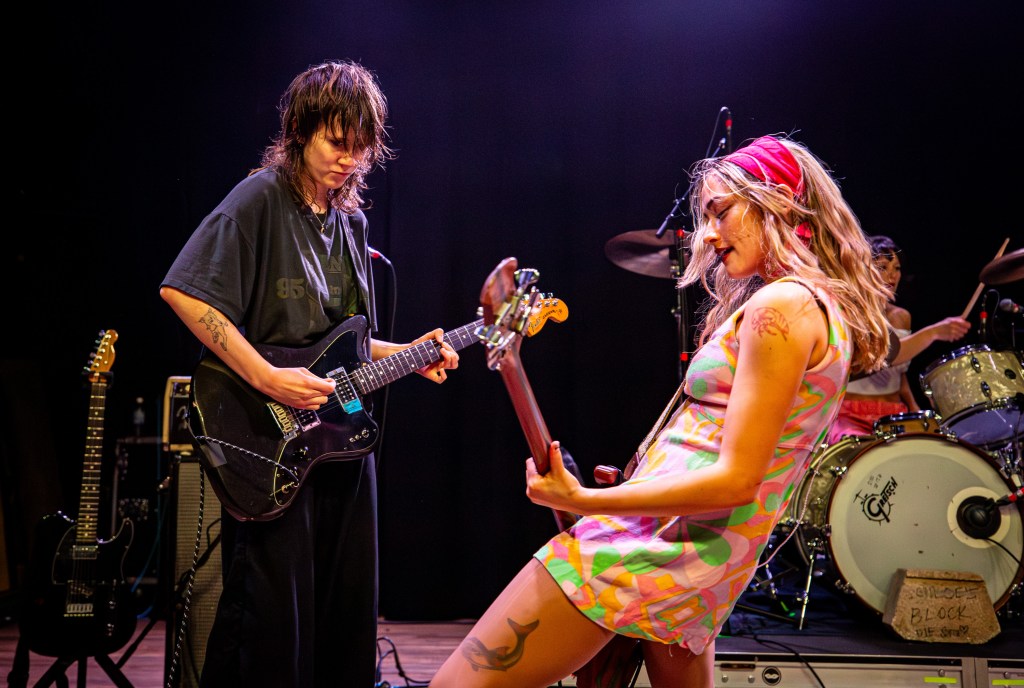
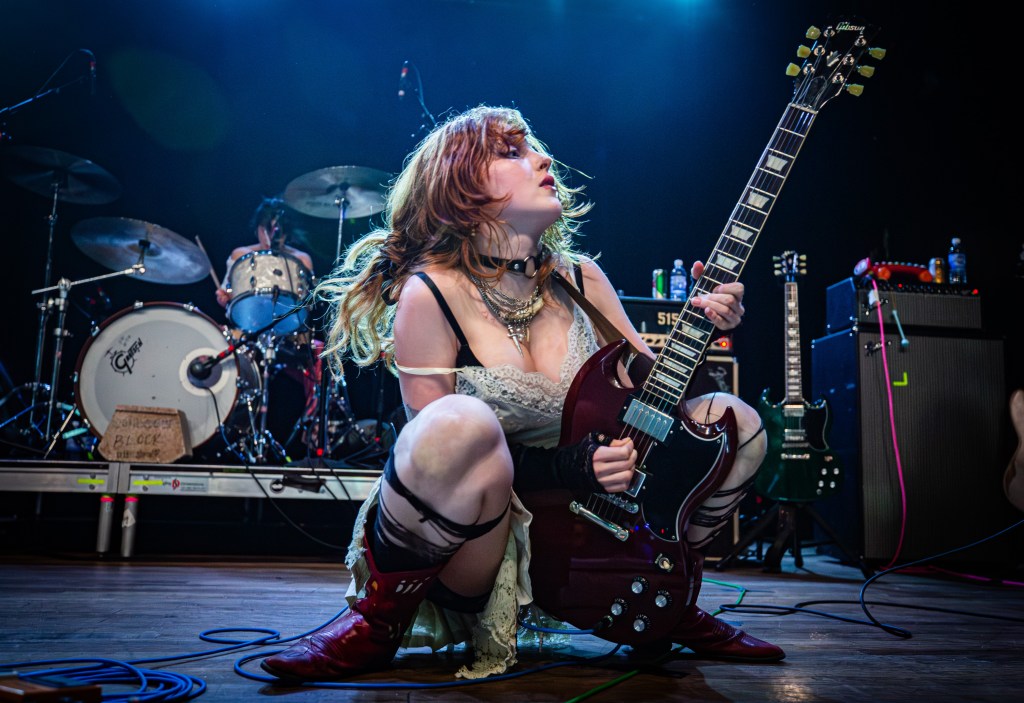
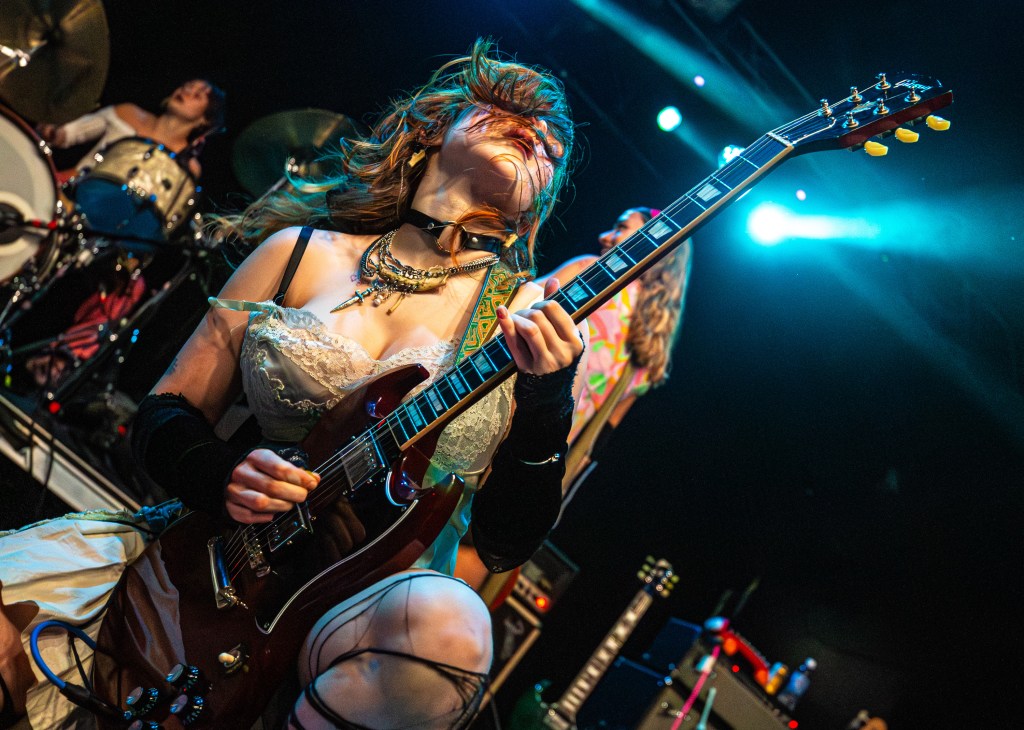
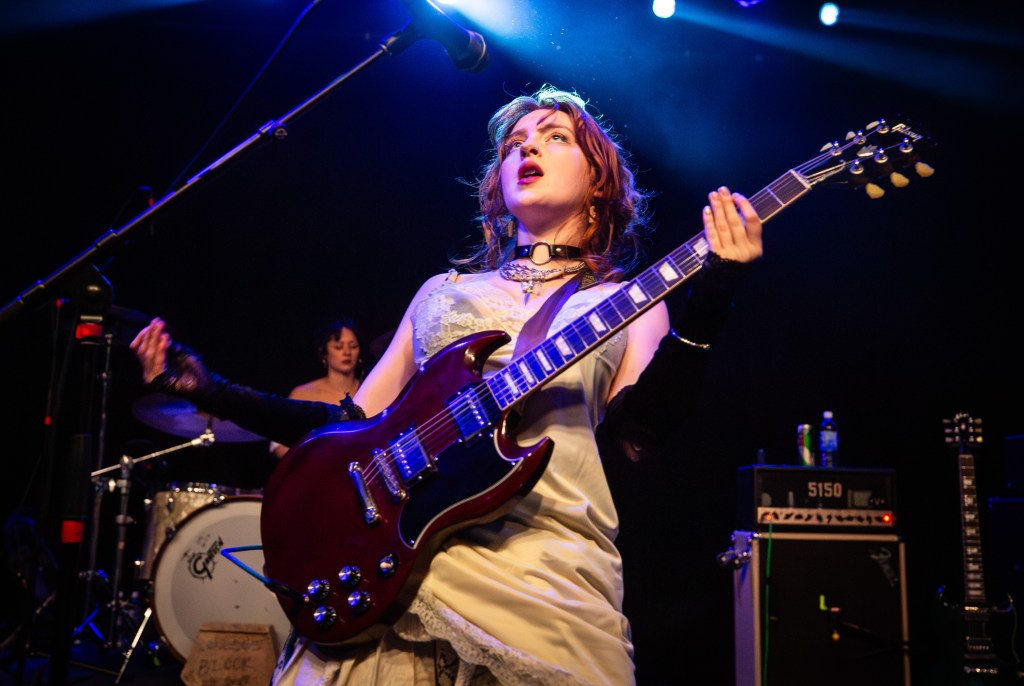
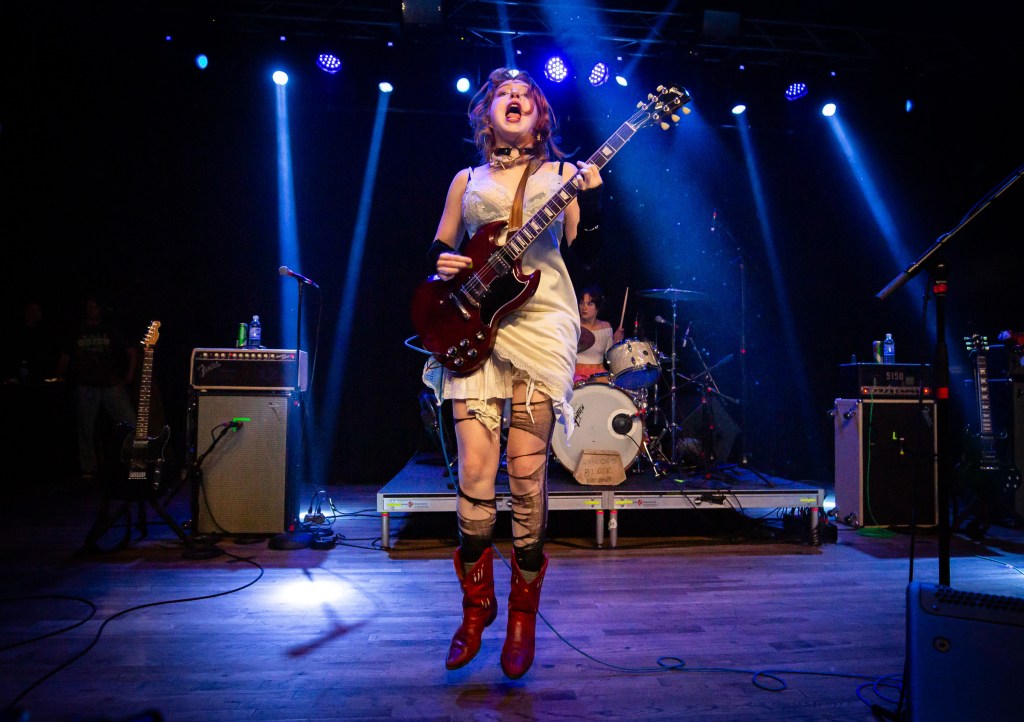
When the lights finally collapsed into darkness at The Masquerade, the crowd’s anticipation detonated. The opening notes were less heard than felt, a concussive wave that triggered immediate movement — moshing, shouting, bodies colliding in rhythmic disorder. From the outset, the band embodied the feral reputation that precedes them. High kicks punctuated riffs, guitars were swung with theatrical menace, and the stage became a site of controlled disarray. There was no distance between performer and audience; the boundary dissolved within minutes, replaced by a shared kinetic urgency that rendered observation impossible — participation was mandatory.
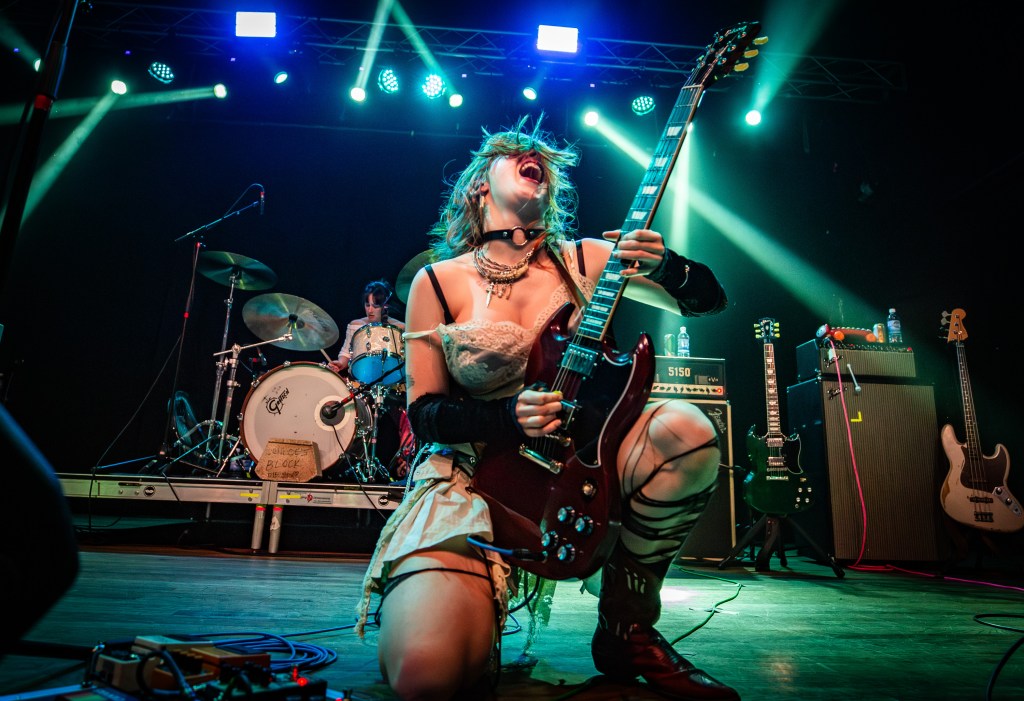
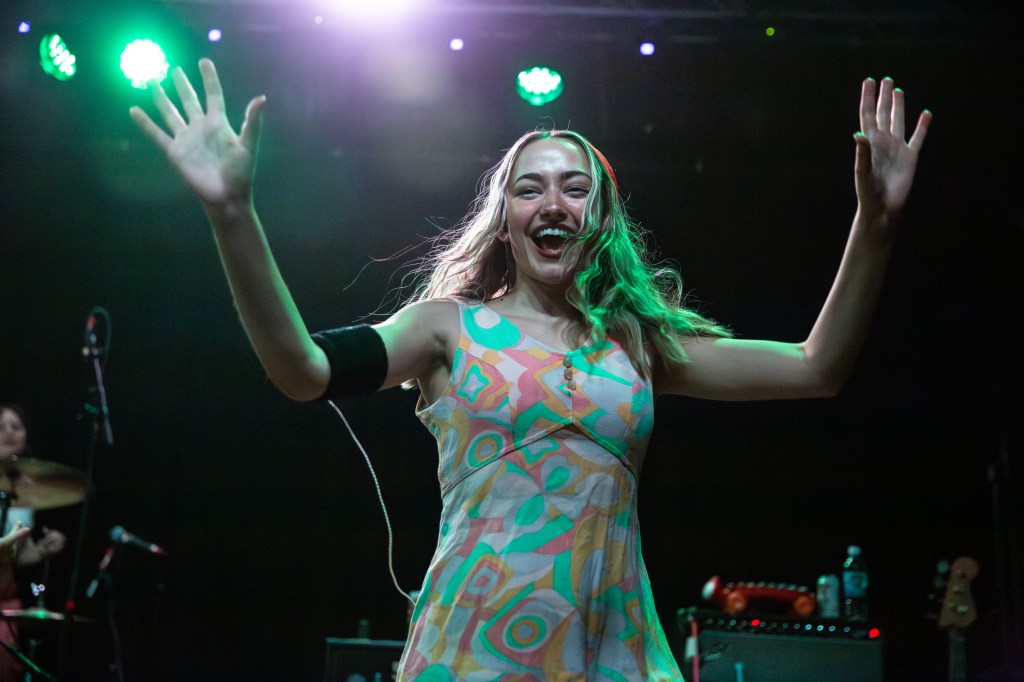
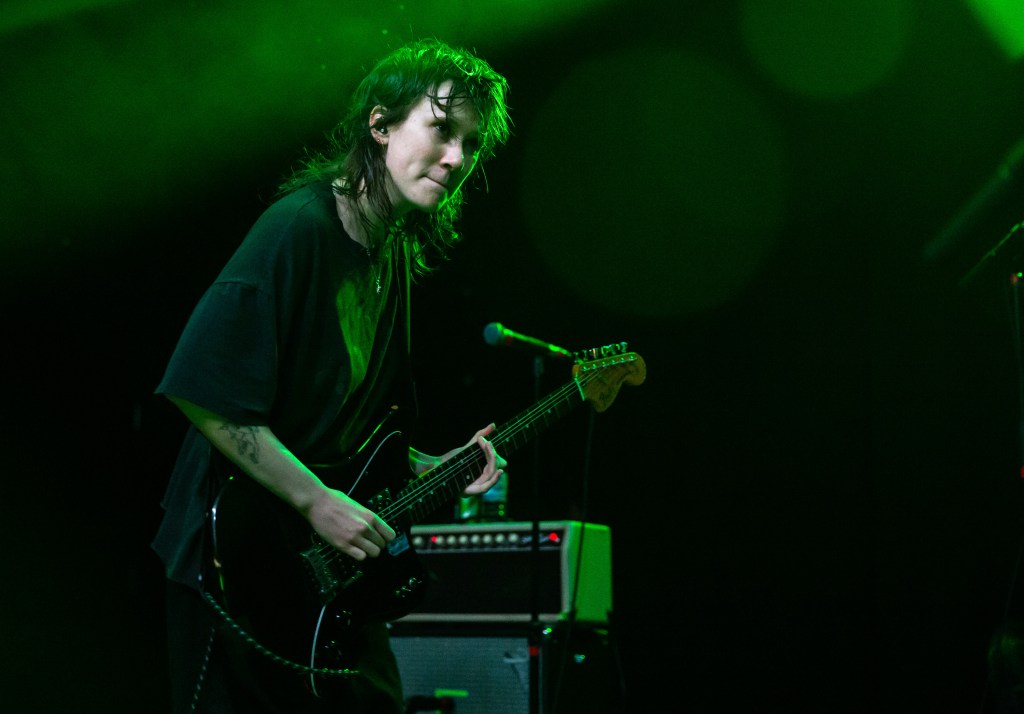
At the center stood Schrobilgen, whose lead vocals carried both abrasion and clarity, slicing through the density with a command that never tipped into excess. Livingston and de St. Aubin periodically joined her, their shared singing creating moments of layered intensity that expanded the emotional range of each song. Meanwhile, Halter became a focal point of spectacle, launching herself into the crowd with a bassist’s instrument still slung across her frame. That act of crowd surfing, mirrored by fans who followed her lead, epitomized the evening’s ethos: no hierarchy, no separation, only immersion.
What distinguished the performance was not merely its volume or velocity, but its capacity to suspend time. For the duration of the set, the audience existed in a heightened state where external concerns dissolved, replaced by a singular, collective presence. This is the essence of Die Spitz’s appeal: not just sound, but experience — an unfiltered confrontation with energy in its most immediate form. As the final notes decayed and the house lights returned, there was a lingering sense that something had been briefly unlocked, then sealed again. In that fleeting interval, both band and audience occupied the same volatile frequency, and neither emerged unchanged.



Leave a Reply