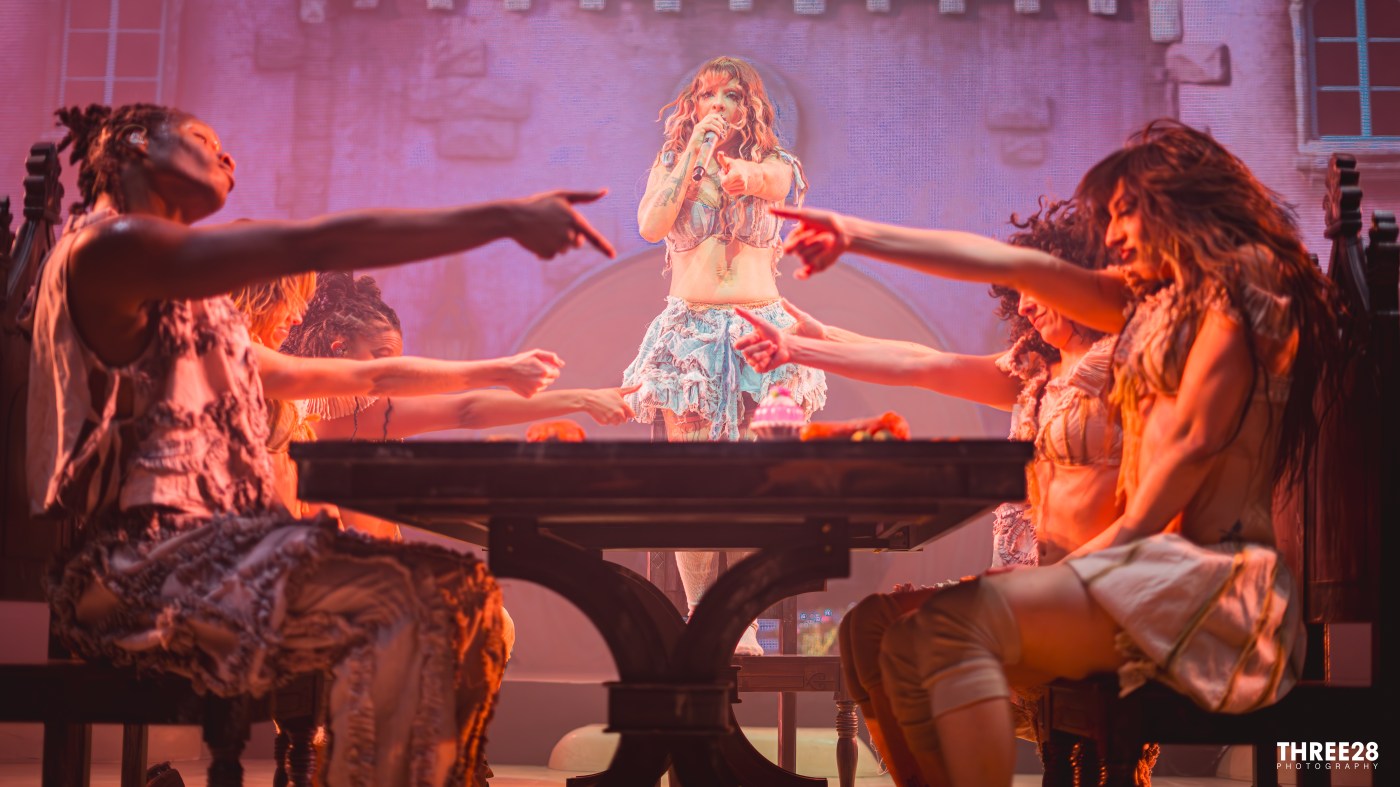
HADES: THE SACRIFICE Tour Turns Gas South Arena Into a Beautiful, Unsettling Underworld
There are concert tours that promote an album, and then there are tours that seem determined to physically inhabit one. Melanie Martinez and her HADES: THE SACRIFICE Tour belongs emphatically to the latter category. At Gas South Arena, Martinez transformed a conventional 13,000-seat arena into the latest chapter of the strange, theatrical universe she has been constructing for more than a decade. The performance was not merely a collection of songs performed live; it was a meticulously staged piece of dark-pop theater, one that demanded the audience surrender to its mythology, imagery and increasingly surreal logic. Most strikingly, Martinez committed herself entirely to HADES, her fourth studio album, performing the record from beginning to end rather than padding the evening with familiar favorites from Cry Baby, K-12 or PORTALS. It is a bold choice, particularly for an artist with a catalog containing enormous fan favorites, but it makes perfect sense within Martinez’s increasingly cinematic approach to pop. HADES is not simply an album she is touring; it is the world she wants the audience to enter.
Martinez has occupied an unusual position in contemporary pop since her appearance on The Voice in 2012. What initially appeared to be a highly stylized aesthetic — baby-doll dresses, pastel colors, childlike imagery juxtaposed with unsettling subject matter — eventually became an entire artistic language. With Cry Baby, K-12, PORTALS and now HADES, she has demonstrated an unusual ability to turn albums into self-contained universes, where music, fashion, choreography, storytelling and visual art function as interconnected pieces rather than separate promotional tools. Her importance to the alternative-pop and dark-pop landscape is difficult to dismiss precisely because she has never seemed interested in fitting neatly inside it. Martinez helped demonstrate that an artist could build an intensely specific visual identity around emotionally complicated, sometimes macabre material and still reach an enormous mainstream audience. Her influence can be felt in the way younger pop artists increasingly treat the concert stage as an extension of the music video — or, more ambitiously, as a piece of world-building in its own right. HADES represents the next stage of that evolution: less nursery rhyme, more dystopian nightmare; less whimsical fantasy, more grotesque social commentary.
The current trek, which began in July and continues through the summer before heading overseas, is Martinez’s most uncompromising album presentation yet. The 18-song performance follows HADES in sequence, beginning with “GARBAGE” and “IS THIS A CULT?” before moving through “POSSESSION,” “WHITE BOY WITH A GUN,” “DISNEY PRINCESS,” “GRUDGES,” “MONOPOLY MAN,” “AVOIDANT,” “MONOLITH” and “WEIGHT WATCHERS,” eventually reaching the ominous closing stretch of “THE PLAGUE,” “BATSHIT INTELLIGENCE,” “GUTTER,” “UNCANNY VALLEY,” “THE VATICAN,” “HELL’S FRONT PORCH,” “CHATROOM” and “THE LAST TWO PEOPLE ON EARTH.” Rather than treating the album as a collection of individual tracks, Martinez presents it as a continuous narrative. Before many of the songs, spoken-word passages narrated by Circle establish the circumstances, themes or emotional temperature of what is about to happen. Those interludes are crucial: they provide connective tissue between songs and make the evening feel less like an ordinary arena concert and more like watching a dystopian stage production unfold in chapters.

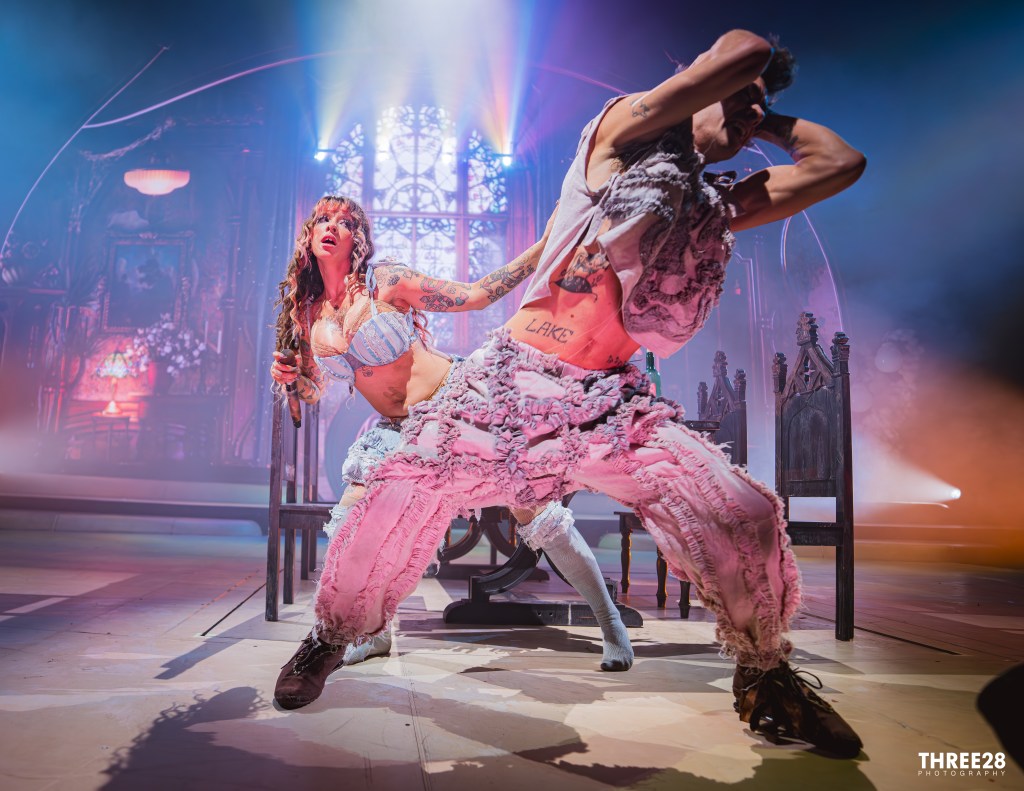
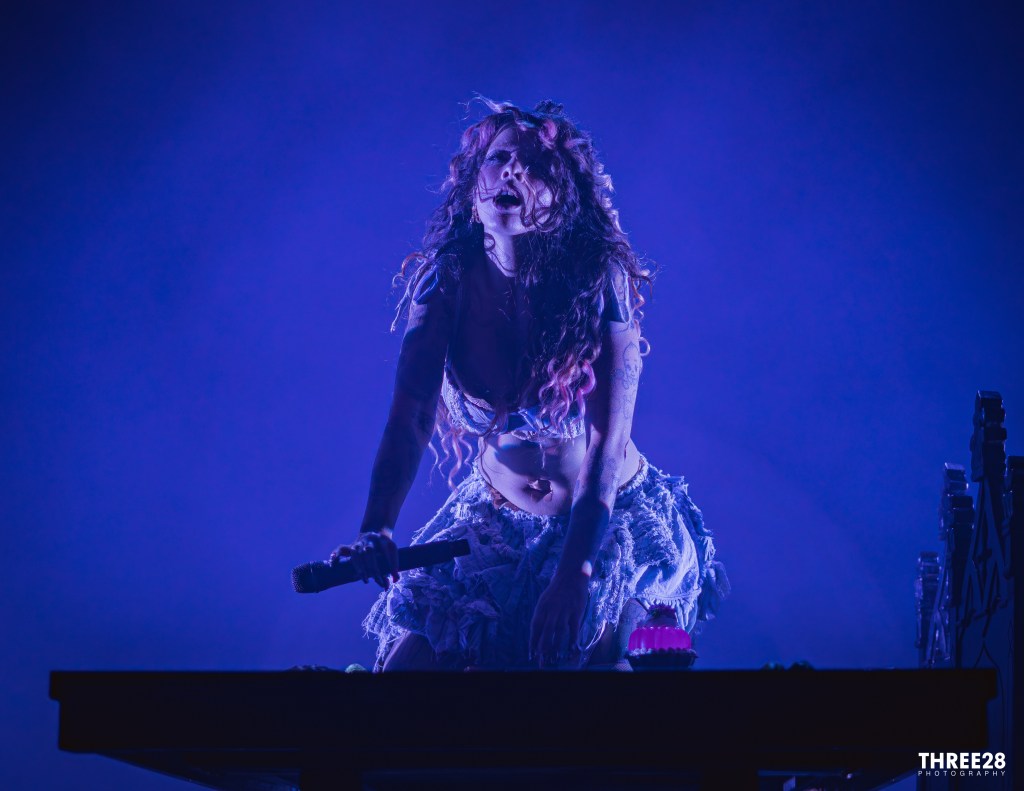
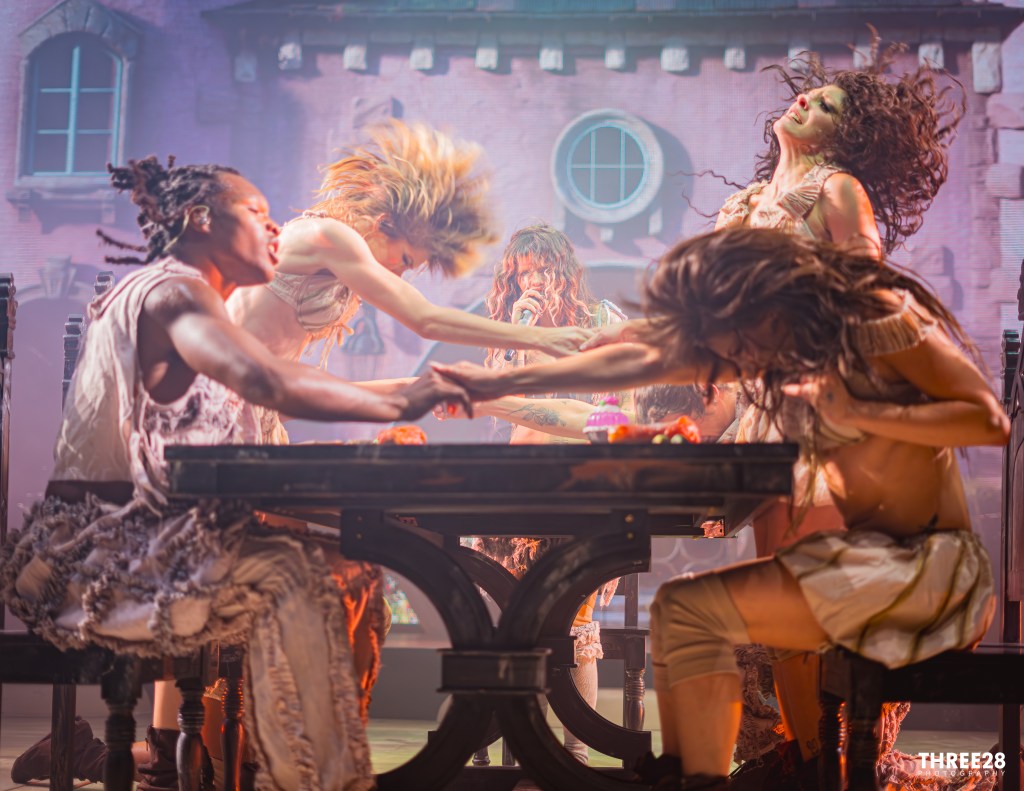
That sense of theatrical continuity is amplified by an extraordinary production design. The arena’s primary stage serves as the enormous visual canvas, but a smaller secondary stage sits in the middle of the floor, allowing Martinez to periodically abandon the distance of the main platform and materialize directly in the middle of her audience. The result is a production that continually manipulates perspective. One moment, Martinez is dwarfed by gigantic, nightmarish imagery; the next, she is close enough to the crowd that the spectacle becomes startlingly intimate. The props are equally elaborate, and the visual backdrops frequently feel closer to elaborate practical sets than conventional concert screens. Martinez has spoken about wanting this tour to be more immersive and cinematic, incorporating practical elements and camera illusions, and that ambition is unmistakable in the finished production. There is a deliciously disorienting quality to watching the imagery shift around her while the dancers populate the stage like inhabitants of some fever dream. The production never feels like decoration behind the music; it is an active participant in it.
And then there are the costumes. Martinez has always understood that her clothing is part of her storytelling, but the HADES era pushes that philosophy into stranger territory. Her outfits are elaborate, otherworldly and deliberately sculptural, while the dancers complement her with equally striking looks that make the entire ensemble appear to have escaped from the album artwork itself. The choreography is frequently ferocious, strange and almost physically uncanny, with the dancers moving as a unified organism rather than simply providing conventional backup. The visual language becomes particularly effective during the more aggressive songs, when the choreography, lighting and electronic production converge into something approaching controlled chaos. The dancers deserve enormous credit because they do not merely accompany Martinez; they help establish the emotional architecture of each number. Their bodies become another special effect, another layer of the mythology, another way for the audience to understand what Martinez is communicating without her having to spell everything out.

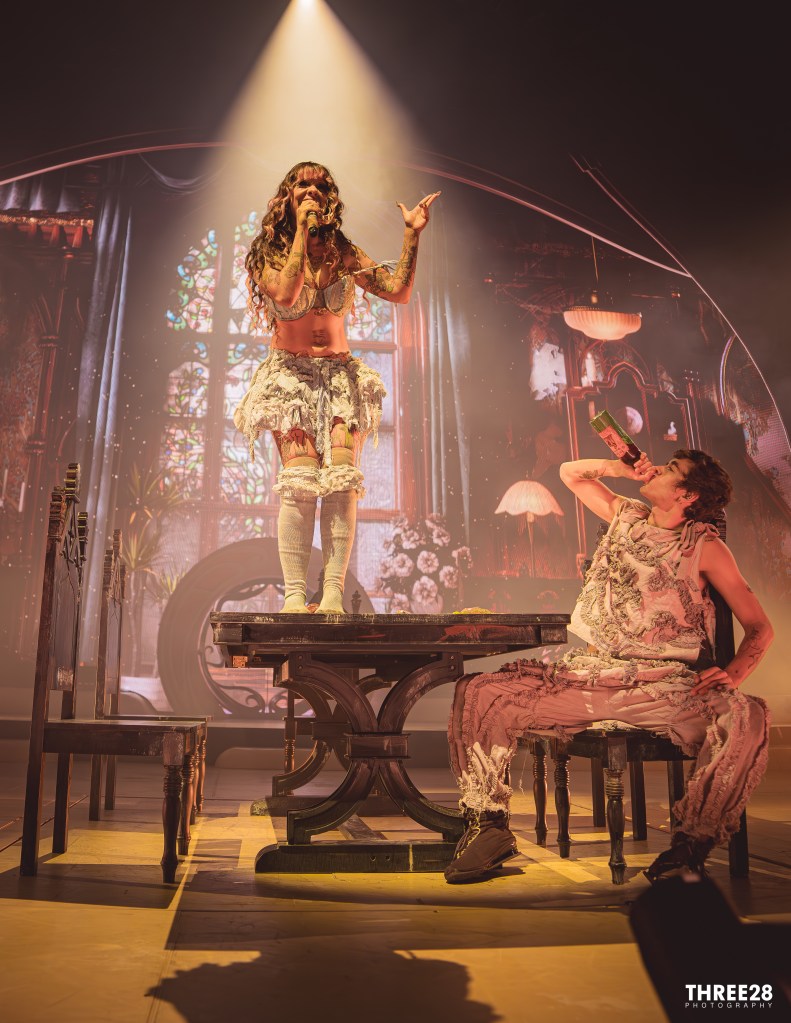
Musically, several songs take on a different magnitude in an arena. “POSSESSION,” with its deceptively catchy surface and increasingly sinister undertones, becomes a particularly potent live statement, while “DISNEY PRINCESS” demonstrates Martinez’s talent for taking familiar cultural imagery and twisting it into something uncomfortable. “GUTTER,” meanwhile, feels like one of the evening’s great dramatic centerpieces. Its darker atmosphere and social commentary acquire additional weight when surrounded by the massive production, while the accordion-driven musical texture gives the song an almost ritualistic quality. “THE VATICAN” is another spectacle altogether, building toward an extended dance break that allows Martinez and her dancers to take the theatricality to an almost absurd level. The music never becomes subordinate to the production, however; if anything, the elaborate visuals make the songs’ eccentric arrangements and sharper lyrical ideas easier to appreciate.

Yet perhaps the most impressive element of the night is the audience. Gas South Arena was filled with fans who did not simply recognize the songs — they inhabited them. The singalongs were startlingly loud, frequently threatening to overpower the arena’s sound system, and there was a communal quality to the response that made it obvious how deeply Martinez’s work has embedded itself in the lives of her listeners. The crowd itself became part of the visual spectacle. Everywhere one looked were fans dressed in colorful, meticulously assembled outfits inspired by Martinez’s various eras: echoes of Cry Baby, K-12, PORTALS and now the darker HADES aesthetic. Some costumes were subtle; others looked as though their wearers had spent weeks constructing them. That dedication says something important about Martinez’s relationship with her audience. Her fans are not passive consumers of the aesthetic — they participate in it. The concert becomes a gathering of people who understand the references, recognize the symbols and collectively scream every word back at the woman who created them. Even between songs, the crowd’s energy was almost its own performance.

Ultimately, HADES: THE SACRIFICE is a remarkable demonstration of what happens when an artist refuses to separate the album from the experience surrounding it. Martinez could easily have built a conventional greatest-hits set around a handful of HADES tracks, particularly given the popularity of her earlier material. Instead, she chose the riskier route: eighteen songs, presented as a single theatrical journey, with spoken interludes, elaborate props, constantly transforming backdrops, astonishing dancers, multiple stages, extravagant costumes and visual sequences that routinely approach the surreal. It is sometimes bizarre, occasionally overwhelming and deliberately uncomfortable — and that is precisely why it works. Martinez has spent her career proving that pop music can be simultaneously catchy and unsettling, beautiful and grotesque, childish and adult, intimate and enormous. At Gas South Arena, she took that philosophy to its logical conclusion. HADES: THE SACRIFICE is not simply a concert supporting her latest LP. It is a fully realized piece of performance art built around it, and by the time “THE LAST TWO PEOPLE ON EARTH” arrives as the encore on the smaller stage, the audience has not merely heard HADES. For roughly two hours, they were willingly trapped inside it.


Leave a Reply