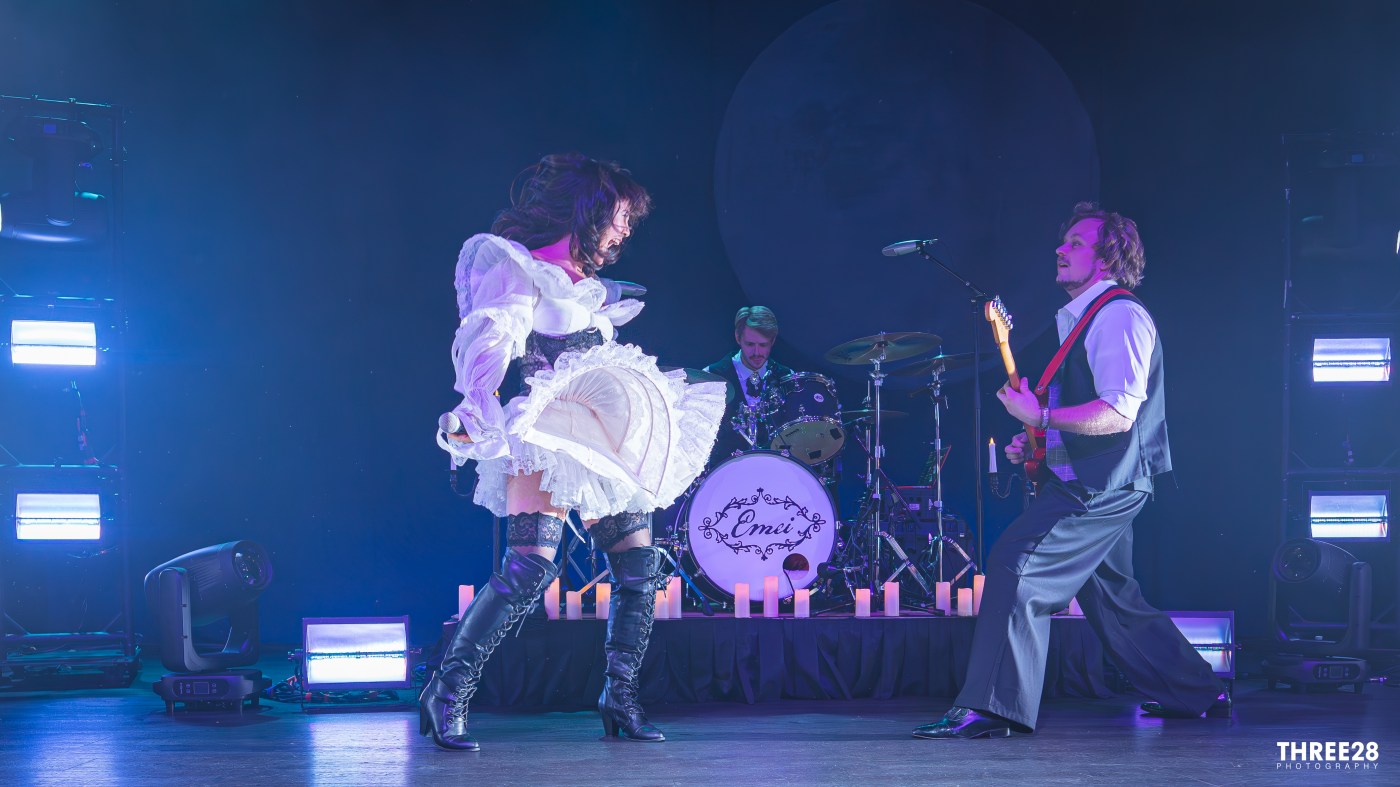
There are few better ways to prepare an audience for an evening of theatrical excess than blasting Britney Spears’ “Toxic” and Whitney Houston’s “I Wanna Dance With Somebody” through the speakers before the headliner even appears. At the Buckhead Theatre, these pop classics served as an unofficial overture, transforming the wait into a communal warm-up in which anticipation became part of the entertainment. When Emei finally took the stage for her Night at the Opera Tour, the transition from pre-show singalongs to full-scale performance felt less like the beginning of a concert than the raising of a curtain. Born Emily Li, the Chinese-American singer-songwriter has followed an unconventional route to rising-pop-star status. She first gained public attention as a teenager, placing third on Chinese Idol, before earning a degree in cognitive science at Yale University. Her breakthrough in the United States came through social media, where “Late to the Party” gained traction in 2022, followed by the success of “Scatterbrain” and a growing catalog of sharp, emotionally candid alternative pop. Her recent work embraces musical-theatre grandeur, exaggerated personalities, and the delicious absurdity of feeling everything at once. Night at the Opera is a natural extension of that sensibility, giving her songs a dramatic framework in which heartbreak, frustration, and self-deprecation become material for a miniature stage production. Emei may have found her audience online, but her live show makes a persuasive argument that she was always meant to occupy a stage.
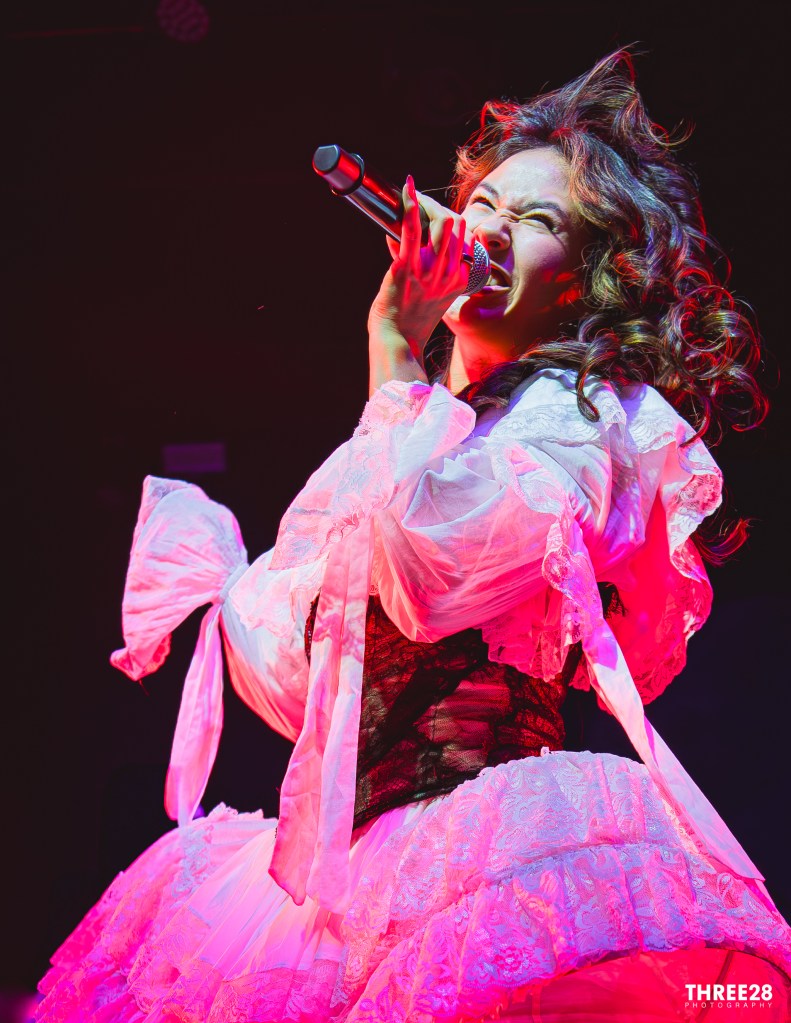
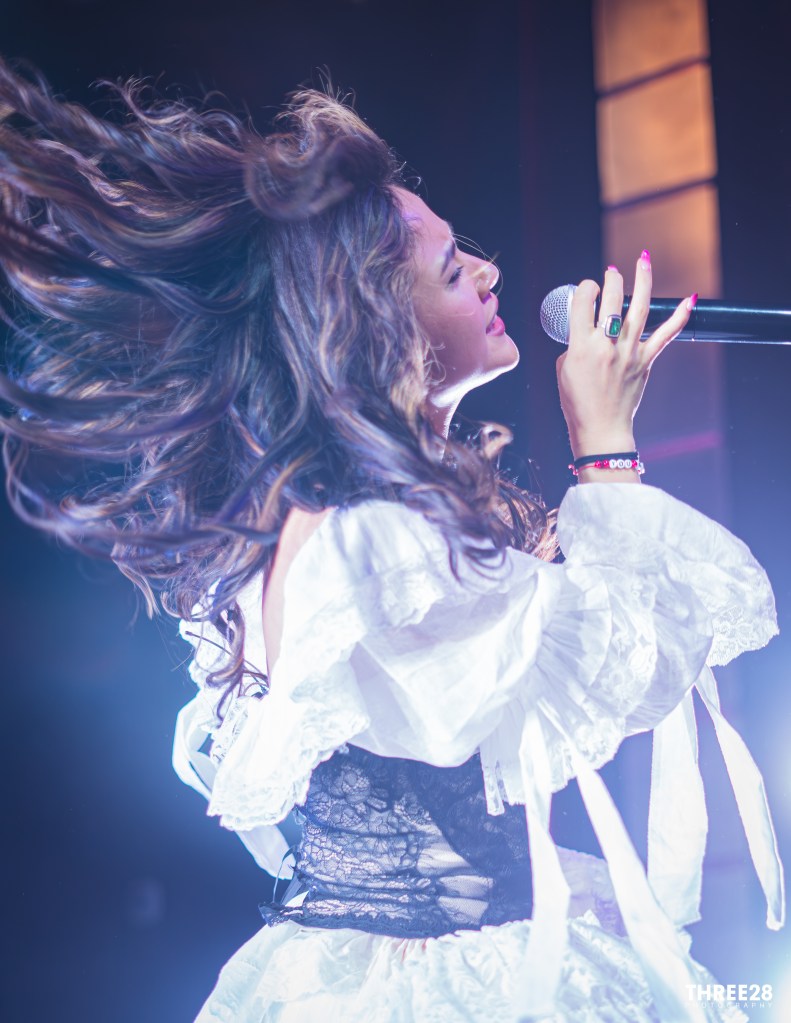
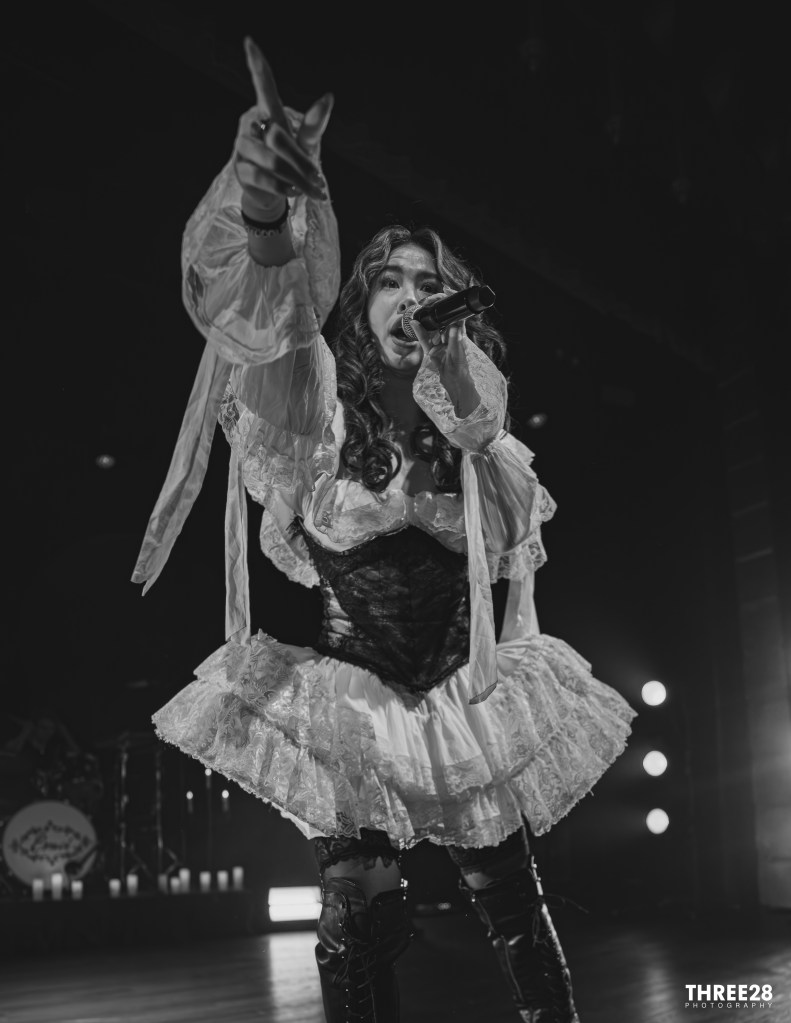
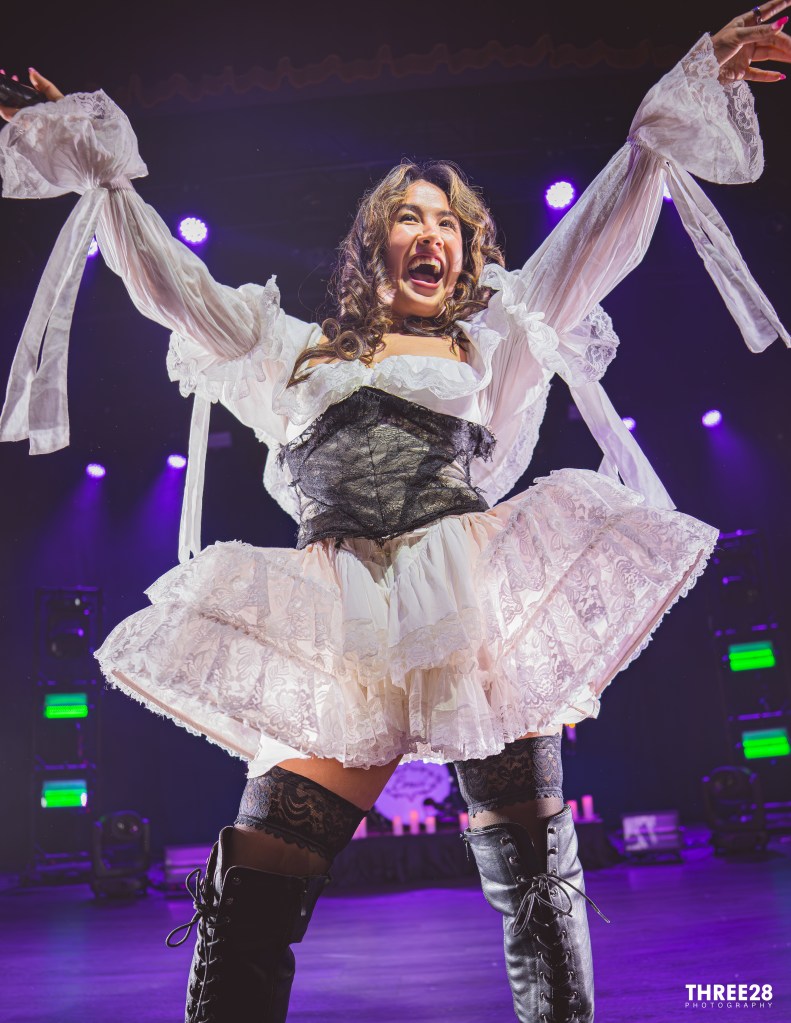
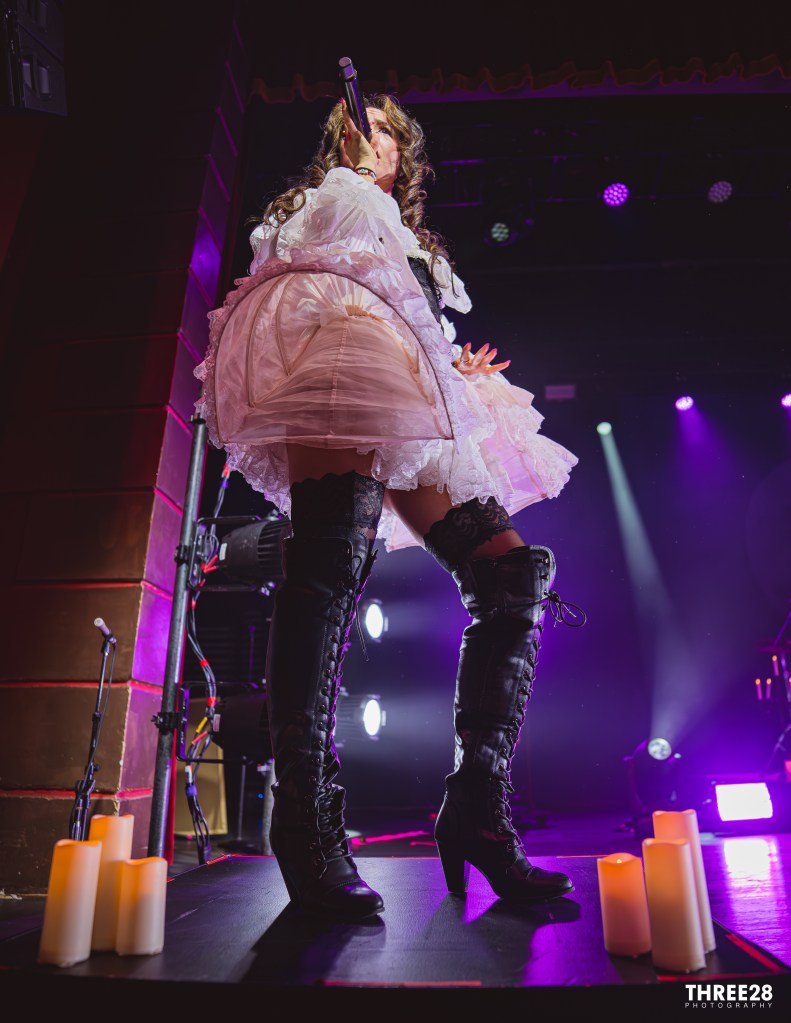
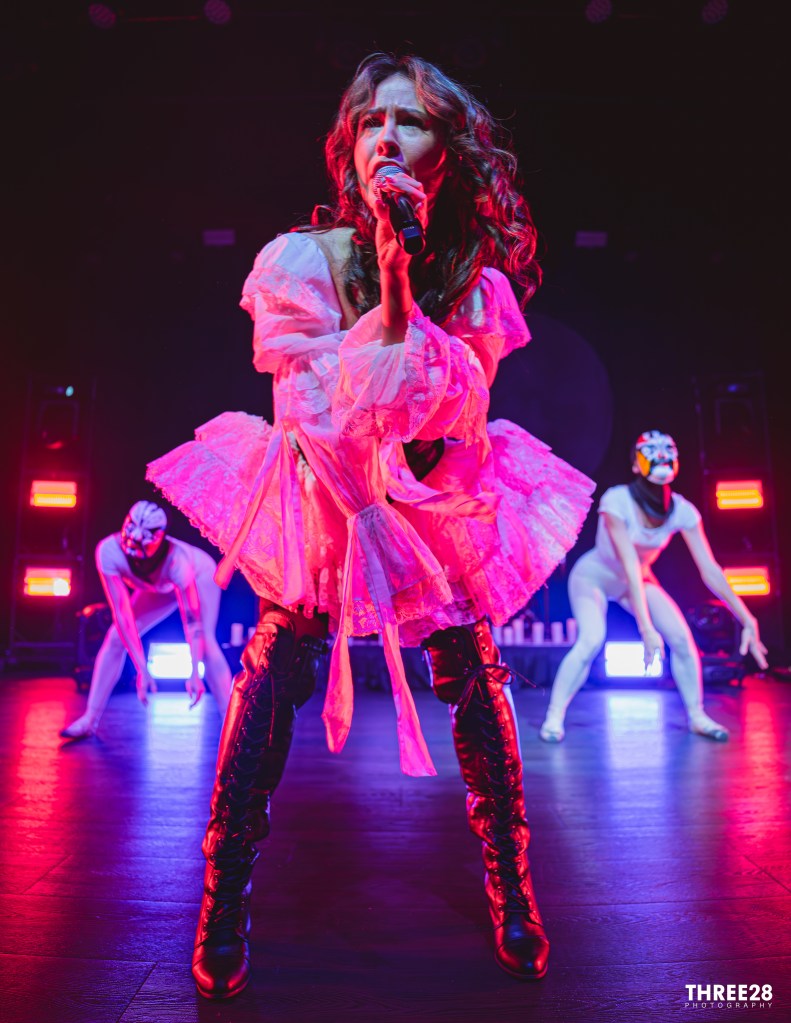
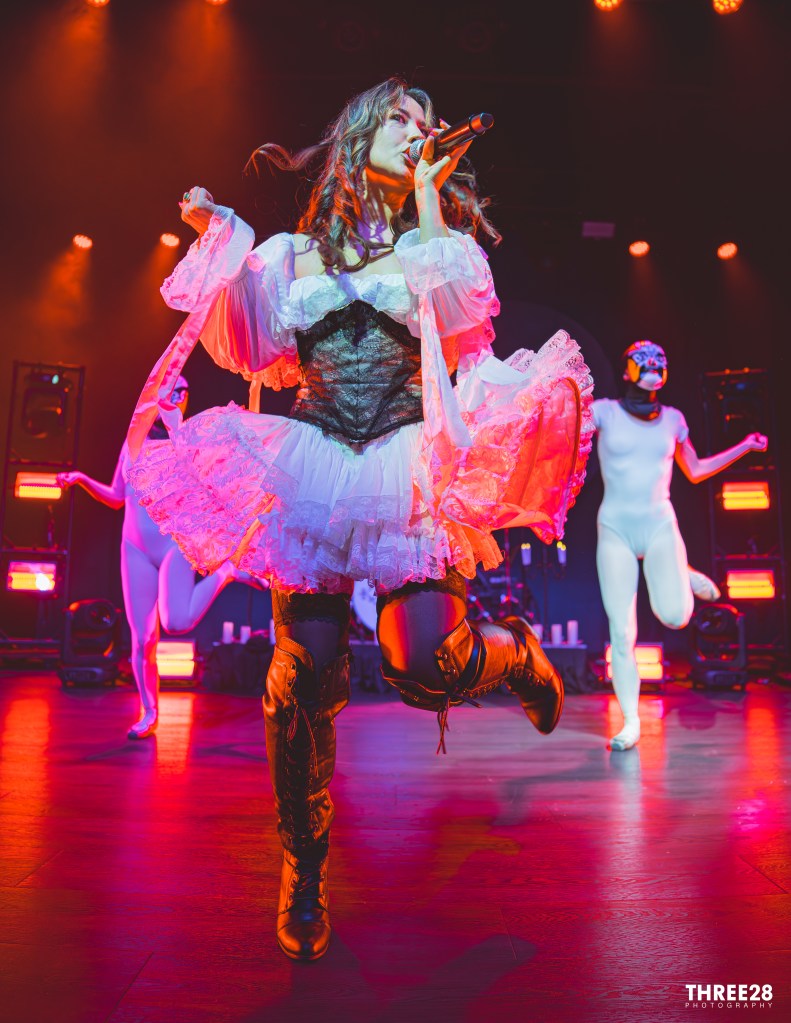
The opening sequence establishes the evening’s peculiar visual language with immediate confidence. Dancers emerge clad in white spandex that covers them from head to toe, their faces concealed behind sinister, theatrical masks reminiscent of Nuo Masks. The resemblance is striking, although the precise identification of the masks is difficult to establish from appearance alone; their exaggerated features and unsettling expressions are sufficient to give the choreography an uncanny quality. Against this procession of anonymous figures, Emei appears in a black-and-white ensemble, her voluminous white lace dress, fitted black corset, layered ruffles, and tall black boots creating a silhouette somewhere between Victorian opera heroine and mischievous gothic ingénue. Long ribbons trail from her sleeves, while her dark curls frame an enormous, almost mischievous smile. She looks delighted to be there, as though the elaborate production is an excuse to indulge every theatrical impulse she has ever entertained. The contrast between her exuberance and the dancers’ masked anonymity establishes an intriguing tension: she is the expressive protagonist surrounded by a chorus of beautifully unsettling apparitions. There is a touch of horror-film imagery in the presentation, but the effect is more playful than genuinely sinister. Rather than relying on expensive-looking scenery or a complicated narrative, Emei uses costume, movement, and lighting to create a distinctive visual identity. The result is an opening that feels carefully choreographed without becoming emotionally distant. The opera has begun, and the leading lady appears positively thrilled that everyone remembered to show up.
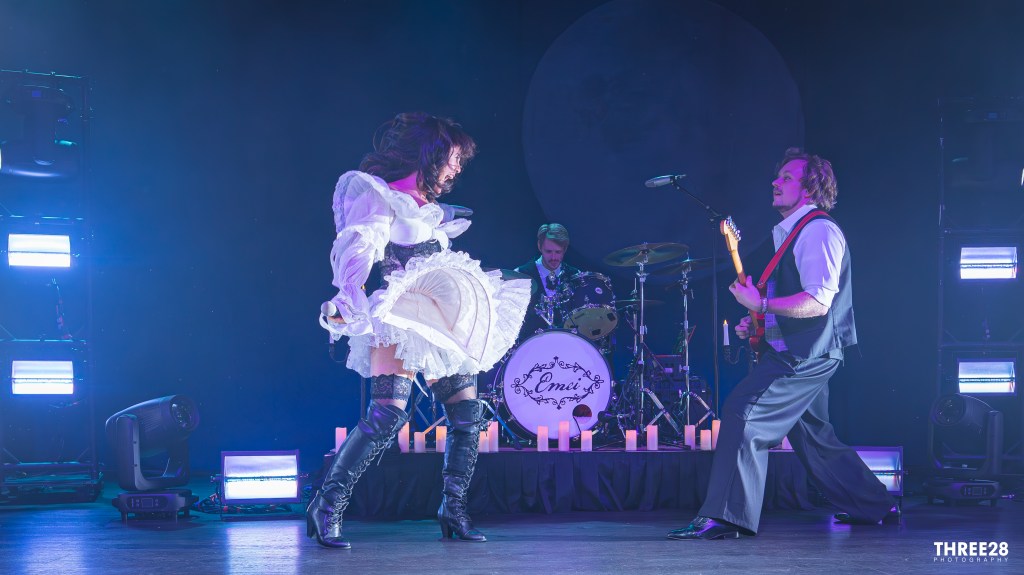
The first act proceeds at a pace that would exhaust a less committed performer. Emei possesses seemingly bottomless energy, moving between singing, dancing, theatrical gestures, and direct exchanges with the audience without allowing the production to lose momentum. She is not content to remain a distant figure beneath the spotlights; instead, she treats the crowd as an indispensable part of the evening’s unfolding drama. Her stage presence is particularly effective because it balances polished choreography with the impression of spontaneous enthusiasm. She can perform a deliberately exaggerated movement one moment and break into an unguarded grin the next, making the spectacle feel personal rather than mechanically rehearsed. At various points, she demonstrates her musical abilities by joining her drummer behind the kit, an entertaining reminder that the theatrical costumes and elaborate blocking are only part of her appeal. Elsewhere, she dances alongside the masked performers in sequences that borrow the heightened gestures of opera and musical theatre while retaining the rhythmic immediacy of contemporary pop. The juxtaposition is delightfully eccentric: traditional dramatic conventions are repurposed for songs about modern relationships, personal frustrations, and the indignities of everyday life. Occasionally, the sheer volume of activity threatens to make the show feel overstuffed, as though every transition must contain another visual surprise. Yet her enthusiasm is contagious enough to justify much of the excess. She performs with the conviction of someone who regards the stage not simply as a workplace but as an opportunity to unleash an unusually vivid imagination. If subtlety is not always the evening’s priority, commitment certainly is.
Beneath the theatrical flourishes, however, the most affecting moments arrive when Emei steps outside the performance long enough to speak candidly about her life. She discusses her battle with shingles in December, an unwelcome physical ordeal that adds a sobering dimension to the exuberance surrounding her. She also speaks about the death of her grandmother, a loss that has weighed heavily on her personal life. The disclosure is especially poignant given the importance of her grandmother to her upbringing and her connection to Chinese culture. For an artist whose public persona is so animated, the admission provides a glimpse of the grief and vulnerability that exist beyond the stagecraft. Emei does not linger in solemnity for long, but neither does she treat these experiences as throwaway anecdotes. Instead, she allows the audience to share in the emotional contradictions of a life that can contain genuine sorrow alongside an almost defiant appetite for joy. This openness becomes particularly engaging when she turns her attention to a fan named Olivia, whom she encourages to embrace a more positive outlook. The audience joins in, shouting, “Get Your Ass Up, Olivia!” The affectionate absurdity of the chant captures the spirit of the concert: encouragement delivered with the subtlety of a marching band and the tenderness of a friend refusing to let you wallow indefinitely. Emei then launches into “Molly,” and the transition feels less like a calculated set-list decision than an attempt to chase the bad vibes out of the room. The moment is funny, generous, and unmistakably human. Sometimes the best form of audience participation is a collective intervention in somebody else and terrible ordeal.
Act II brings a different kind of excitement, particularly when Emei introduces “Regularly Scheduled Program,” a newly released song that had been previewed during the tour. Its arrival gives the evening an additional sense of occasion, allowing the audience to encounter material from her latest chapter within the very environment that shaped its presentation. The song’s theatrical pop construction suits her instincts: dramatic shifts in mood, sharp emotional turns, and an arrangement that can move from playful melodic passages toward a more explosive release. Its central idea, the frustrating experience of believing one has moved on only to find oneself dragged back into familiar emotional turmoil, is well suited to Emei and her songwriting. She has a talent for presenting private irritation with such extravagant conviction that it becomes both relatable and entertaining. The song’s inclusion also demonstrates how the Night at the Opera concept can accommodate new material without feeling like a rigid framework imposed on the set. Emei’s growing catalog contains enough personality to sustain the production, while the theatrical structure gives individual songs a greater sense of continuity. The performance is particularly satisfying because it feels like an invitation into the next stage of her artistic development rather than a promotional interruption. There is a distinction between introducing a new song and making it feel as though it already belongs to the evening, and Emei manages the latter. The opera, it turns out, is still writing its next act.
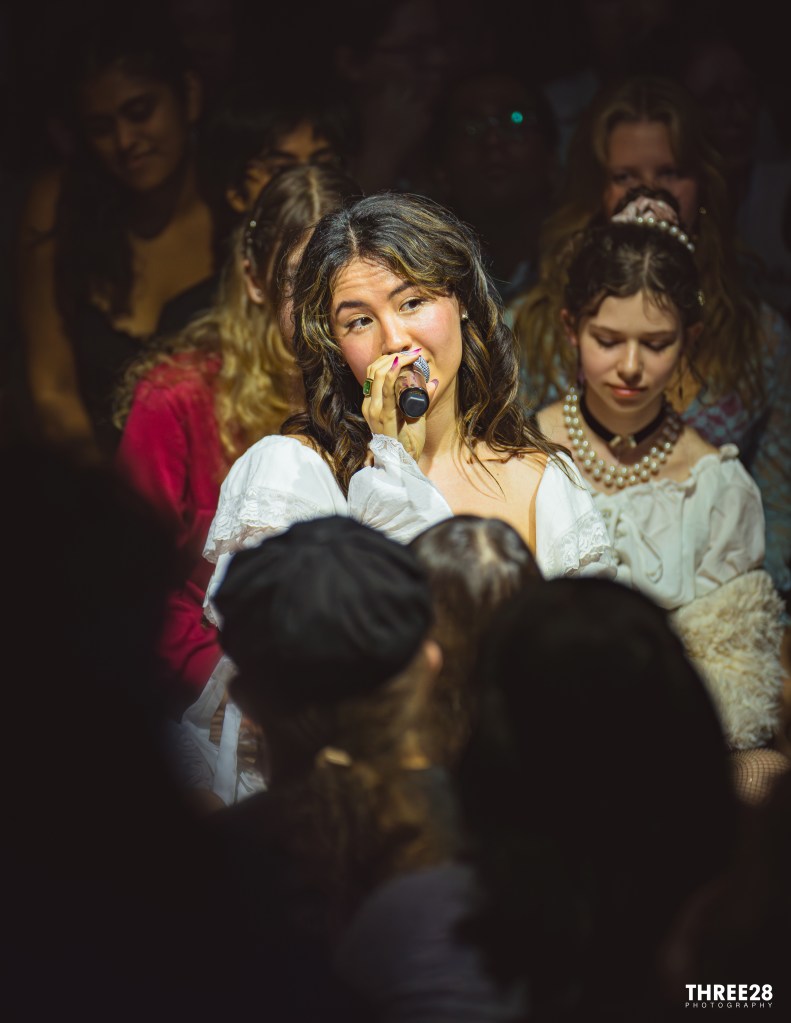
One of the most effective departures from the larger spectacle comes when Emei leaves the stage and settles directly among the audience. Rather than merely walking through the crowd for a brief moment of proximity, she invites everyone to sit on the floor as she performs a ballad. The change in scale is remarkable. After an evening of masked dancers, choreographed movement, and flamboyant costuming, the sight of an entire audience sitting together transforms the venue into something intimate and almost domestic. The arrangement strips away much of the visual machinery, leaving her voice, the song, and the people listening. It is a welcome reminder that theatrical ambition does not require constant escalation. Indeed, the quieter passage carries weight precisely because it contrasts with the exuberance surrounding it. Emei seems comfortable inhabiting both extremes: she can play the grand protagonist in an extravagant pop production and then become a singer sharing a vulnerable moment with a roomful of strangers. That flexibility is essential to the show’s success. Without it, the masks and costumes might feel like elaborate distractions; with it, they become part of a broader performance that understands the value of contrast. The audience is not simply watching a character enact a series of dramatic emotions. It is being invited to participate in an evening that makes space for grief, silliness, encouragement, and connection. For all the theatrical trappings, the most memorable scene is one in which the production temporarily asks everyone to sit down and listen.
The encore completes the evening with a satisfying return to its point of origin. After the intervening songs, emotional conversations, and excursions into the crowd, Emei closes with the tour namesake, “Night at the Opera,” reprising the song that opened the performance. The circular structure gives the show a sense of resolution without diminishing its restless spirit. The audience has traveled through two acts of heightened emotion and theatrical play, only to arrive back at the song that established the evening’s terms. It is an effective choice, both musically and conceptually: the ending reinforces the idea that her world is one in which drama is not an occasional indulgence but the organizing principle. Her strengths are considerable. She is an energetic performer, an engaging communicator, and a songwriter whose blend of alternative pop and musical-theatre sensibilities gives her a recognizable identity in an increasingly crowded field. There are moments when the choreography and visual flourishes threaten to crowd out the music, and the relentless enthusiasm can leave little room for stillness. Yet the quieter interlude demonstrates that she understands the importance of emotional breathing room, even if the production occasionally seems reluctant to take one. Ultimately, Night at the Opera succeeds because Emei commits fully to its premise while allowing glimpses of the person behind the costumes to emerge. The evening is dramatic without becoming joyless, eccentric without losing its warmth, and polished without entirely sacrificing spontaneity. Li does not merely bring the house down; she gives it a standing invitation to join the cast. And if life insists on turning itself into an opera, she seems determined to make sure the audience gets a good seat, a memorable chorus, and at least one opportunity to tell the bad vibes to take their final bow.


Leave a Reply