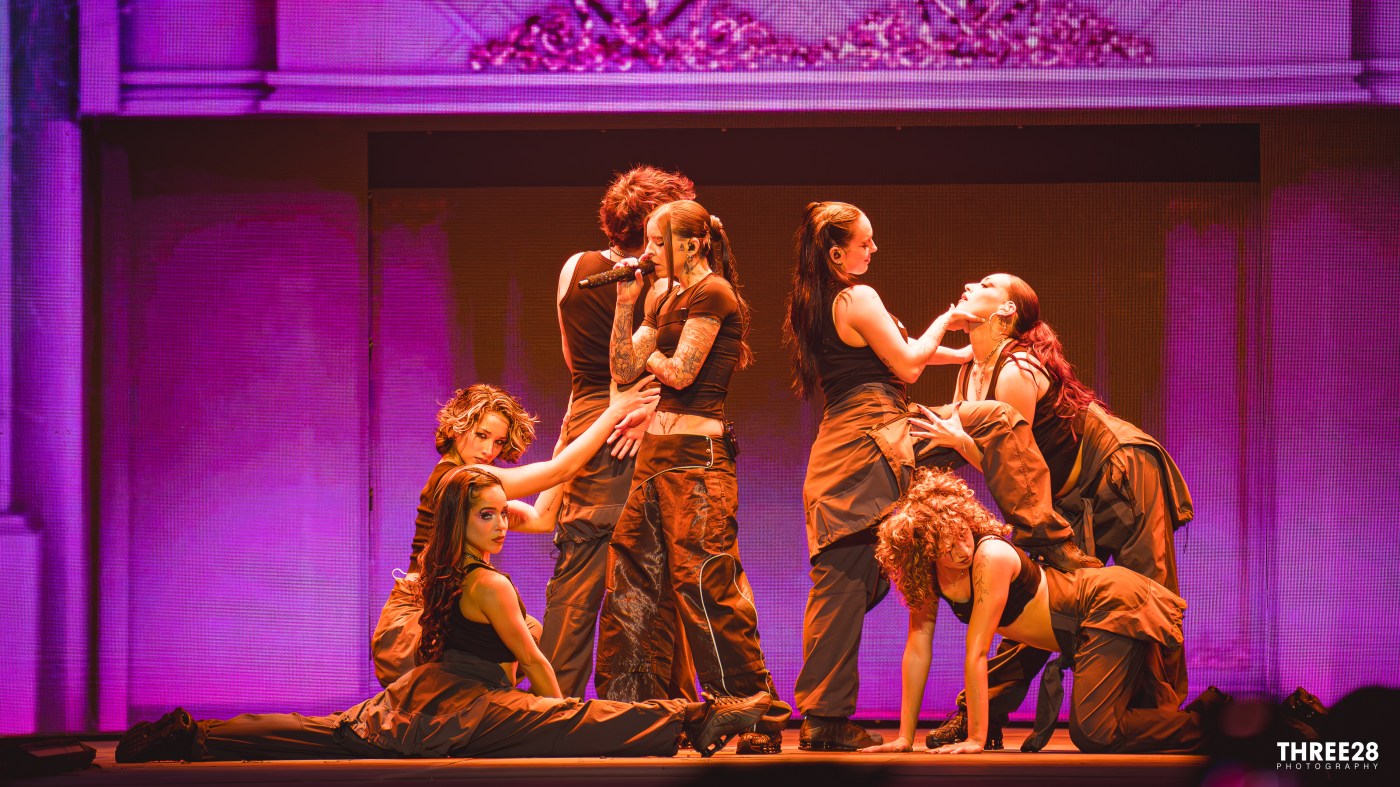
Young Miko wasted little time establishing that Halloween belonged to her, opening her Late Checkout Tour performance with “What’s Your Vibe?” and transforming the evening into a full-blown celebration dubbed Mikoween. The October 31 spectacle at State Farm Arena brought together music, fashion, theatrical flair, and an unmistakable sense of Puerto Rican pride. The occasion felt especially fitting for an artist whose identity thrives on individuality, irreverence, and a willingness to color outside the lines. Costumes were everywhere, with countless concertgoers embracing the spooky holiday through elaborate disguises, playful accessories, face paint, and imaginative interpretations of their favorite characters. The crowd itself became part of the production, creating an atmosphere somewhere between a Halloween party and a massive Latin music gathering. There was no shortage of personality in the audience, either; apparently, dressing up for Miko was less of a suggestion and more of a dress code. With a predominantly young fanbase, the energy was immediate, infectious, and occasionally deafening.
At just 28, Young Miko has established herself as one of the most compelling figures within contemporary Latin urban music. Born María Victoria Ramírez de Arellano in Añasco, Puerto Rico, she initially pursued tattoo artistry while developing her musical interests independently. Her early releases circulated through SoundCloud, where her distinctive delivery, unconventional flow, and unapologetic personality began attracting attention. Tracks such as “Riri” and “Lisa” helped establish her presence, while collaborations with prominent figures, particularly Feid on “Classy 101,” propelled her into a considerably larger international spotlight. Her breakthrough was not simply a matter of landing catchy singles; Miko brought a refreshing perspective to Latin trap, reggaeton, and rap, carving out a space through her androgynous aesthetic, confident lyricism, and effortless charisma. Her Grammy recognition, major festival appearances, and growing international following further cemented her arrival. Rather than conforming to established expectations, she has become an artist who challenges them, representing a younger generation increasingly comfortable with fluid identity, experimentation, and self-expression. Her ascent has been remarkably swift, yet her presence suggests someone entirely comfortable occupying the spotlight.
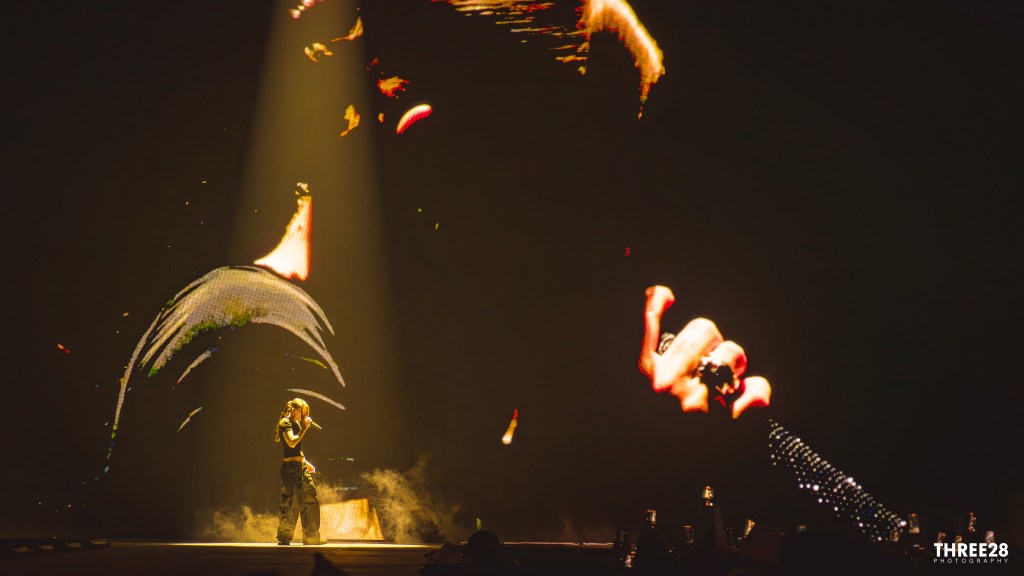
The production surrounding the performance was equally ambitious, featuring a multi-tiered arrangement that gave the stage considerable depth. At mid-height, positioned toward the rear, Miko’s live band supplied the musical backbone, remaining visible without competing for attention. Above them, the primary performance platform extended into a catwalk, allowing the headliner and her dancers to move freely throughout the venue-facing portion of the set. This separation created an appealing visual hierarchy, with musicians semi-hidden behind the principal action while choreography unfolded across the eye levels. Dominating the entire arrangement was an enormous screen, constantly projecting vivid imagery, elaborate animations, and psychedelic color combinations. Among its recurring motifs were representations of a luxurious, high-end hotel, that menacing scorpion, and the unmistakable Puerto Rican flag. These visuals provided a loose narrative thread throughout the evening, reinforcing the tour and its Late Checkout concept while celebrating Miko and her cultural roots. The screen never felt like a passive backdrop; rather, it functioned as another performer, continuously shifting the atmosphere and amplifying each musical passage. The result was a polished spectacle that balanced technological excess with the intimacy of a live band and an artist who knew exactly how to command a room.

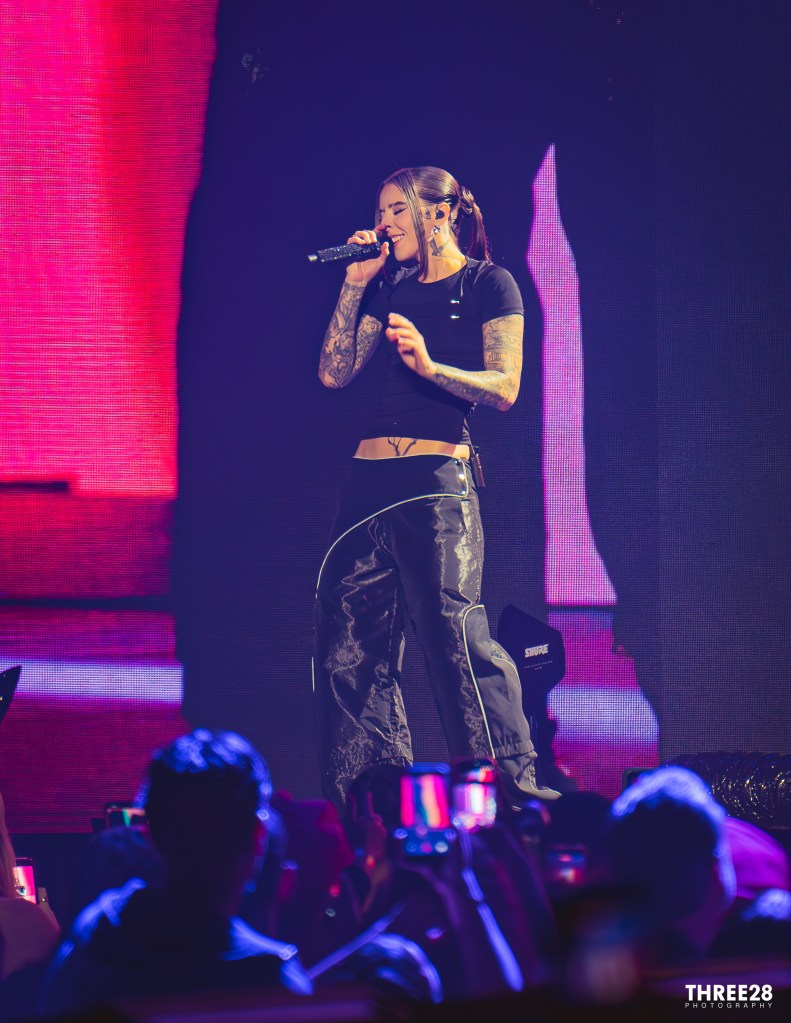
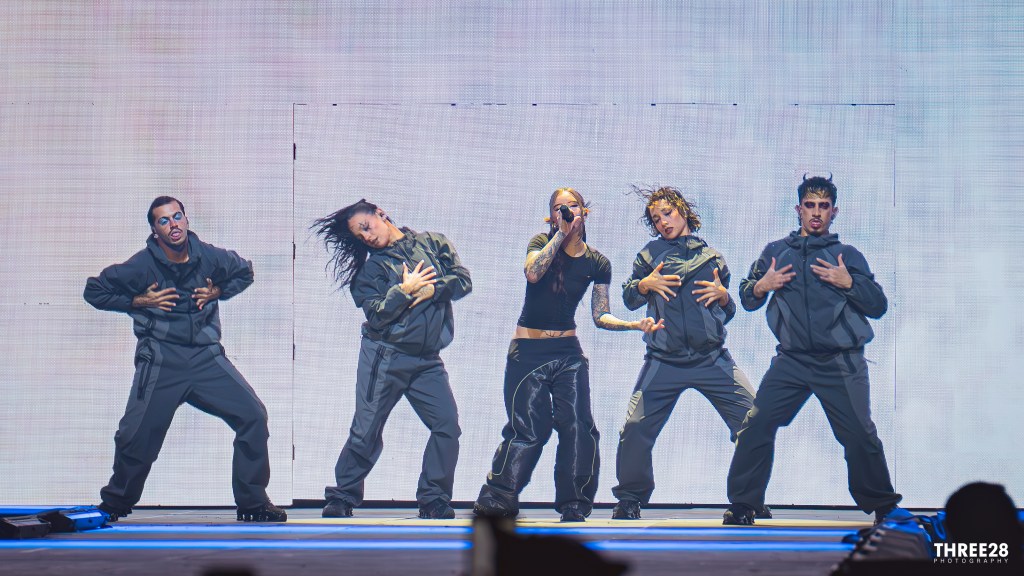
Fashion played an equally important role in establishing the evening’s character. Miko initially appeared in an all-black ensemble consisting of a cropped top and generously baggy trousers, an outfit that complemented the coordinated dark attire worn by her dancers. The look was understated in color but unmistakably confident in attitude, offering a sleek introduction before the production gradually became more extravagant. Her movement across the catwalk was fluid and assured, frequently accompanied by synchronized choreography that gave the performance additional momentum. At one point, “Traviesa” provided another opportunity to showcase her playful stage presence, with the surrounding dancers reinforcing the track’s infectious rhythm. Miko possesses an appealing ability to alternate between commanding attention and appearing completely at ease, as though performing before thousands were simply another Friday evening activity. Her swagger never seemed forced, and her interactions with the audience conveyed an artist who genuinely enjoyed the spectacle she had created. The costume coordination also gave the entire ensemble a cohesive identity, making the opening portion feel like a carefully assembled visual statement rather than a collection of individual outfits.
Midway through the performance, Miko introduced a wardrobe change that shifted her aesthetic without sacrificing its original attitude. She returned wearing ripped black jeans and a distressed white shirt, creating an effortlessly urban appearance that felt equal parts streetwear and rock-inspired rebellion. Beneath the torn fabric, however, was an especially entertaining surprise: a black-and-red Spider-Man top ala Miles Morales, a subtle nod to the beloved animated superhero. It was a clever touch, perfectly suited to an evening built around costumes, comic-book references, and youthful imagination. The ensemble also reinforced her ability to incorporate personal interests into her public image without making anything appear overly calculated. Later, carrying a Puerto Rican flag, Miko draped it around her neck before leaving the main platform and venturing into the audience pit. She reached toward fans, clasping hands and exchanging high-fives with several concertgoers who were fortunate enough to find themselves within arm’s reach. The gesture provided one of the evening’s warmer moments, temporarily replacing the grandeur of the production with a direct connection between performer and audience. For an artist whose success is increasingly international, that display of cultural pride felt particularly meaningful. She did not merely wear her heritage as an accessory; she carried it into the crowd.
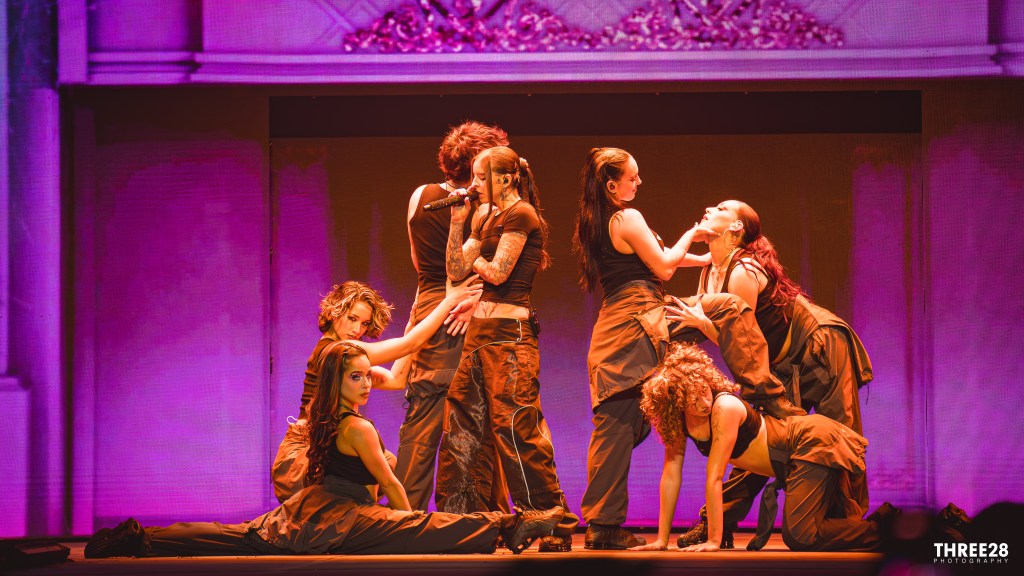
By the closing stretch, Mikoween had become precisely what its name promised: an extravagant celebration of an artist whose appeal extends well beyond her recordings. Young Miko’s greatest strength lies in her ability to make a large-scale production feel personal, balancing confident showmanship with spontaneous humor, genuine affection, and a playful disregard for convention. Her youthful supporters supplied much of the evening’s electricity, singing along, dancing, waving flags, and responding to every interaction with extraordinary enthusiasm. Yet the performance also demonstrated that her appeal is not solely dependent on social media popularity or a handful of viral moments. The live instrumentation, elaborate staging, coordinated choreography, and carefully considered visual identity reflected an artist increasingly capable of delivering a complete arena experience. As “WASSUP” brought the evening toward its final moments, the celebration reached a fitting conclusion, leaving little doubt that Miko had successfully checked out of ordinary concert territory. Halloween may have provided the occasion, but the real attraction was the woman onstage. If this is what happens when Young Miko checks into a hotel, perhaps nobody should bother requesting a checkout time.


Leave a Reply