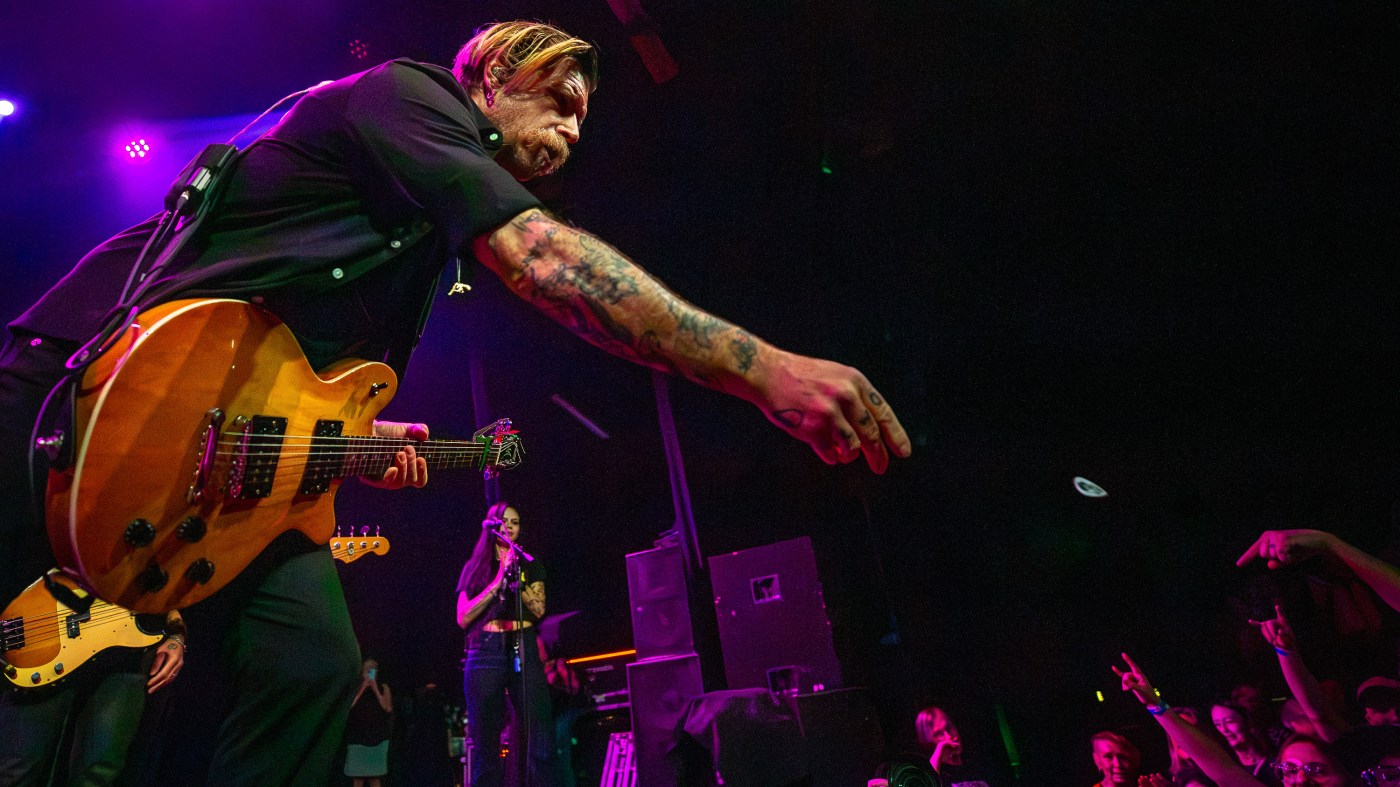
Photos by Ryan Fleisher
There are bands that arrive at a concert venue to perform, and then there are bands that seem to have wandered in from the nearest bar after somebody promised them electricity. Eagles of Death Metal have always belonged firmly in the second category. At Center Stage, in front of a packed crowd, the California outfit delivered a performance that felt less like a conventional concert than a particularly well-organized bar fight — only everybody brought guitars and nobody seemed interested in going home. The room was full before the first note, a testament to the peculiar staying power of a band that has never needed to fit neatly into anybody’s genre box. Founded in Palm Desert in 1998 by lifelong friends Jesse Hughes and Josh Homme, Eagles of Death Metal began as an irreverent collision of garage rock, blues, boogie, hard rock and desert swagger. Despite the wonderfully misleading name, there is precious little death metal involved. The joke was always the point. The music was built to move bodies, raise eyebrows and make rock ’n’ roll feel mischievous again. Their catalog, from Peace Love Death Metal through Death by Sexy and Heart On to Zipper Down, has maintained that philosophy even as the production became more refined: never confuse sophistication with seriousness.
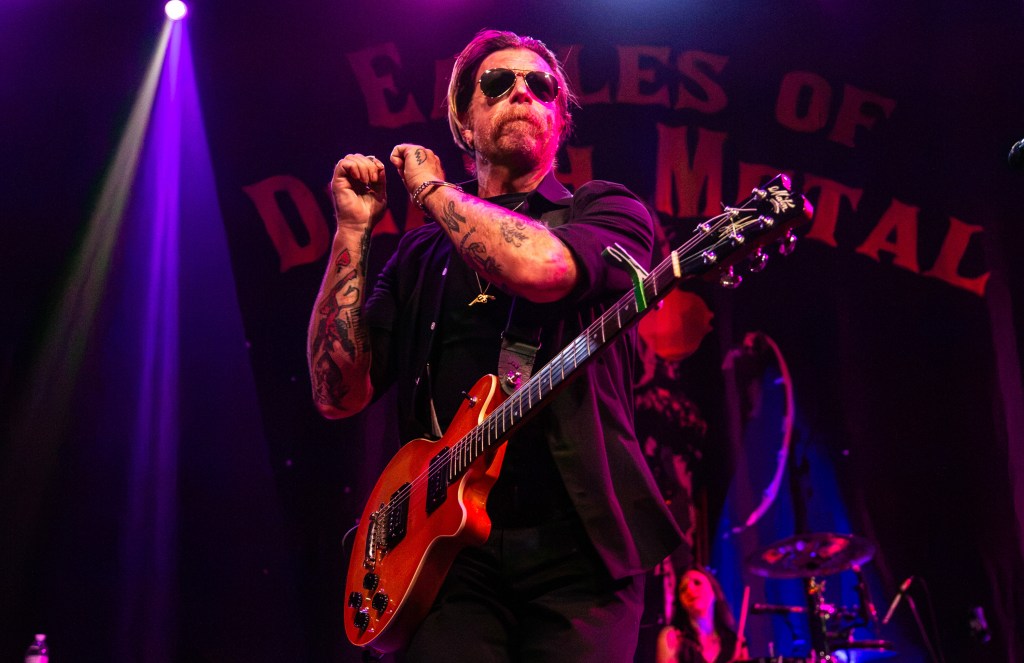
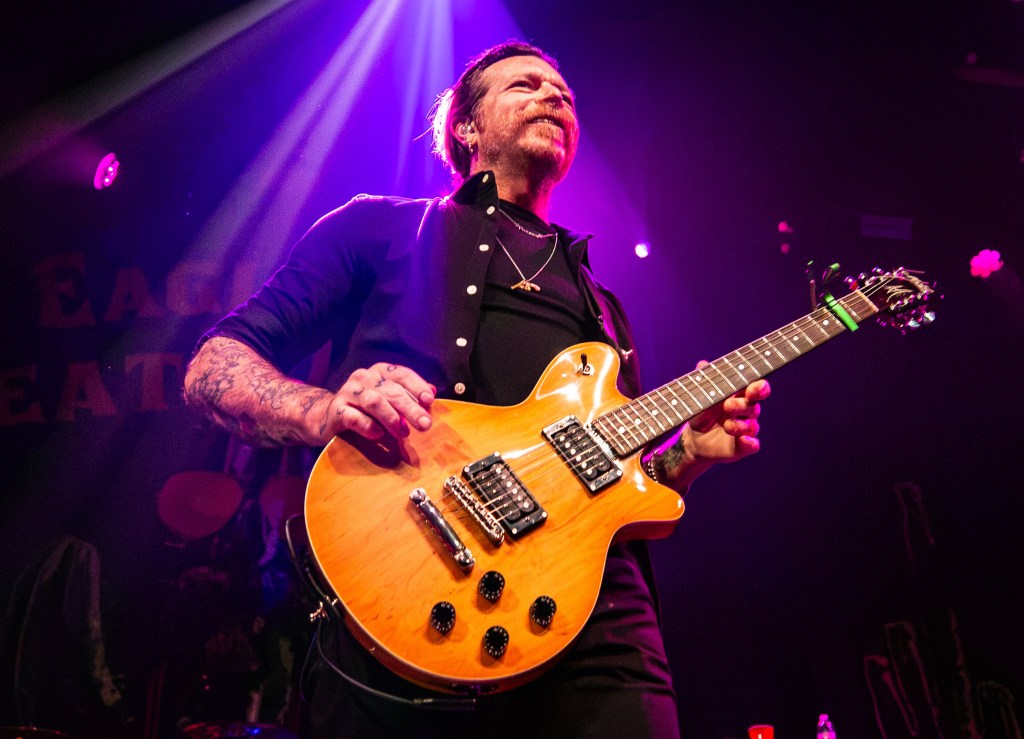
That irreverence is central to what Eagles of Death Metal represent within their corner of rock. They emerged from the same California desert ecosystem that produced Kyuss and eventually Queens of the Stone Age, but they took a markedly different road. Where Homme’s Queens project could turn a riff into something ominous and monumental, Eagles of Death Metal preferred to put on sunglasses, loosen the belt and make the riff buy everyone a drink. Their aesthetic owes as much to classic rock, glam, blues and rockabilly as it does to garage punk. The result is music that understands the history of rock without behaving as though it is trapped inside a museum. There is an almost deliberate refusal to be precious about it. “Wannabe in L.A.,” “I Only Want You,” “Don’t Speak” and “Whorehoppin’” work because they are uncomplicated in the best possible sense: guitar, groove, attitude and a chorus that does not require a doctoral dissertation. That quality has made the band something of a cult institution. They are not trying to reinvent rock music every night. They are reminding audiences why people fell in love with it in the first place. The band’s history also carries a much heavier chapter, following the 2015 terrorist attack at Paris’s Bataclan during their performance, an event that killed 89 people inside the venue. The fact that Eagles of Death Metal continued to perform afterward adds another dimension to their relationship with live music: for them, the stage is not simply a workplace. It is where the band’s identity becomes tangible.
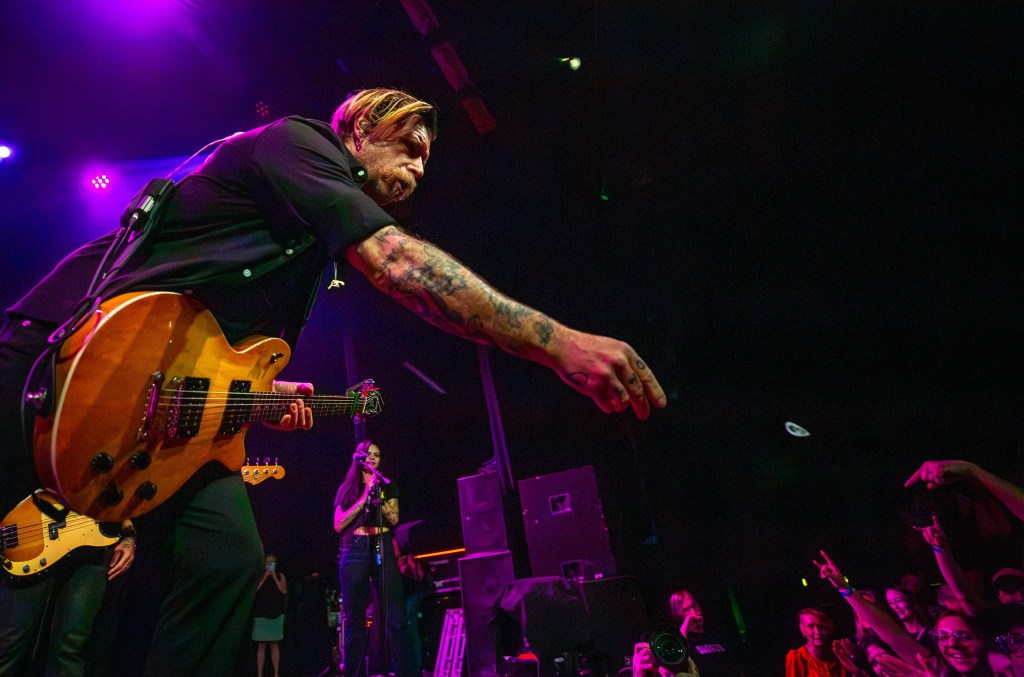
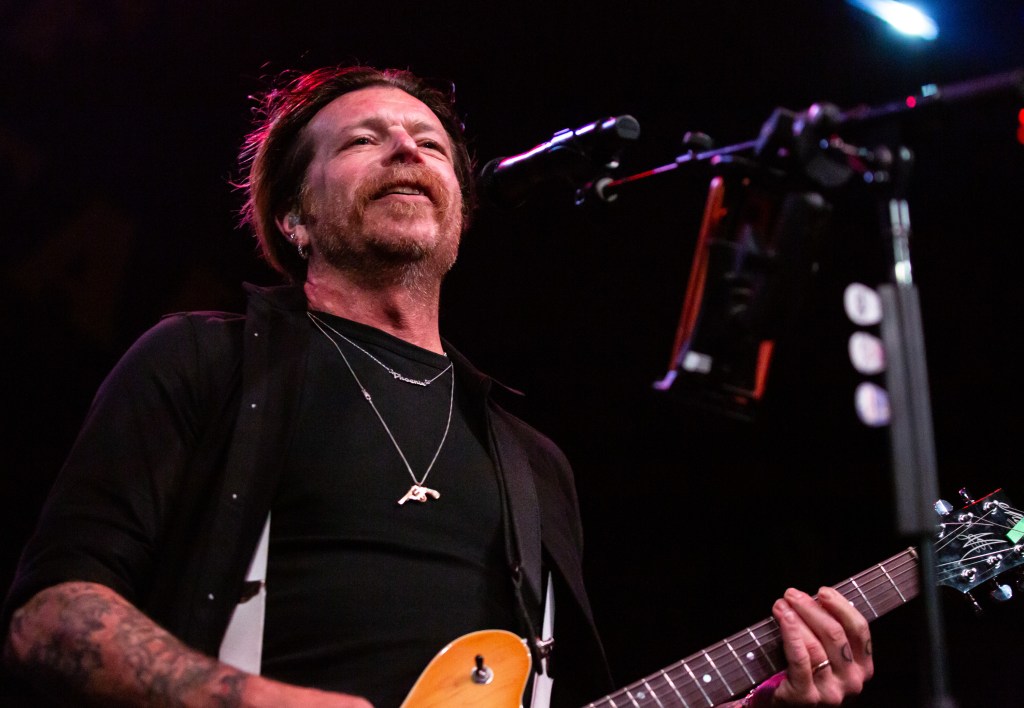
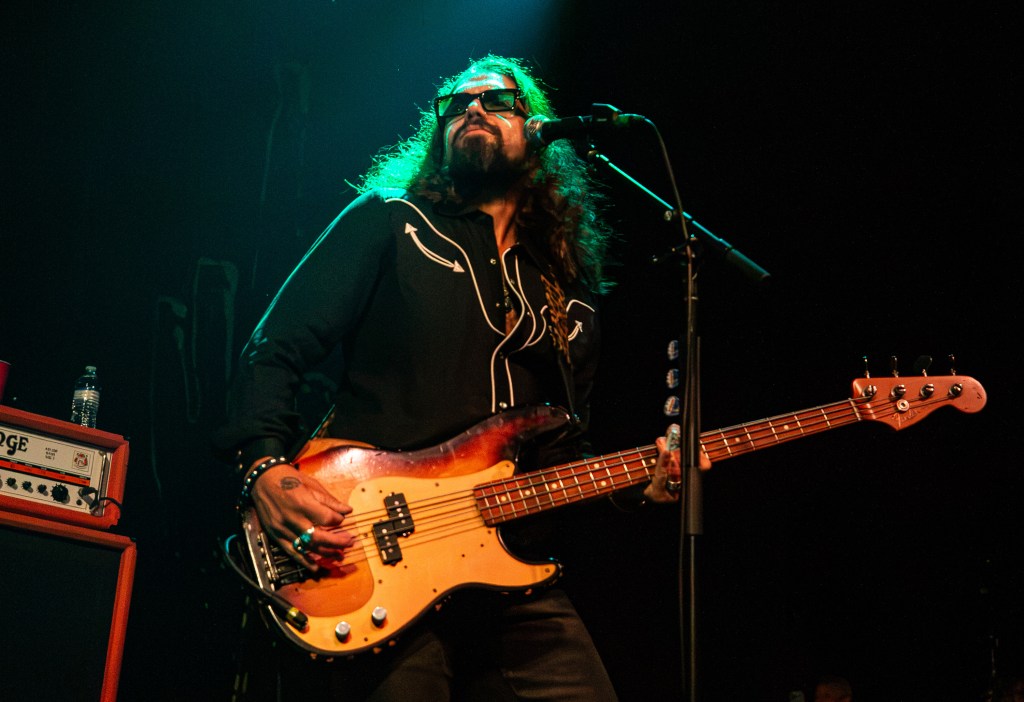
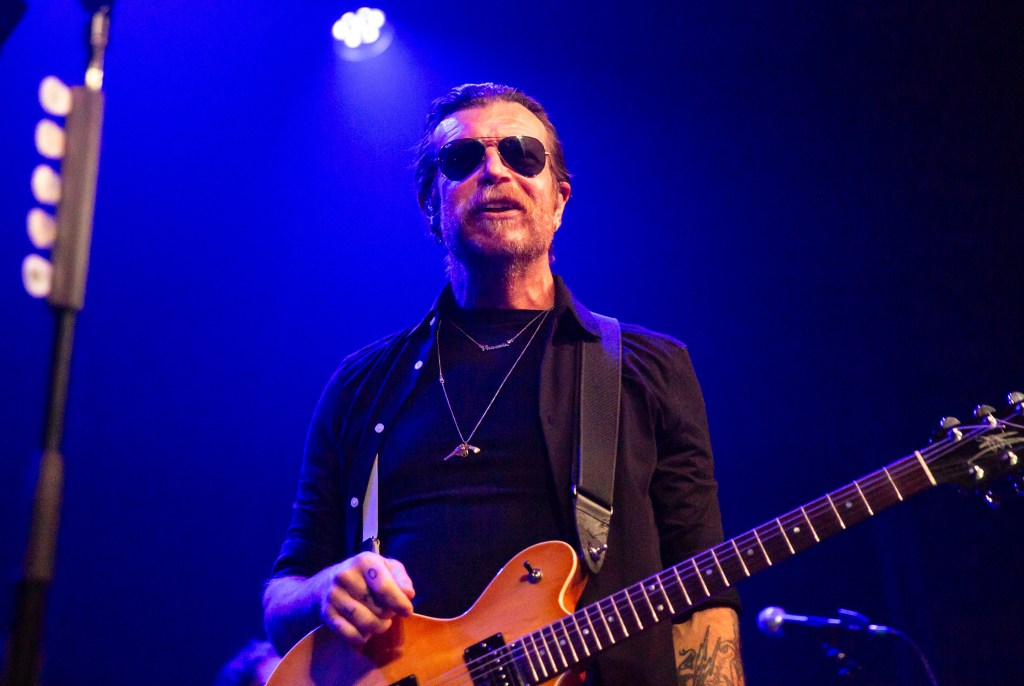
At the center of that identity is Jesse Hughes, a frontman who seems biologically incapable of standing still for an entire song. Hughes is the essential Eagles ingredient — the mustache, the swagger, the theatrical poses, the knowing grin and the sense that he might abandon the setlist at any moment simply because something more entertaining has occurred to him. Homme may have been the musical architect and remains Hughes’ lifelong creative partner, but Hughes is the character who gives the band its face. Homme’s influence remains inseparable from the group’s DNA even while his Queens of the Stone Age responsibilities keep him largely away from the road with Eagles of Death Metal. The fascinating thing about the band live is that Hughes does not attempt to recreate a studio lineup so much as assemble a crew capable of preserving the spirit of the thing. At Center Stage, that meant surrounding him with Scott Shiflett, Leah Bluestein, Eric Epple and Dustin Douglas. Each brought a different piece to the puzzle. Shiflett supplied the guitar muscle and rhythmic confidence necessary to keep Hughes free to become the evening’s ringmaster. Bluestein provided the engine from behind the kit, giving the songs the snap and forward motion they require. Epple added another sonic layer without cluttering the proceedings, while Douglas helped anchor the low end and keep the whole operation from flying apart under Hughes’ relentless stage energy. They did not look like interchangeable hired hands. They looked like musicians who understood the assignment: preserve the sleaze, the humor and the groove without sanding off the rough edges.
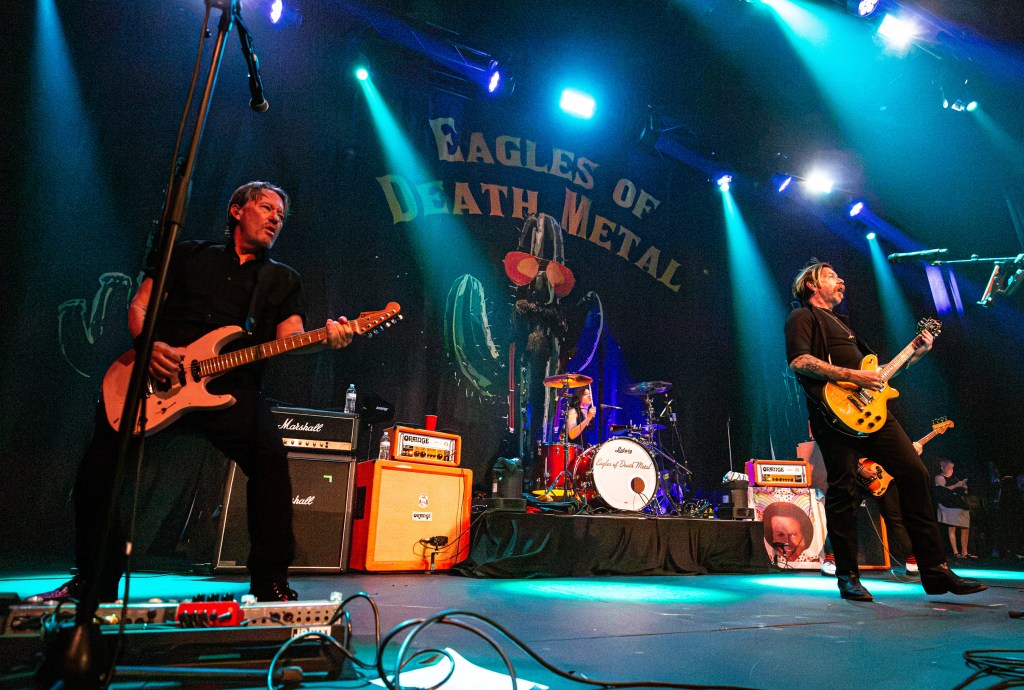
And rough edges are precisely where Eagles of Death Metal live best. Their concerts have always possessed the atmosphere of a dive bar that somehow acquired a professional lighting rig. There is sweat, volume, swagger and just enough danger to keep everyone alert. Hughes works a room rather than merely singing to it. He plays with the audience, flirts with the absurdity of rock-star mythology and repeatedly reminds everyone that this music is supposed to be fun. The Center Stage crowd responded accordingly. By the time songs such as “I Only Want You” and “Wannabe in L.A.” rolled through the room, the distinction between stage and floor seemed increasingly academic. The band thrives on that exchange. A pristine, technically flawless presentation would actually miss the point. Eagles of Death Metal are better when the guitars sound like they might leave fingerprints, when the rhythm section feels like it has been installed in the back room of a questionable establishment and when Hughes looks like he is having considerably more fun than any responsible adult should be allowed to have while holding a microphone. There is musicianship underneath the spectacle, certainly, but the band never permits musicianship to become self-important. Every flourish serves the groove. Every joke serves the atmosphere. Every riff seems designed with one question in mind: are people moving yet?
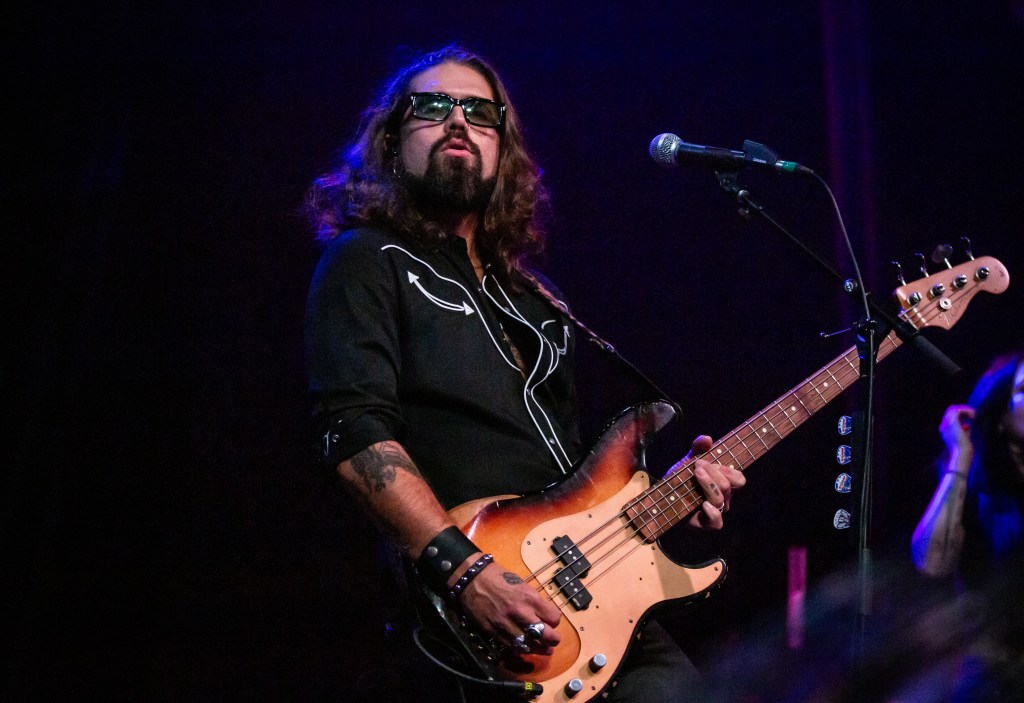
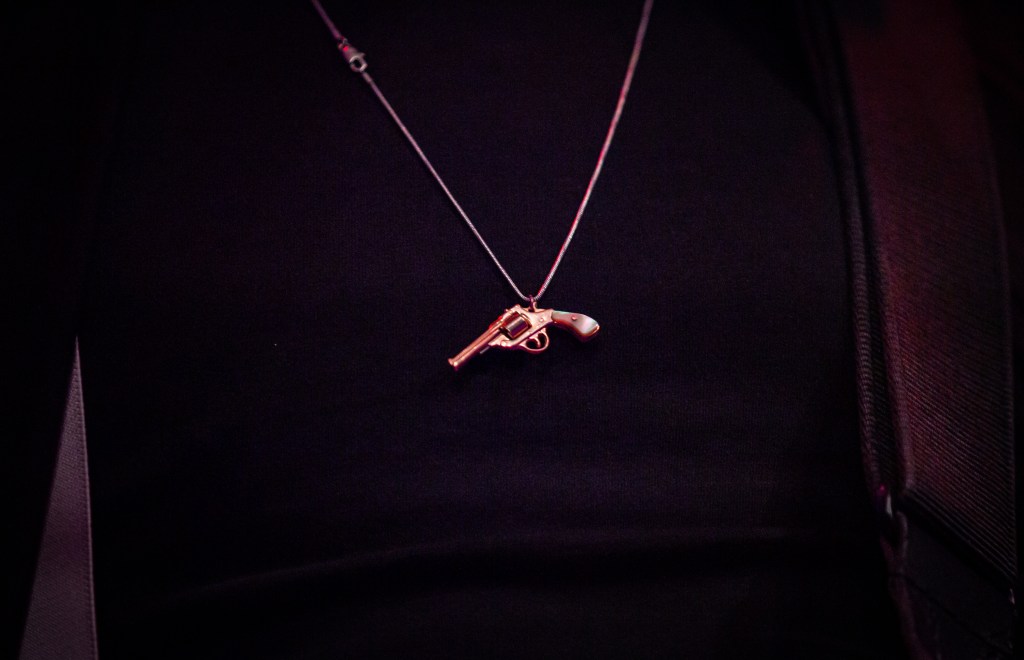
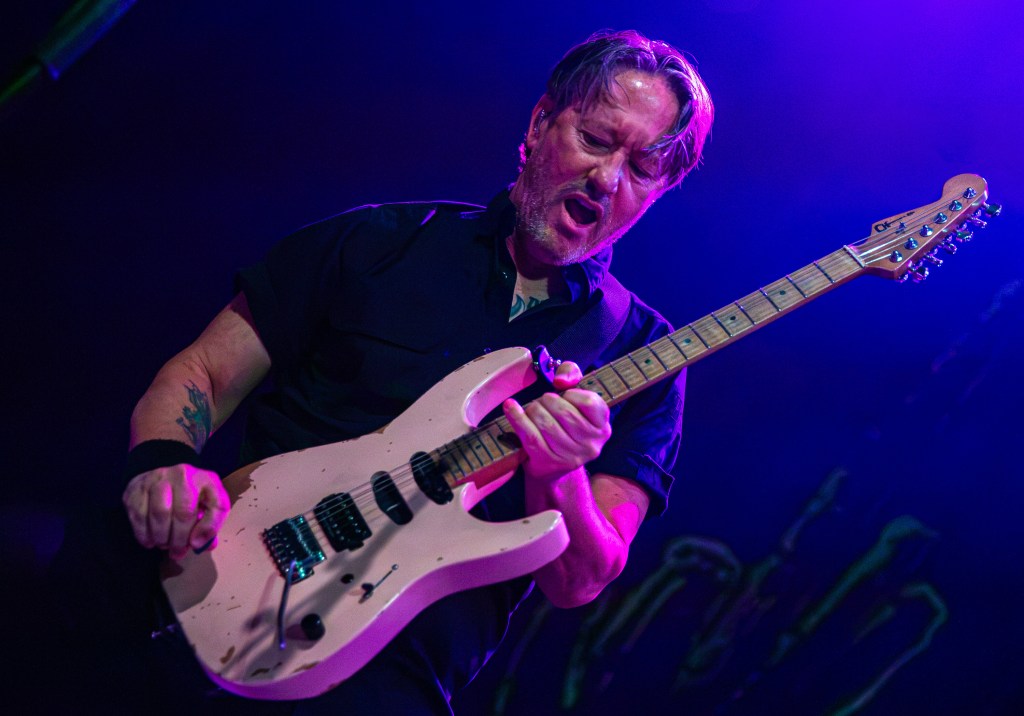
What made the Center Stage performance particularly satisfying was the way the current musicians preserved that old-school chemistry without turning it into nostalgia. Eagles of Death Metal can easily be described through references to their past—the Palm Desert scene, Homme, the early records, the tours and the decades of accumulated rock mythology—but the show itself did not feel like a heritage act checking boxes. It felt immediate. Shiflett, Bluestein, Epple and Douglas approached the material with enough individuality to make it breathe, yet they never overwhelmed the personality of the songs. Hughes, meanwhile, remains a remarkably effective frontman precisely because he has never confused coolness with charisma. He does not need to look detached. He needs to look delighted, dangerous, ridiculous and completely committed, sometimes within the same thirty seconds. That is the Eagles’ particular trick. The band can play a dirty, blues-soaked riff with the conviction of a group defending rock ’n’ roll’s honor while simultaneously making the whole enterprise feel like a joke they are generously allowing the audience to understand. It is an aesthetic that could easily collapse into parody in lesser hands. Here, it works because the musicians genuinely believe in the music underneath the wink.
By the end of the night, the packed Center Stage room had been reminded of something that can become surprisingly easy to forget in an era of immaculate productions and algorithmically engineered playlists: rock music does not always need to be complicated to be meaningful. Eagles of Death Metal represent a stubborn, gloriously unserious strain of the genre that values personality over polish, groove over grandstanding and participation over passive observation. Jesse Hughes remains the beating heart of that philosophy, while the musicians around him supply the horsepower that turns the concept into a living, breathing concert. Homme’s absence from the road does not diminish his importance; if anything, the rotating cast of contributors demonstrates how durable the foundation he and Hughes built nearly three decades ago has become. At Center Stage, that foundation held. The guitars barked, the drums pushed, the crowd surged and Hughes worked the room like a man who had just discovered that someone had left the door to the coolest dive bar in town unlocked. Eagles of Death Metal may have one of rock’s most misleading names, but their mission has never been particularly mysterious. They want people to have a damn good time. In Atlanta, they succeeded with the subtlety of a Marshall stack at midnight—and nobody in the packed room appeared eager to complain.


Leave a Reply