Photos by Ryan Fleisher
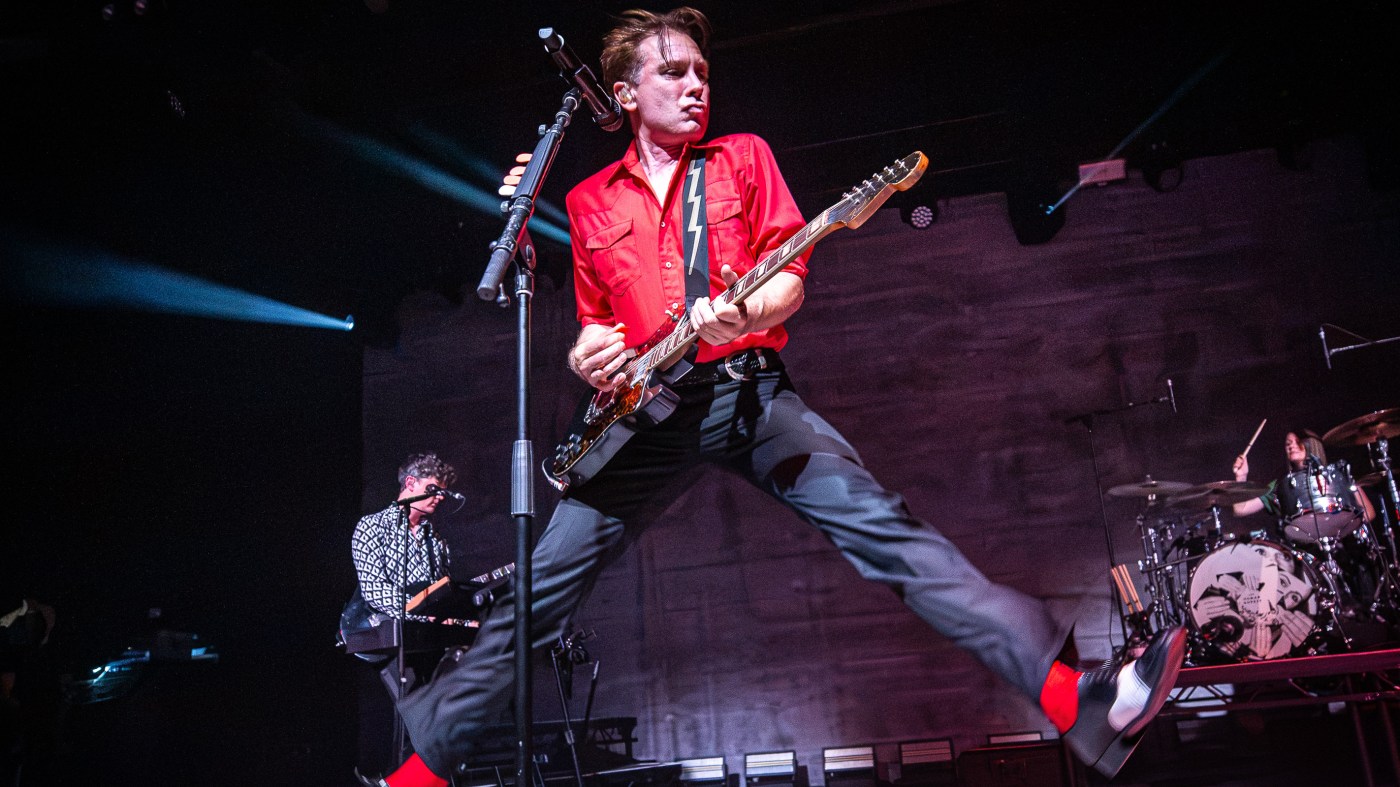
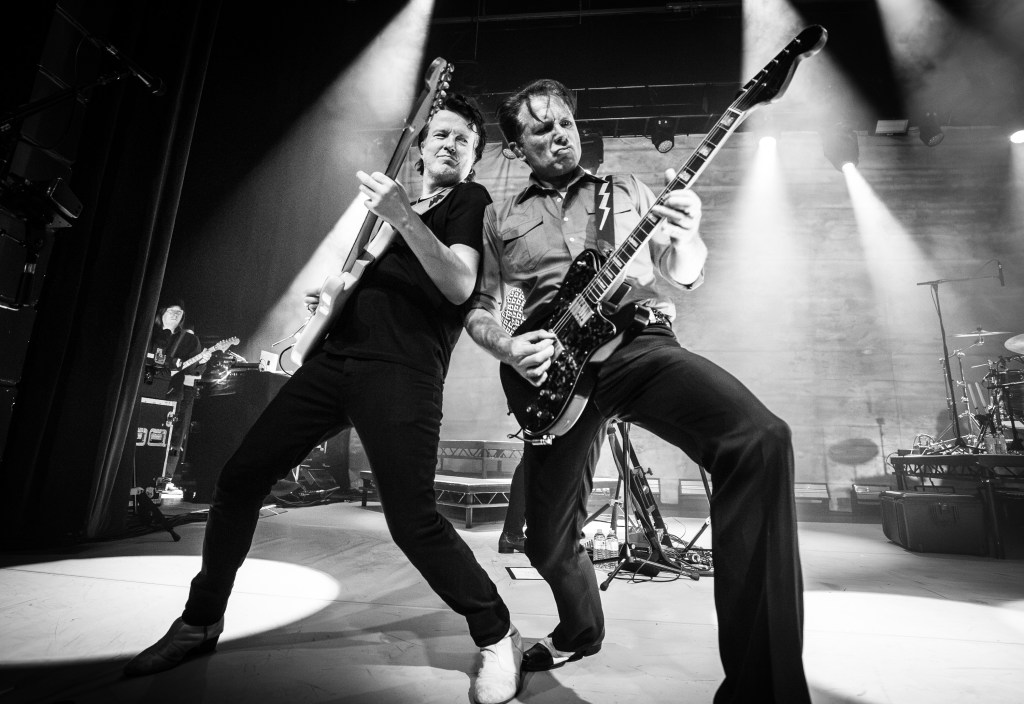
There are concert bands, and then there are bands that seem personally offended by the concept of standing still. Franz Ferdinand has always belonged to the latter category. At Buckhead Theatre, a packed house was treated to an evening that felt less like a rock concert and more like an exceptionally well-dressed dance party that happened to feature electric guitars. The Scottish quartet-turned-quintet arrived with nearly a quarter-century of accumulated swagger behind them, yet nothing about the performance suggested a band content to live off its early-2000s reputation. If anything, Franz Ferdinand seemed determined to prove that the angular guitar pop, sly sexuality and post-punk pulse that made them famous remain remarkably effective when delivered by musicians who know exactly how to work a room. Formed in Glasgow in 2002, the band helped define the early-21st-century indie-rock revival alongside acts such as The Strokes and The Libertines, but their secret weapon was always movement. They took wiry guitars, disco rhythms, art-school cool and classic pop songwriting and turned the combination into something almost impossible not to dance to. Their self-titled 2004 debut became a worldwide success and won the Mercury Prize, while songs like “Take Me Out,” “The Dark of the Matinée” and “Do You Want To” became permanent fixtures of the alternative-rock canon. More than two decades later, the formula remains gloriously intact.
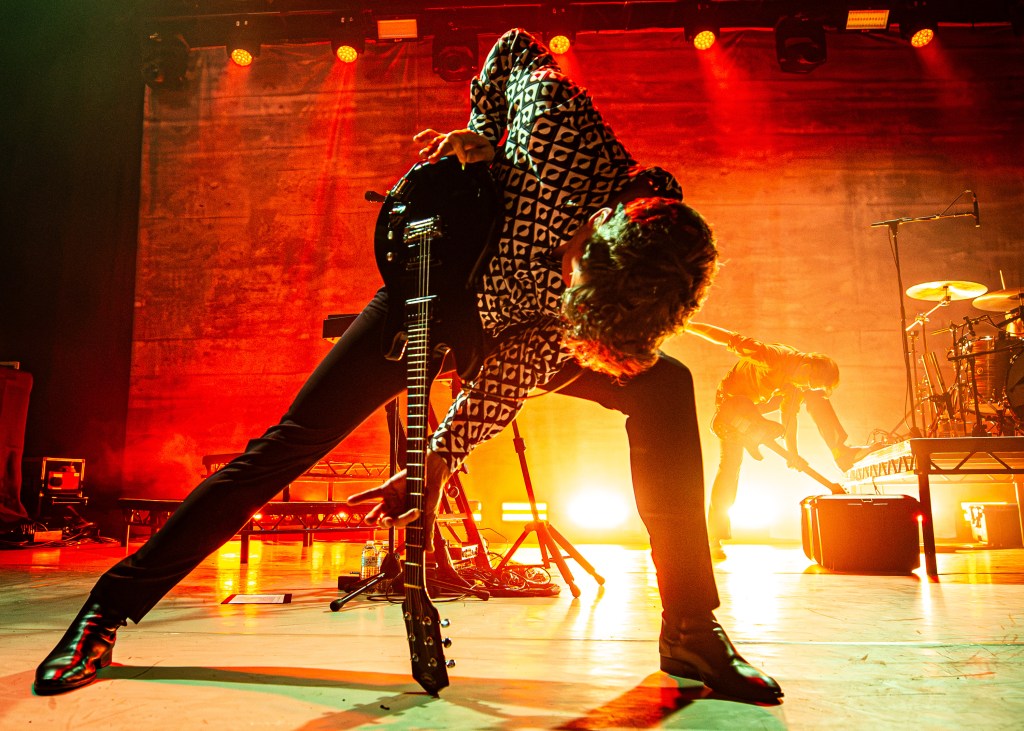
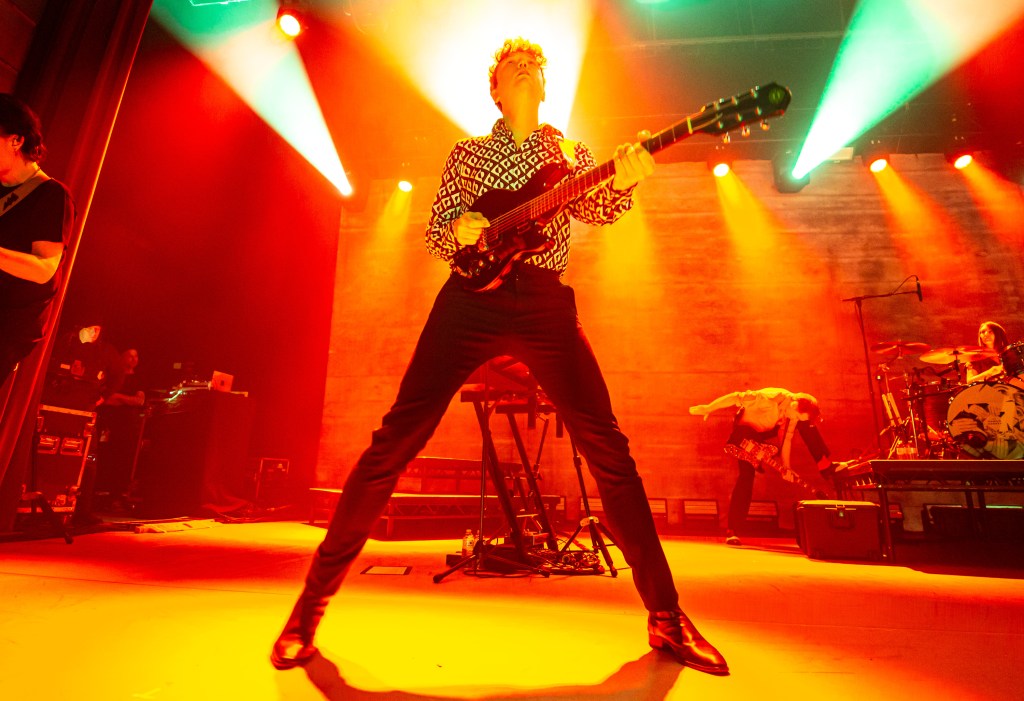
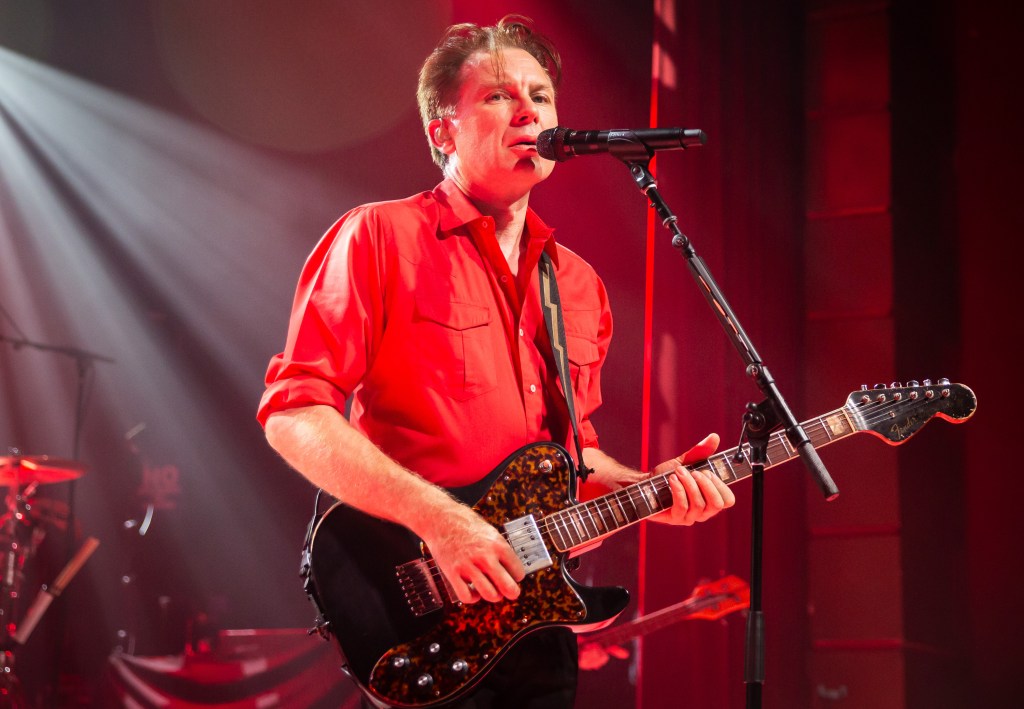
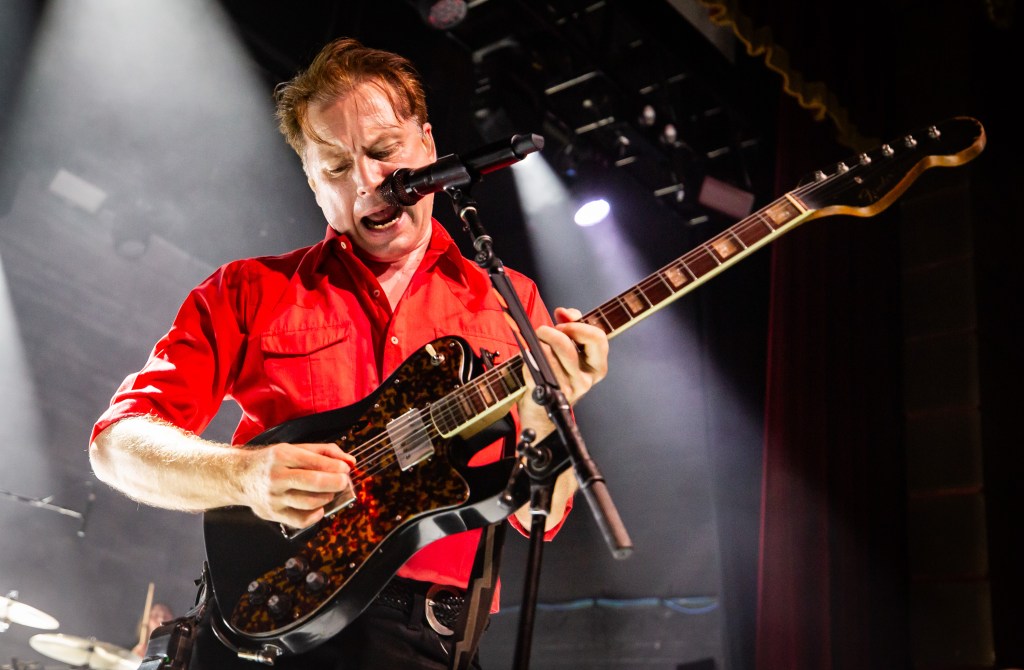
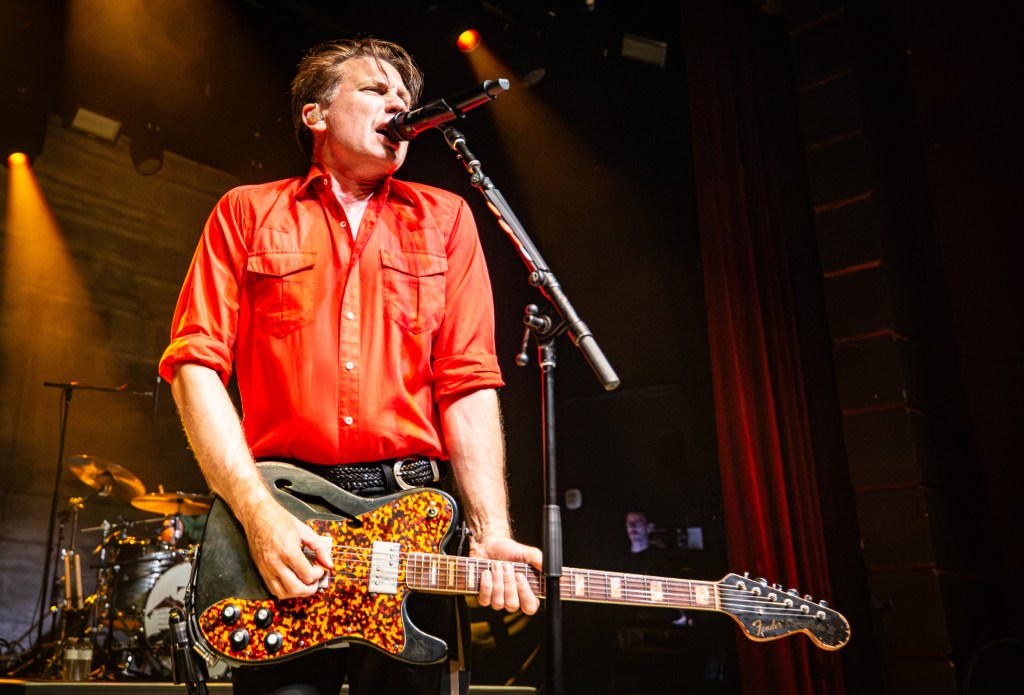
The remarkable thing about Franz Ferdinand is that their music has never really behaved like ordinary indie rock. Even at its most guitar-driven, there has always been a nightclub hiding inside the machinery. Alex Kapranos understands this instinctively. As frontman, guitarist and principal songwriter, he possesses the rare ability to look simultaneously like the coolest man at the party and the guy most likely to start the party himself. His performance carried that duality throughout the evening. There was no desperate attempt to manufacture excitement; the songs already arrived preloaded with it. “No You Girls” immediately tapped into the crowd’s collective memory, while “Walk Away” transformed the room into a mass singalong. “Michael,” naturally, required no introduction whatsoever. The opening guitar figure practically functions as a cultural fire alarm: once it sounds, everybody knows exactly what happens next. Yet the show did not become a museum piece dedicated to the glory days of 2004. Material from The Human Fear, the band’s first studio album in seven years, fit comfortably beside the classics, demonstrating how naturally Franz Ferdinand have evolved without abandoning their essential character. The newer material carries the same tension between nervous energy and dance-floor release, while songs such as “Night or Day” and “Audacious” reveal a group still willing to add fresh colors to a familiar palette.
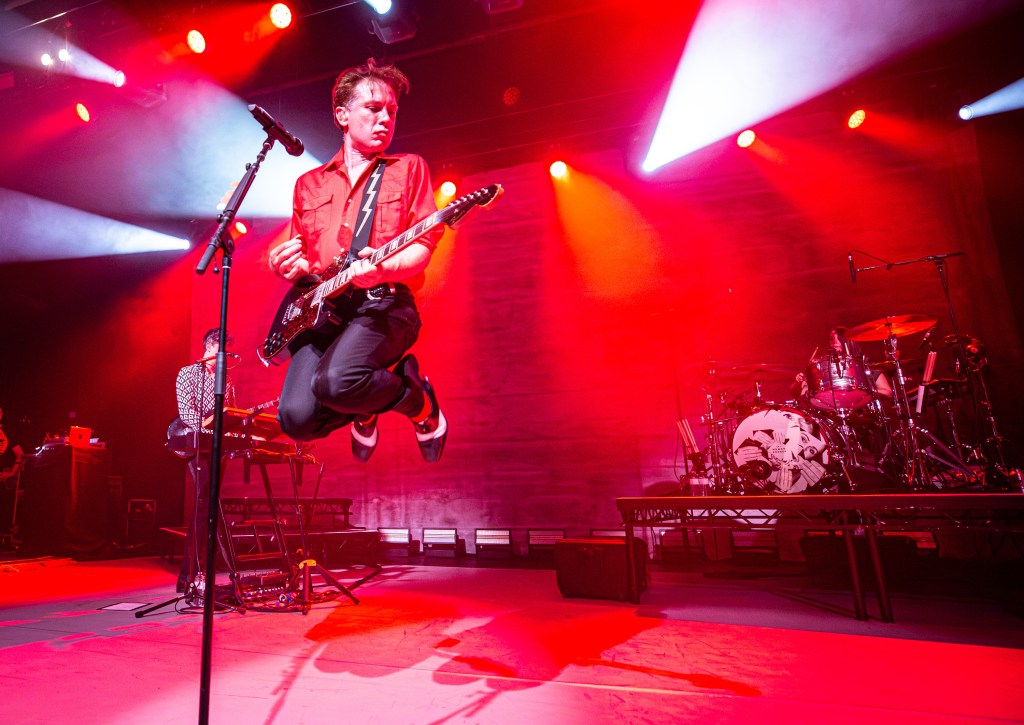
If there was one genuine problem with the evening, it was not Franz Ferdinand. It was physics. Buckhead Theatre’s general-admission floor was packed, and Franz Ferdinand are a band that practically demands more square footage than the average human body is willing to surrender. Their songs create an involuntary contradiction: your brain says, “Stand here and watch,” while your legs respond, “Absolutely not.” The audience spent much of the night attempting to negotiate this dispute. Shoulders moved. Feet shuffled. People bounced in place. Entire rows appeared to be conducting tiny, private battles with the laws of personal space. The room was lively enough that one could almost make the case for issuing dance permits at the door. General admission works beautifully for creating immediacy between performer and audience, but with Franz Ferdinand it can feel like putting a Formula One car on a go-kart track. There simply is not enough room to properly execute the assignment. A band whose greatest gift is making thousands of people want to move simultaneously should perhaps come with a slightly larger dance floor. The Buckhead Theatre’s intimate scale has obvious advantages — it puts the audience close to the stage and gives the performance a personal quality — but on this particular night, intimacy occasionally became crowd compression.
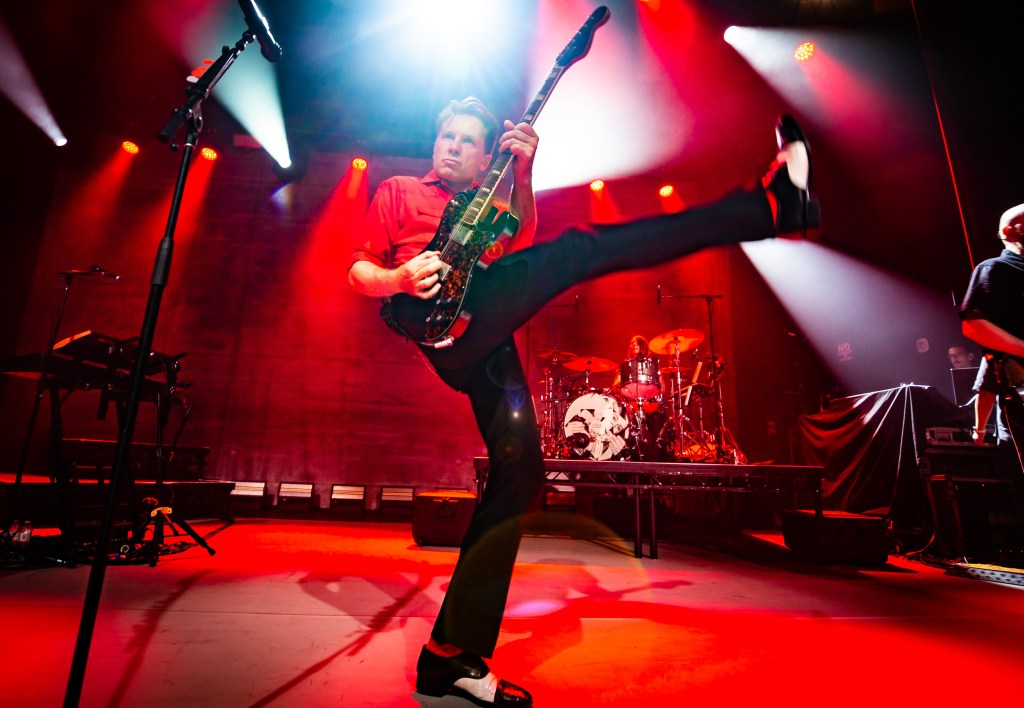
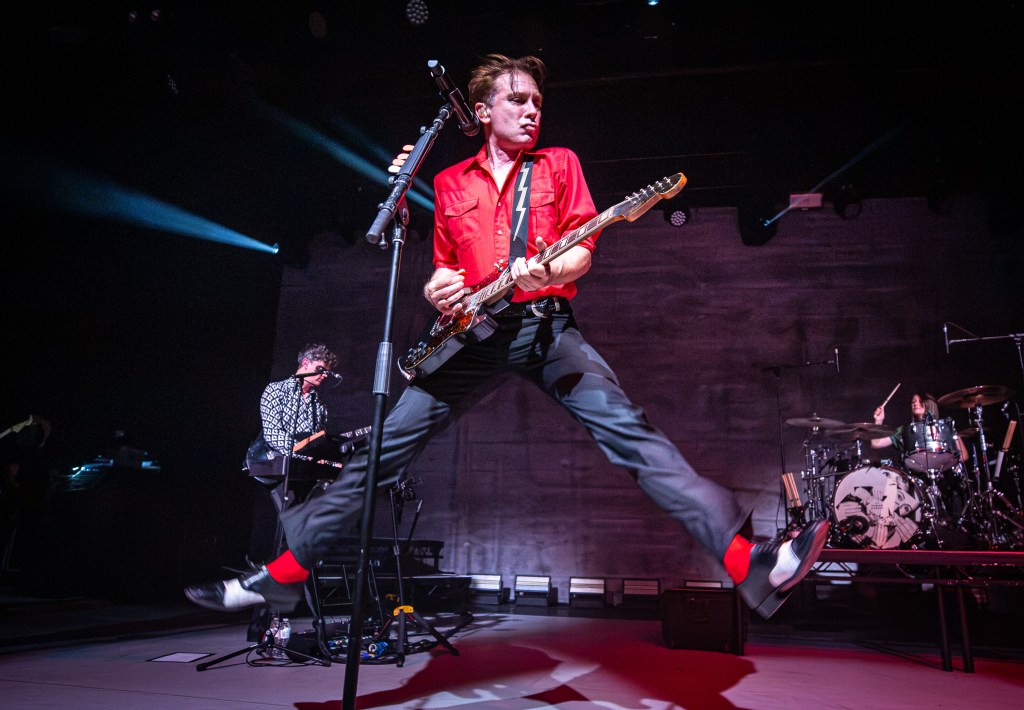
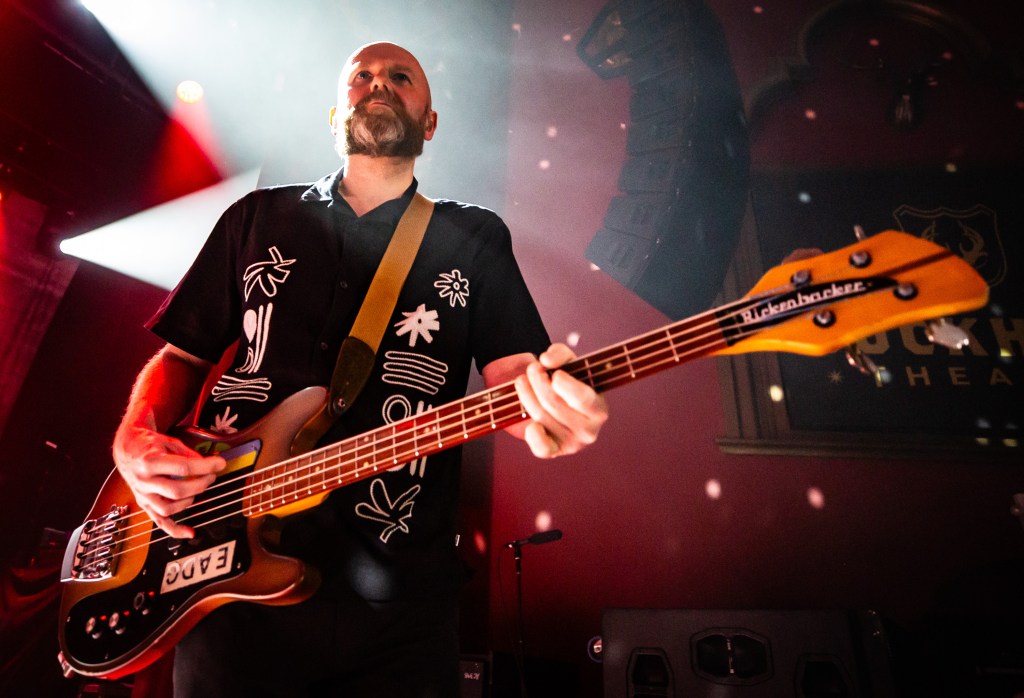
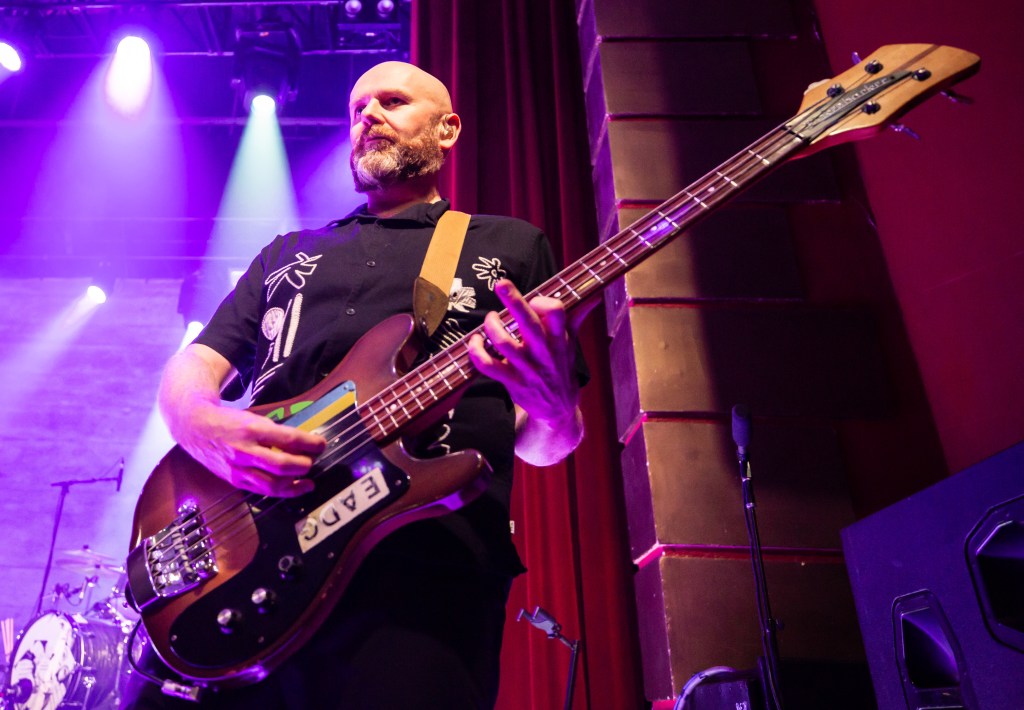
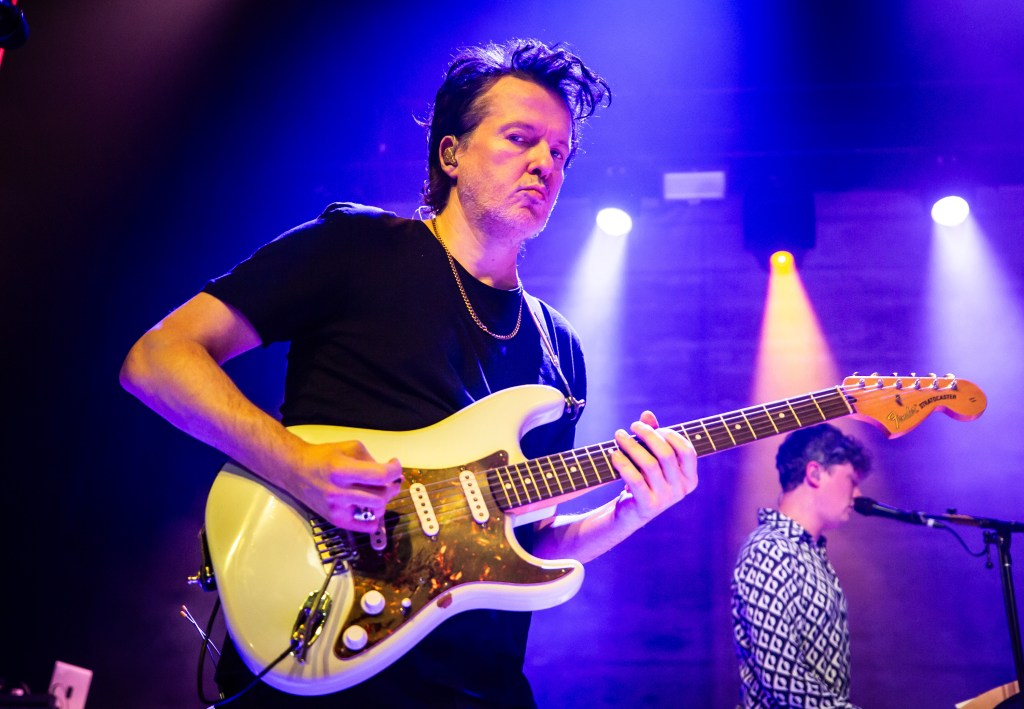
Still, the limitations of the room arguably made the atmosphere more entertaining. There was something wonderfully communal about watching an entire crowd attempt to dance while remaining approximately within the boundaries of its assigned territory. The singalongs were equally infectious. Franz Ferdinand have accumulated enough recognizable material that the audience often seemed to know the next lyric before Kapranos delivered it. That relationship is a major part of the band’s appeal. Their music is clever without being aloof, stylish without becoming sterile and sophisticated without losing its sense of fun. Bob Hardy’s bass remains crucial to that balance, providing the deep, economical propulsion beneath the guitars, while Julian Corrie brings keyboards and electronics that broaden the band’s rhythmic vocabulary. Dino Bardot supplies guitar with a presence that complements rather than competes with Kapranos, and drummer Audrey Tait gives the songs an especially physical backbone. The current lineup has undergone significant evolution from the original configuration, but the identity has survived because the chemistry is bigger than any one personnel chart. Tait replaced longtime drummer Paul Thomson in 2021, while Bardot and Corrie joined earlier in the band’s modern era. Their collective performance made clear that Franz Ferdinand is not simply preserving a sound — it is preserving an attitude.
That attitude has always been rooted in the peculiar Glasgow alchemy that made Franz Ferdinand so distinctive in the first place: take post-punk angularity, add disco’s sense of propulsion, sprinkle in glam-rock theatricality and then write choruses clever enough to survive repeated exposure. It should not work as seamlessly as it does. Yet the band’s catalog has repeatedly demonstrated that the gap between indie-rock credibility and pure pop pleasure is mostly imaginary. Even the group’s history reflects that willingness to experiment. They moved from the taut guitar pop of their debut toward dub textures on Tonight, disco influences on Always Ascending and, more recently, glam-inflected material on The Human Fear. Live, those distinctions become less important. Everything gets folded into the same kinetic machine. A song does not have to be one of the band’s biggest hits to generate movement; it simply needs that unmistakable Franz Ferdinand combination of clipped guitar, elastic bass, sharp drumming and Kapranos’ theatrical delivery. The result is a concert that feels festive without becoming frivolous. There is craft underneath the celebration, and the musicians are too experienced to let the party obscure the precision of the playing.
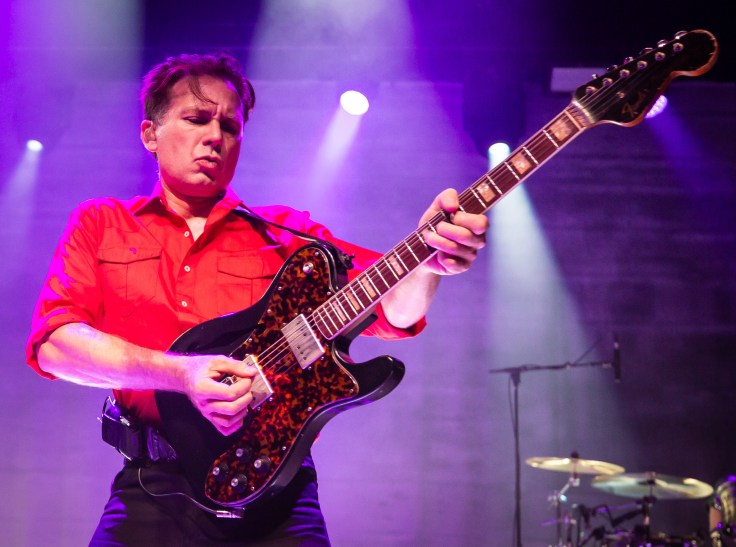
By the time Franz Ferdinand left the stage, the most obvious conclusion was also the simplest: this is a band that remains extraordinarily good at making people want to move. That sounds like a modest achievement until you consider how difficult it is to manufacture genuine physical excitement in a concert audience. Franz Ferdinand do it with guitars, drums, bass, keyboards, charisma and songs that have somehow managed to age without becoming trapped in their original decade. At Buckhead Theatre, the packed room sang, bounced, swayed and attempted to dance within the increasingly theoretical concept of personal space. The irony was almost perfect. A band whose music was built to get people out of their chairs found itself playing to a crowd with nowhere to go. Perhaps that is the highest compliment available: the room was too small for the reaction. Franz Ferdinand have spent more than twenty years proving that indie rock can be stylish without being self-serious and danceable without surrendering its edge. In Atlanta, they made the case again, with Kapranos leading the charge and the rest of the band supplying the machinery. The songs were familiar, the performance was fresh and the audience was ready to move. All that was missing was about three feet of personal space per person — and judging by the way the crowd kept trying anyway, even that might not have been enough.


Leave a Reply