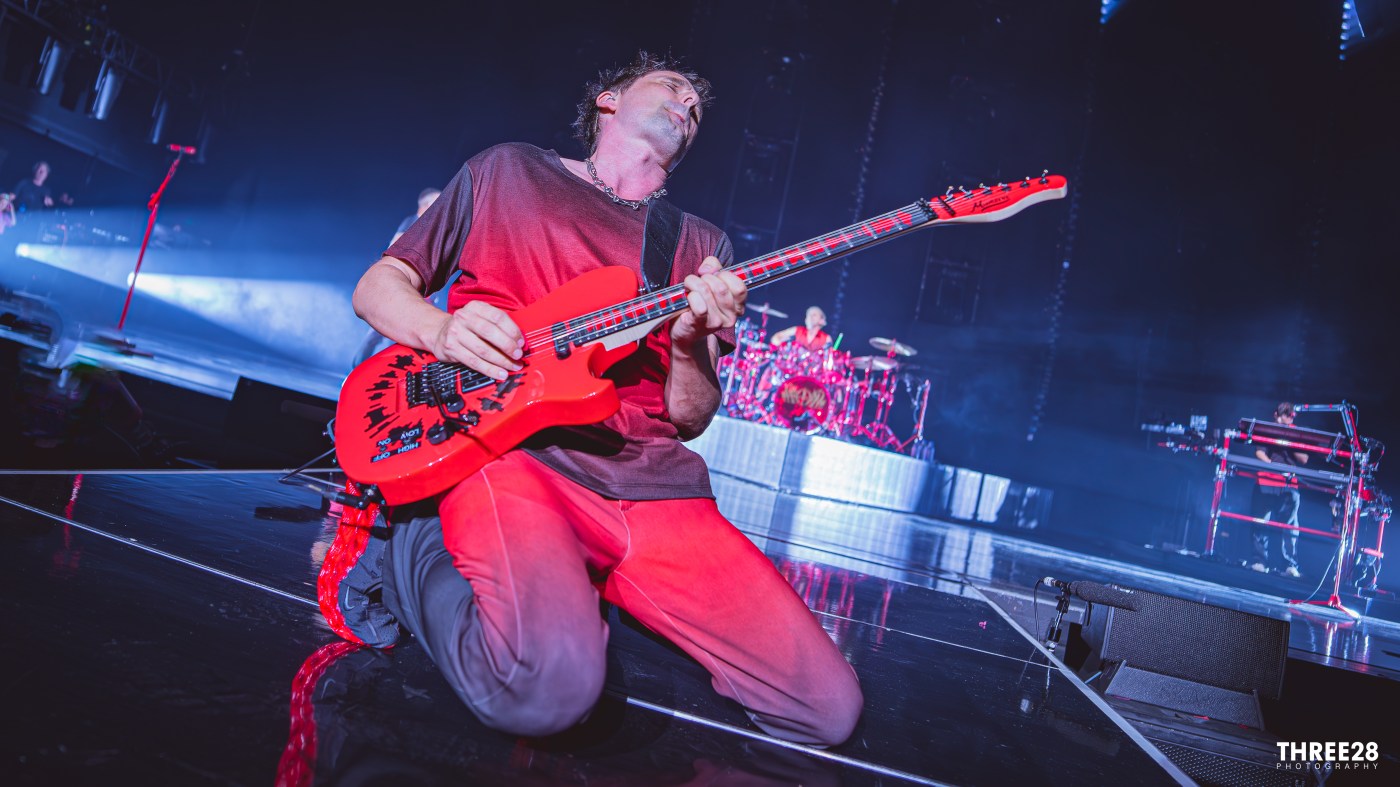
MUSE turned Atlanta into something considerably more ambitious than a concert venue. Lakewood Amphitheatre became a launchpad, a theater, a science-fiction transmission station and, at various points, what appeared to be the control room of a very expensive alien invasion. The Atlanta stop of The Wow! Signal Tour arrived as part of the band tour supporting the tenth MUSE studio album, with Portugal. The Man and The Temper Trap opening the evening. By the time MUSE took the stage, Lakewood was packed and primed for the kind of spectacle that has become synonymous with this English rock powerhouse. MUSE has never been particularly interested in the concept of simply standing onstage and playing songs. Nearly three decades after forming in Devon, the group has developed into one of the most important arena-rock acts of the modern era, combining progressive ambition, electronic experimentation, theatrical presentation and unapologetically gigantic guitar music. The result was not merely a performance. It was an event.
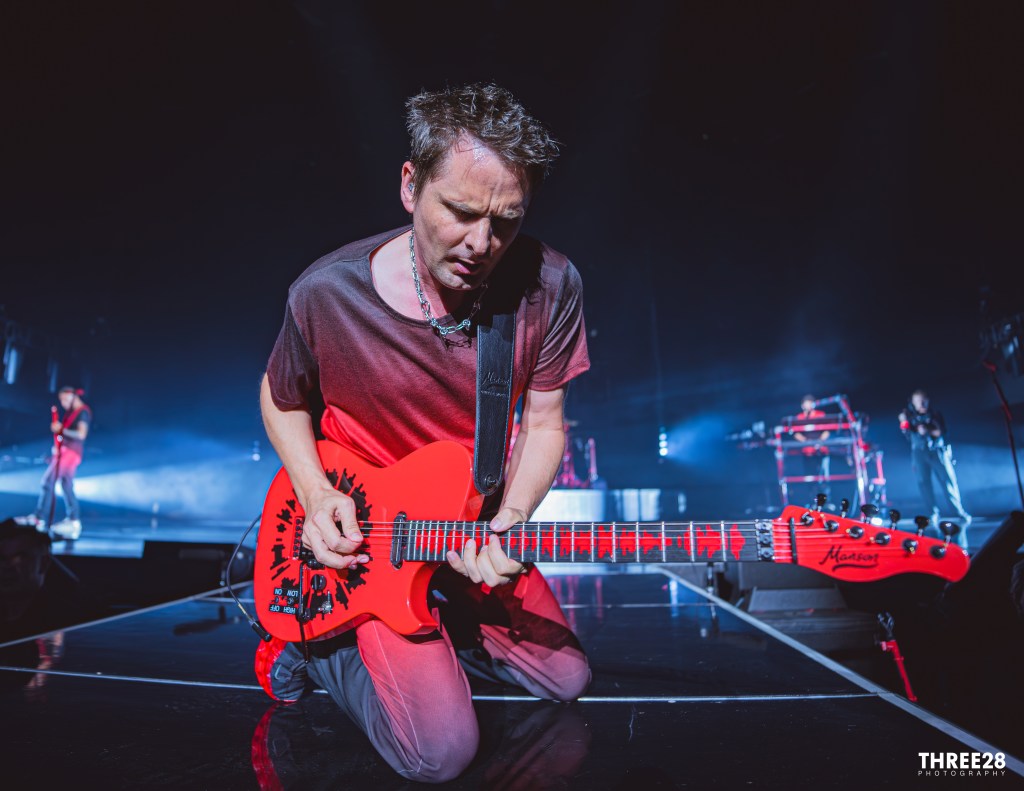
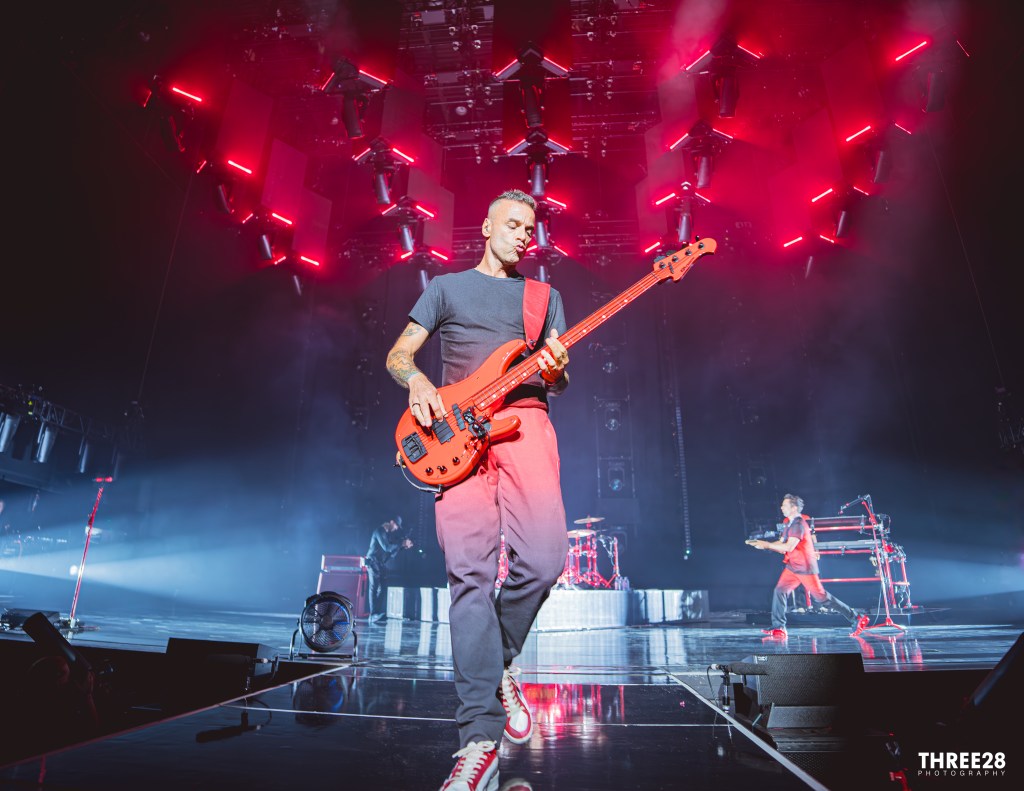
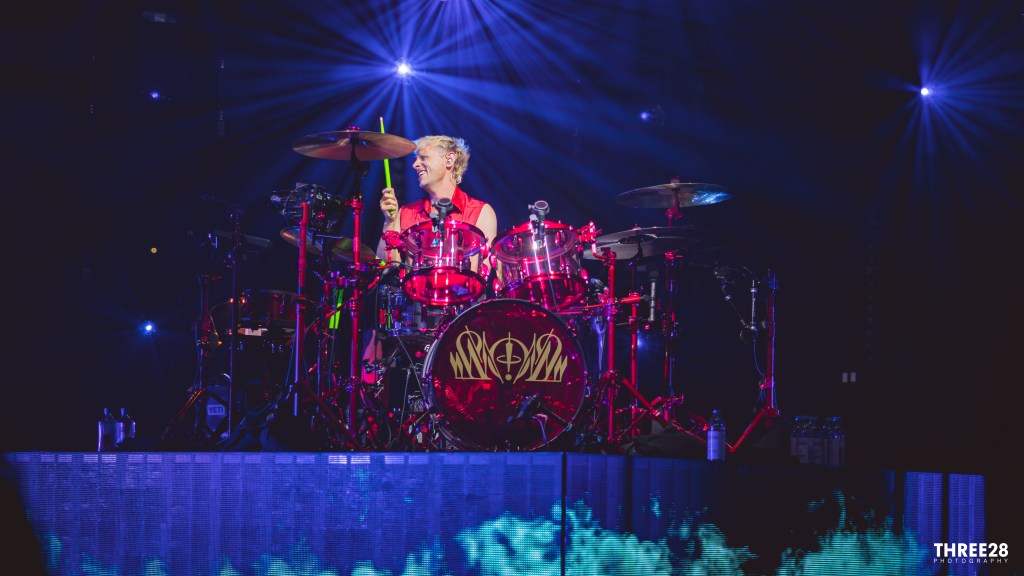
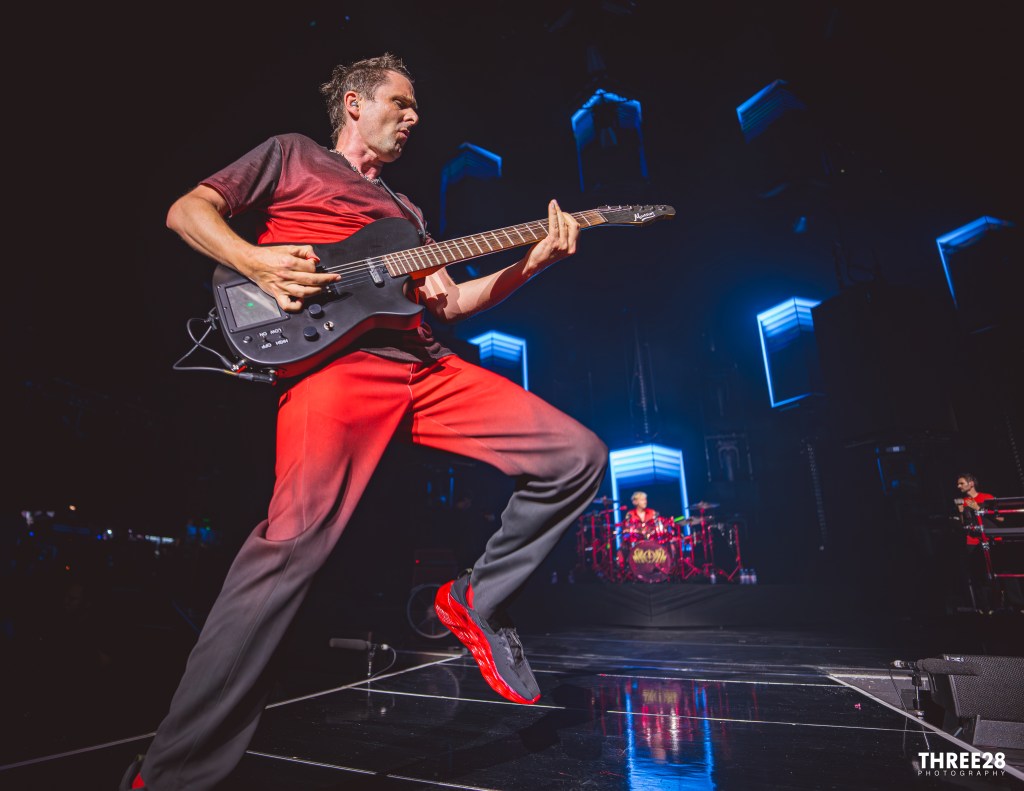
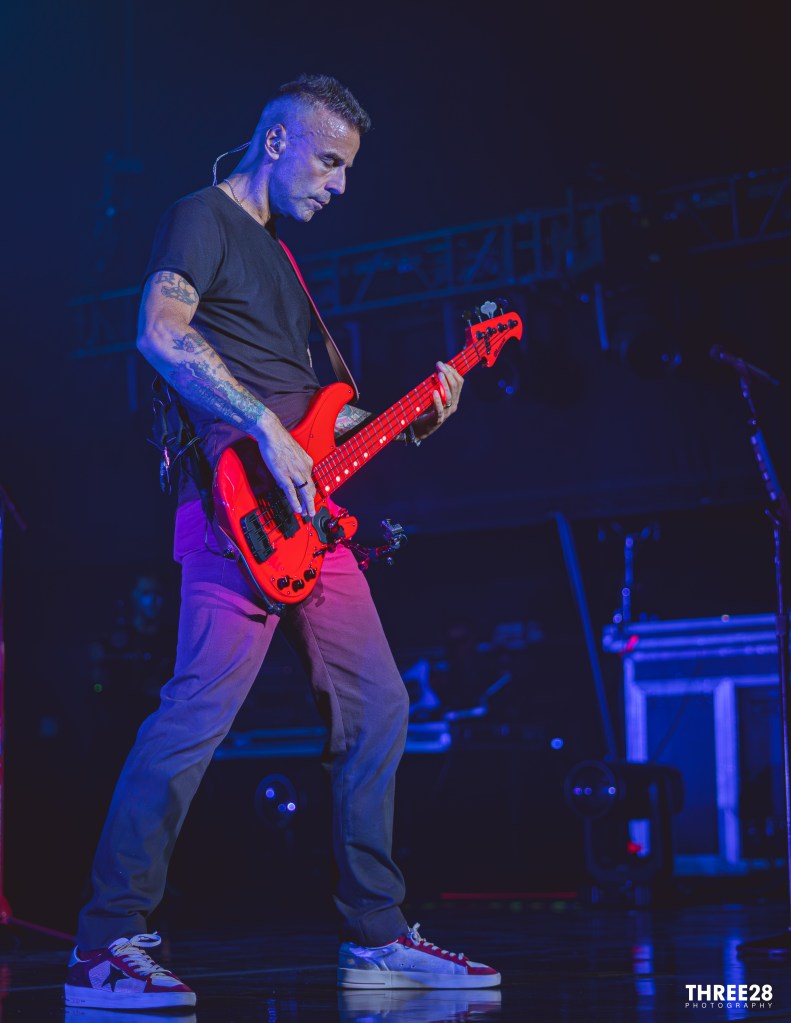
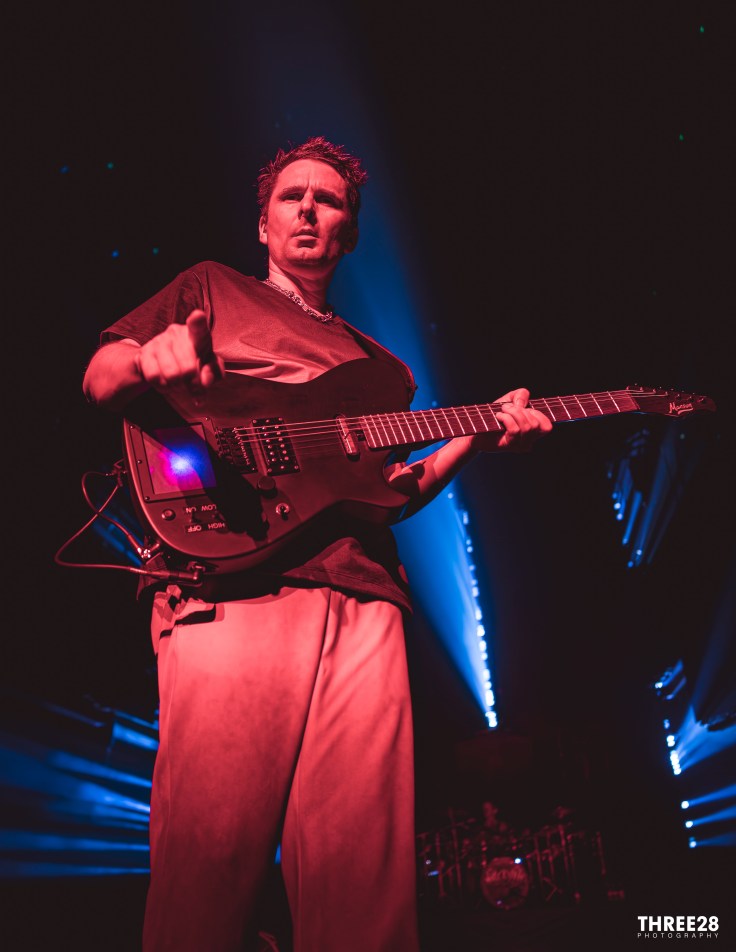
The importance of MUSE becomes easier to understand when watching the band perform rather than simply listening to a studio recording. Matt Bellamy, Chris Wolstenholme and Dominic Howard have spent years expanding the vocabulary of mainstream rock without abandoning the basic ingredients that make the genre thrilling. Bellamy remains the obvious focal point, possessing the rare ability to move between guitar virtuosity, piano, synthesizers and an instantly recognizable voice while somehow making every transition look casual. His stage presence is theatrical without feeling manufactured. Wolstenholme provides the muscular foundation, anchoring the songs with bass lines that frequently function as hooks rather than background support. His backing vocals add another layer of weight, particularly when the arrangements become enormous. Howard, meanwhile, is the engine. His drumming gives MUSE its physical force, capable of moving from precision to controlled chaos without losing the pulse. Together, the three operate less like three musicians occupying separate jobs and more like parts of one highly calibrated machine. That chemistry explains why MUSE has managed to remain adventurous while becoming one of the biggest rock bands on the planet.
The visual production made that scale impossible to ignore. Suspended above the stage were multiple hanging screen boxes, constantly shifting between graphics, imagery, colors and abstract visual sequences. Rather than functioning as oversized televisions, the screens became part of the architecture. They moved attention around the stage and made the performance feel three-dimensional. A medium-length catwalk extended down the middle of the stage, giving Bellamy and the others opportunities to move toward the crowd without sacrificing the massive backdrop behind them. The arrangement also created an effective sense of intimacy inside an otherwise enormous production. There were plenty of classic rock idiosyncrasies along the way: dramatic poses, guitars held aloft, towering riffs, theatrical pauses and enough swagger to remind everyone that rock music is supposed to be a little ridiculous when taken to its logical extreme. MUSE understands that perfectly. The band does not wink at the absurdity of it all; it embraces it and makes the excess part of the entertainment.
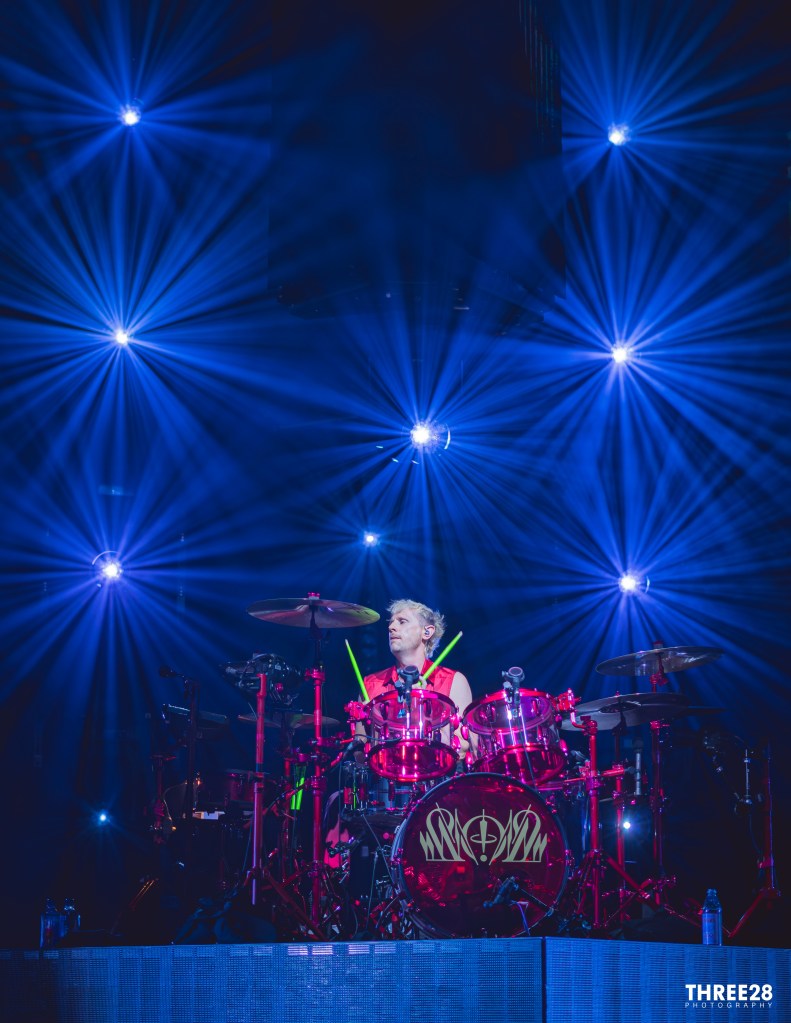
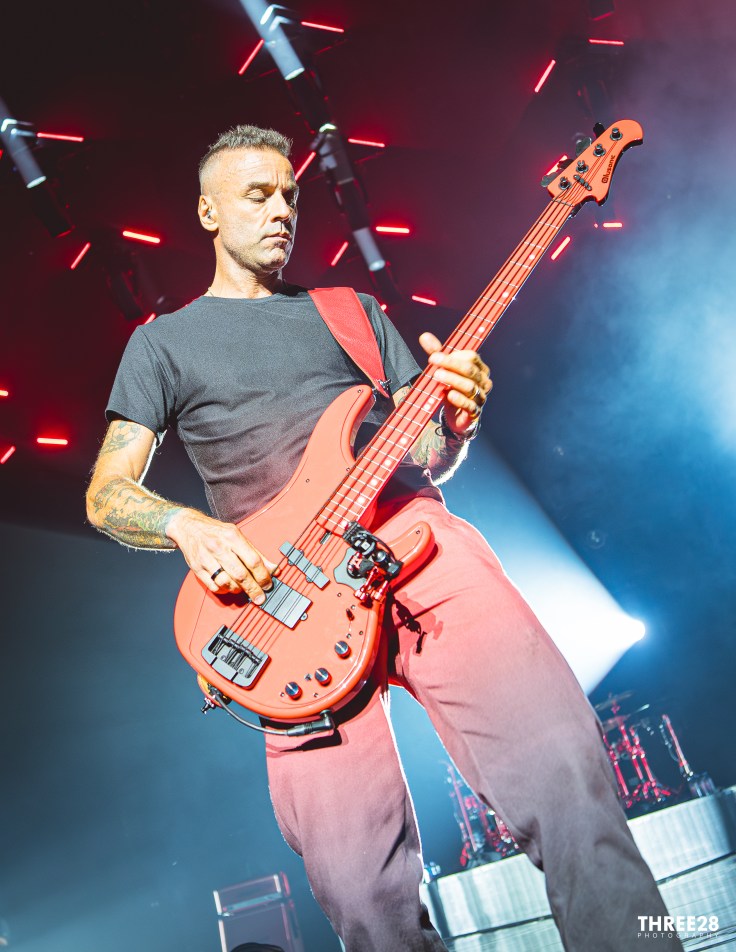
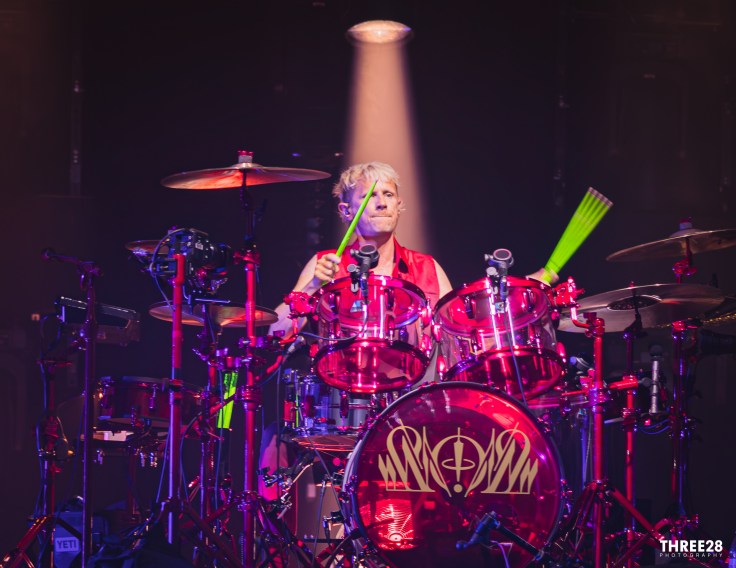
The attention to detail extended all the way to Howard drum kit, which looked less like ordinary percussion equipment and more like something recovered from a neon-lit laboratory. The drums featured glowing red skeletal-bone designs, creating an eerie visual centerpiece whenever the lighting focused on him. Howard then attacked the kit with neon green sticks, producing a striking contrast against the red-and-black visual language running throughout the production. The members also appeared in coordinated red-and-black outfits, giving the group a unified visual identity without turning the musicians into identical mannequins. Bellamy, Wolstenholme and Howard retained their individual personalities, but the matching palette made them look like members of the same strange rock-and-roll battalion. It was a small touch compared with the lasers and screens, yet those smaller decisions are what made the entire production feel intentional rather than merely expensive.
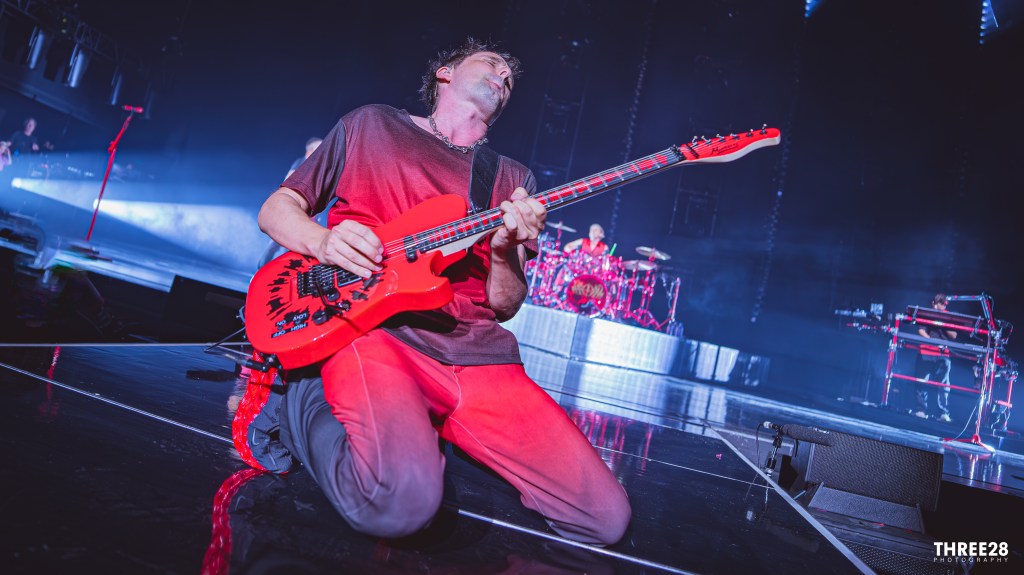
Musically, MUSE had plenty of opportunities to demonstrate why its reputation has endured. Early in the evening, “Hysteria” arrived with the kind of bass-driven urgency that has made the song a concert staple, immediately reminding the audience that beneath all the futuristic technology is a band capable of producing brutally effective rock music. Later, “Madness” shifted the atmosphere toward something more restrained and hypnotic, allowing Bellamy vocal character to occupy the center of the arrangement. The performance also moved freely between eras, demonstrating how comfortably MUSE can place newer material alongside songs that have already become part of its legacy. That ability is significant. Many veteran rock groups become touring versions of their younger selves, repeating an established formula for audiences seeking nostalgia. MUSE has generally resisted that trap. The catalog keeps evolving, and the live production evolves with it.
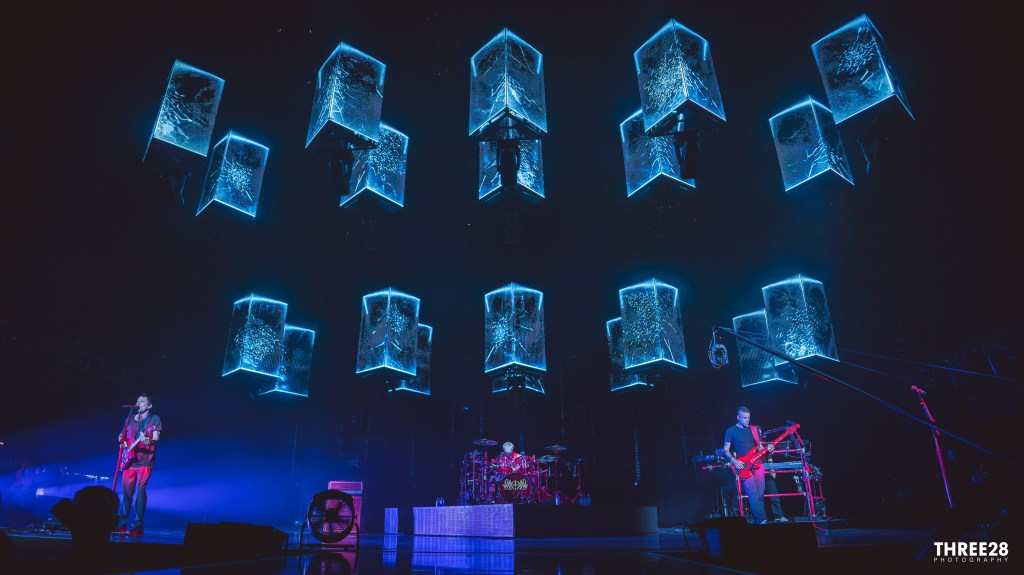
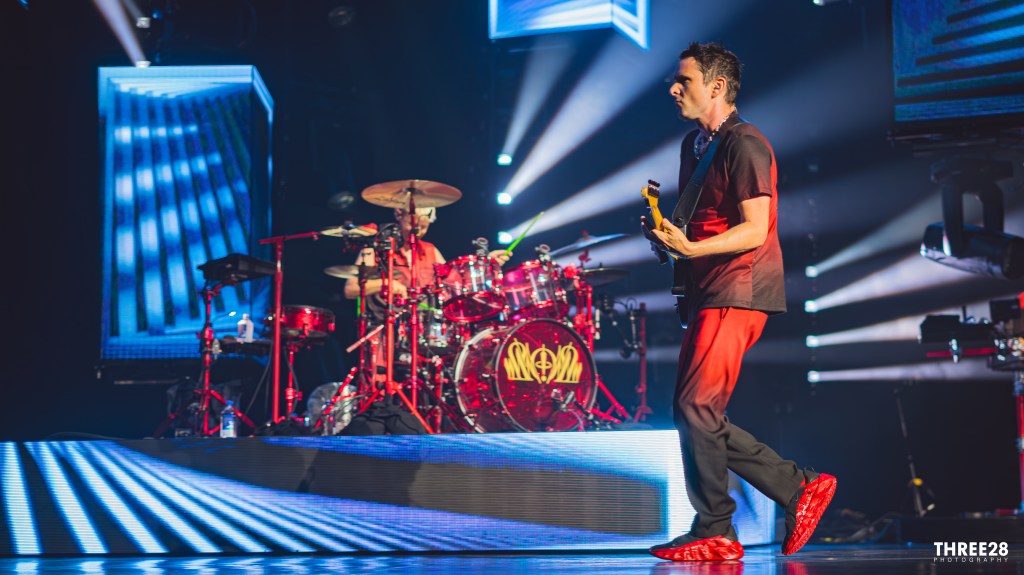
Then came “Time Is Running Out,” and the amphitheater became less like an audience and more like a single organism. The crowd sang, shouted and moved with the rhythm, while the band leaned into the song famous combination of tension and release. This is where MUSE strength as a live act becomes especially obvious: the songs are engineered for communal moments without sounding like they were written solely to produce communal moments. There is a difference. The best arena rock does not merely tell an audience when to clap. It gives thousands of people enough musical space to make the moment their own. Atlanta did exactly that. The crowd knew the words, recognized the riffs and responded to every dramatic shift. Bellamy repeatedly worked the stage and catwalk, while Wolstenholme and Howard maintained the rhythmic architecture beneath him. The interaction felt natural, with the band feeding energy into the audience and the audience returning it in increasingly loud waves.
And then MUSE decided that regular concert lighting had apparently become insufficient. Toward the latter portion of the show, the production escalated into a full sensory assault. Lasers sliced through the air above the crowd, transforming the amphitheater into a field of light. Confetti cannons fired across the venue, followed by those long streamers that shoot outward in dramatic ribbons, covering the space with airborne strands. It was wonderfully excessive. The suspended screens continued displaying surreal graphics while the lights, lasers and pyrotechnic-style effects created the feeling of a finale from a futuristic stadium spectacular. “Knights of Cydonia” provided another major surge, its galloping rhythm and cinematic guitar work practically designed for this kind of treatment. By this point, subtlety had been officially removed from the building. MUSE was no longer simply playing a rock concert; it was detonating the closing chapters of a multimedia production.
The final moments, however, brought the spectacle back down to something surprisingly human. As the performance wound toward its conclusion, the musicians began dispersing guitar picks into the crowd, creating one last scramble among fans hoping to take home a physical souvenir from the evening. Dominic Howard offered Atlanta a goodnight and an “until next time” farewell as the band prepared to disappear. It was a fitting ending because MUSE had spent the previous couple of hours making everything feel enormous, yet the goodbye carried the warmth of a band acknowledging the people standing in front of the stage. Then the members dispersed, leaving behind the confetti, glowing screens, laser trails and thousands of fans processing what had just happened. The Wow! Signal Tour stop at Lakewood demonstrated why MUSE remains such a formidable live act: the band can be bombastic without becoming hollow, technical without becoming sterile, theatrical without losing its rock identity and ambitious without forgetting that three musicians still have to make the whole thing work. Atlanta did not simply receive a concert. It received the full MUSE experience — loud, strange, spectacular, occasionally absurd and completely committed to the idea that rock music can still feel enormous.


Leave a comment