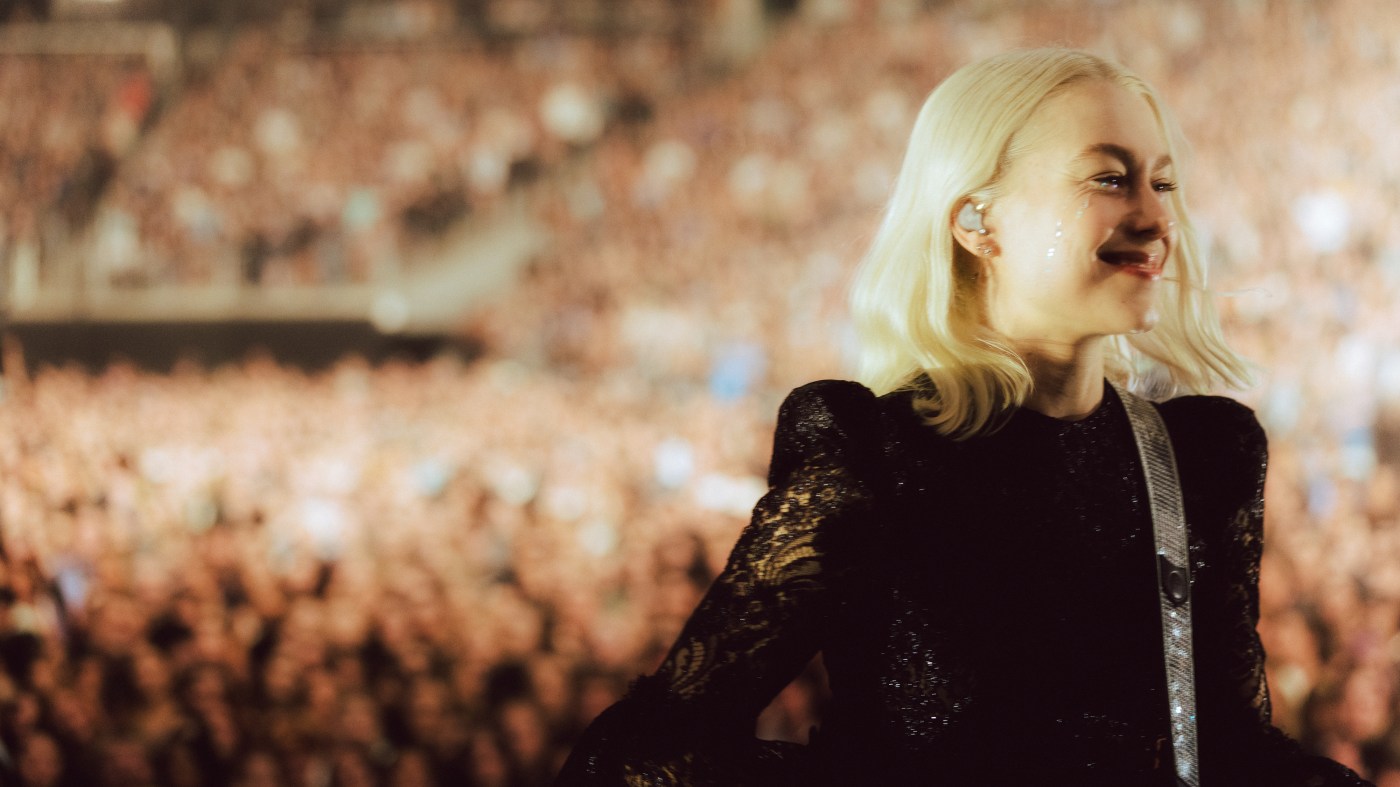
Photos by Matt Grub and Wes Ellis
There is something profoundly poetic about an artist who has spent her career examining the fragility of human existence arriving aboard what resembles an intergalactic spacecraft. Yet, Phoebe Bridgers has never been particularly interested in conventional storytelling. As the opening notes of “The Outside” reverberated throughout the cavernous venue, a celestial spectacle of lasers, extraterrestrial graphics, and theatrical smoke transformed the stage into an otherworldly landscape. It was an entrance befitting a superstar, although the woman commanding the production has built her reputation on making vulnerability sound remarkably ordinary. From her early days navigating the independent music circuit to the critical triumph of Stranger in the Alps, the cultural phenomenon of Punisher, and her celebrated collaboration with boygenius, Bridgers has ascended without sacrificing the confessional intimacy that distinguishes her songwriting. Her musical evolution has followed an increasingly sophisticated exploration of alienation, mortality, fractured relationships, and the uncomfortable business of simply being alive. On The Lost Tour, those existential preoccupations received a spectacular new dimension, proving that even the most introspective musicians can occasionally reach for the stars.
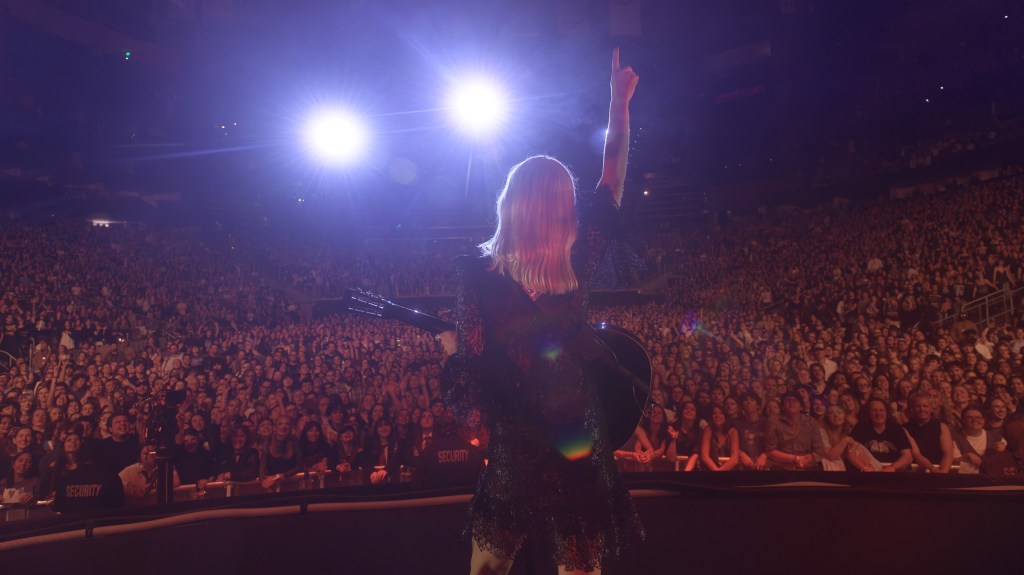
The emotional architecture of Bridgers’ latest chapter finds its foundation in grief, particularly the complicated aftermath of her father’s passing. Their historically difficult relationship lends additional poignancy to a body of work already preoccupied with unresolved affection, forgiveness, and the permanence of absence. Rather than presenting mourning as a linear journey toward enlightenment, her music recognizes its contradictory nature: resentment can coexist with tenderness, while reconciliation sometimes arrives too late to be spoken aloud. Such thematic complexity permeated the evening, accentuated by a production that balanced colossal theatricality with startling restraint. Her principal stage featured sweeping illumination, cosmic imagery, and magnificent pageantry, while a secondary platform offered a more secluded atmosphere beneath a hovering, igloo-like dome. The latter resembled an emotional sanctuary suspended within an enormous gathering, allowing thousands of spectators to experience the peculiar sensation of being personally addressed. Bridgers understood that grief rarely announces itself with fireworks, although she certainly knew when to provide them.
“What the fuck is up, Atlanta?” Bridgers exclaimed, puncturing the evening’s solemnity with the irreverent candor that has endeared her to an exceptionally devoted audience. Her willingness to surrender herself completely to the performance extended beyond musical proficiency into something considerably more consequential: an insistence upon genuine human presence. With phones removed from the equation, spectators experienced a curious resurrection of concertgoing’s analog heyday. There were no illuminated rectangles obstructing sightlines, no frantic attempts to preserve every chorus through distorted recordings, and no digital distractions competing with the person standing directly ahead. Instead, black-clad devotees in battered Doc Martens offered their undivided attention, their faces alternating between euphoric smiles and glistening tears. Bridgers appeared determined to manufacture something increasingly endangered in contemporary entertainment: a collective core memory. The irony was delicious. An artist whose compositions so frequently examine disconnection had orchestrated an evening in which everyone was finally connected.
That communion became particularly palpable during “Kyoto,” whose buoyant instrumentation and deceptively playful momentum concealed the familial turbulence embedded within its lyrics. Bridgers navigated the song with assured musicianship, demonstrating an intuitive command of her instruments while her formidable accompanying band supplied arrangements of extraordinary precision. The ensemble functioned less as supporting personnel than as essential collaborators, seamlessly transitioning between delicate passages and thunderous crescendos. Elsewhere, drifting smoke, shimmering curtains of misted glitter, and prismatic lasers produced a visual vocabulary of almost cinematic extravagance. Her wardrobe mirrored the evening’s evolving emotional temperature: an entirely black ensemble eventually surrendered to an identical silhouette rendered in white. The transformation suggested neither an uncomplicated rebirth nor an erasure of sorrow, but perhaps the possibility of carrying darkness into a brighter tomorrow. Even the costume change seemed to understand the assignment. For an artist so comfortable inhabiting melancholy, Bridgers was unmistakably dressed to address it.
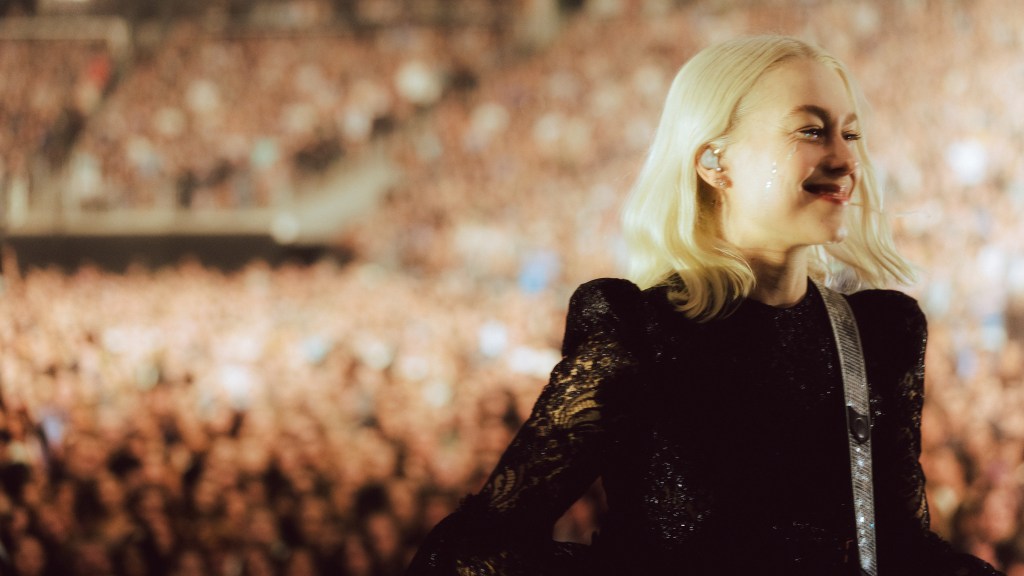
Beyond the elaborate machinery, the performance also provided a platform for Bridgers’ outspoken advocacy. Her affirmations of the LGBTQ+ community emphasized belonging, dignity, and the necessity of protecting vulnerable individuals, sentiments greeted with thunderous approval. Her denunciations of government authority carried considerably sharper edges, including the provocative implication that those exercising institutional power might refrain from personally committing violence while enabling circumstances in which others suffer its consequences. The remarks were confrontational, unmistakably political, and consistent with an artist unwilling to separate compassion from accountability. Nevertheless, the evening’s most persuasive statement required no speech whatsoever. Watching an impressionable generation experience music without the mediation of a screen offered a compelling reminder that empathy develops through participation rather than documentation. For Bridgers, still navigating the complicated emotional terrain of loss, and for listeners discovering their own vocabulary for heartbreak, the performance became a temporary refuge where sadness was neither embarrassing nor isolating. Healing was not presented as an achievement, but as something people could undertake together.
By the time “Scott Street” brought the proceedings toward their conclusion, the evening’s extravagant visual machinery had become secondary to the emotional investment accumulated beneath it. The song’s wistful examination of distance, familiarity, and relationships transformed by time provided an exquisitely appropriate farewell. Bridgers, now dressed in white, stood surrounded by musicians whose discipline had elevated the production without overwhelming its vulnerable center. The lingering haze, suspended glitter, and fading illumination supplied a final portrait of beautiful impermanence. Thousands had arrived expecting a concert; they departed carrying an experience that could not be retrieved from a camera roll. That distinction ultimately defined The Lost Tour’s extraordinary ambition. Its grandeur was undeniable, its technical execution formidable, and its emotional resonance difficult to manufacture. Yet its greatest accomplishment was persuading an audience accustomed to recording life that occasionally, the most meaningful way to preserve a moment is simply to inhabit it. Some memories deserve more than storage. They deserve to be lived.


Leave a Reply