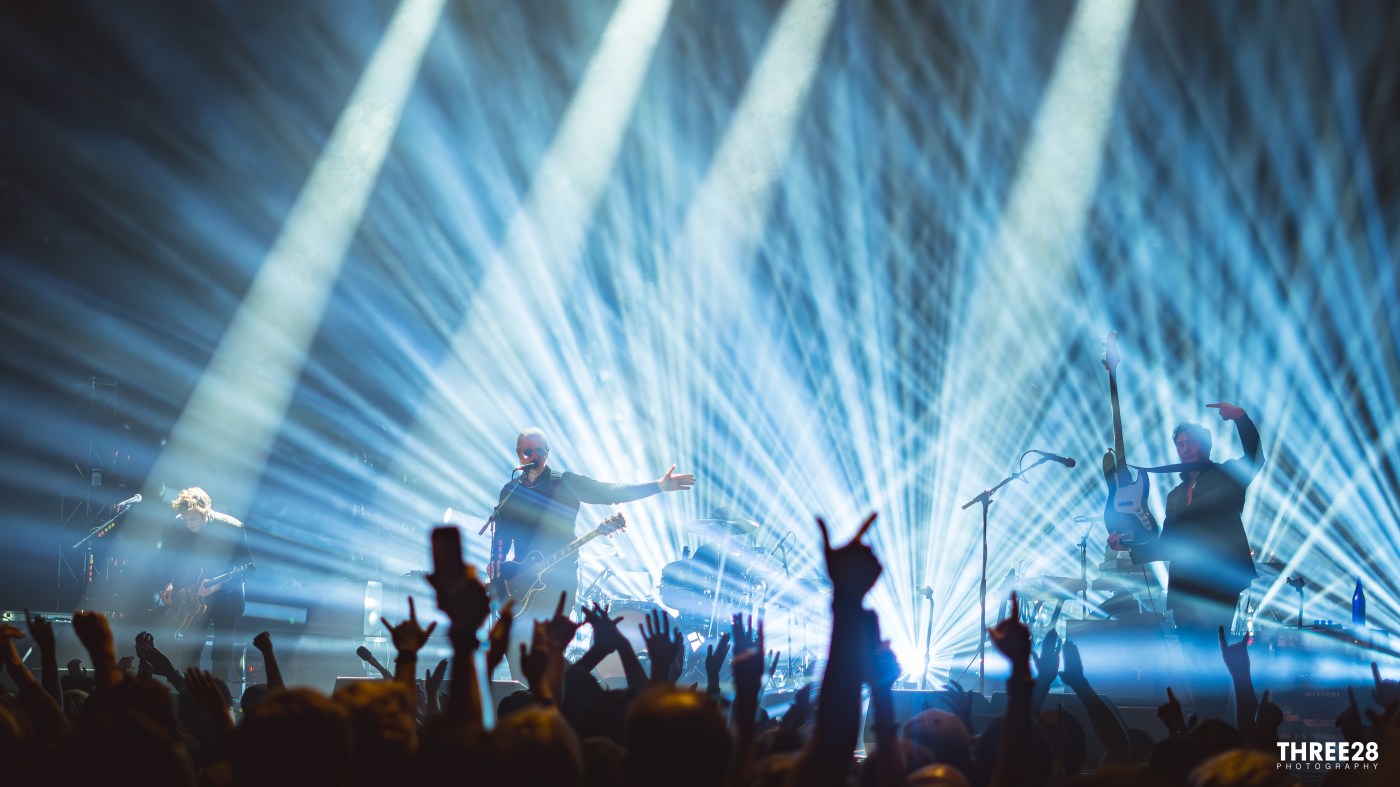
Interpol opened their second consecutive night at The Eastern with “This Mirror Weighs a Ton,” the title track from their latest album, setting an immediate tone of brooding introspection and tightly wound momentum. Returning for the second show of a back-to-back engagement, the New York post-punk veterans demonstrated that familiarity need not breed complacency; sometimes, it simply gives a band another opportunity to turn the screws. A sold-out room of devoted fans arrived ready to cheer, sway, and sing along, greeting the group with the enthusiasm of people who have spent years finding pieces of themselves inside its songs. The atmosphere felt less like a conventional concert and more like a gathering of kindred souls who happen to prefer their emotional catharsis dressed in black.
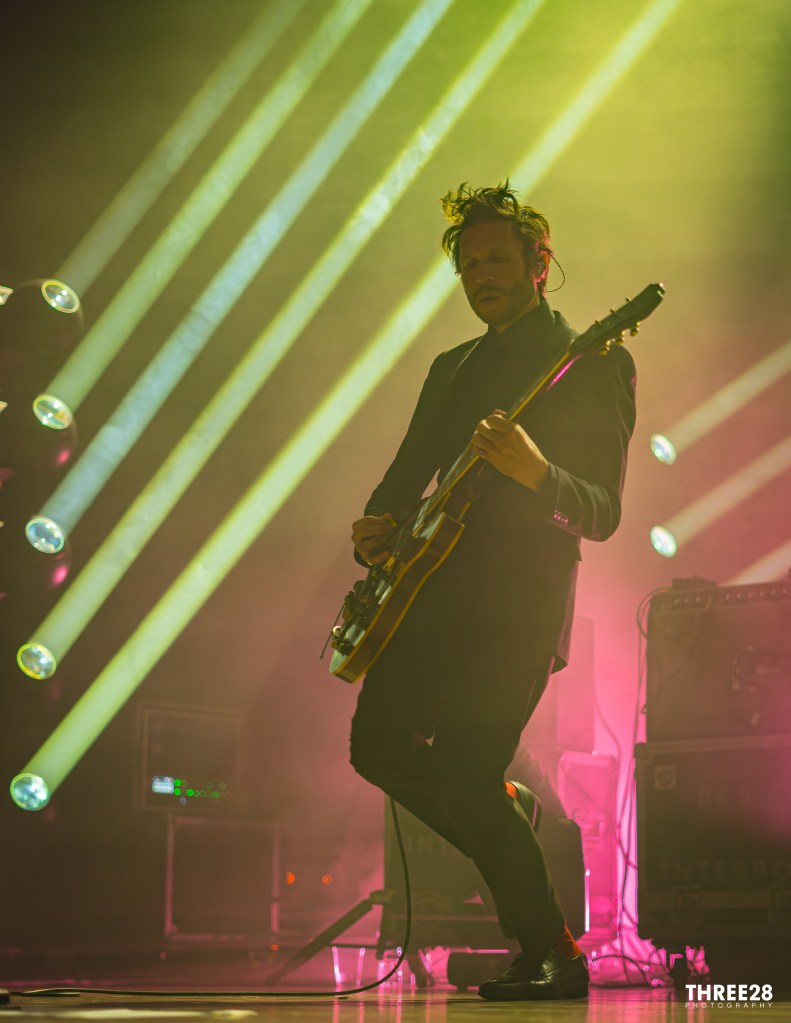
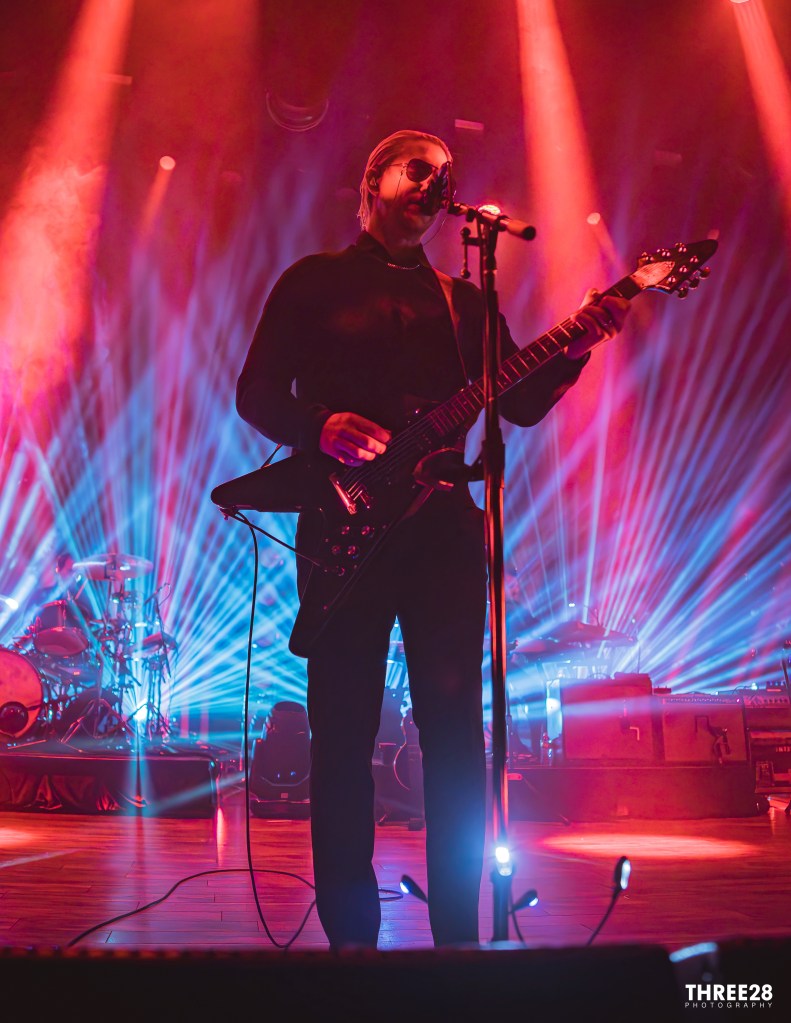
Formed in Manhattan in 1997, Interpol emerged as a defining force in the early-2000s post-punk revival, helping restore angular guitars, insistent bass lines, and artfully detached vocals to the center of alternative rock. Alongside contemporaries such as The Strokes, Yeah Yeah Yeahs, and LCD Soundsystem, they helped establish New York as a creative epicenter for a generation that preferred its rock music lean, cerebral, and stylishly disaffected. Their sound also carried the DNA of earlier innovators, from Joy Division and Television to the shadowy elegance of Echo & the Bunnymen. Yet Interpol have never merely occupied a nostalgic corner of the genre. Their greatest trick has been making tension feel seductive, turning urban alienation into something communal. On this evening, that alchemy was unmistakable: every tightly coiled passage seemed to draw the audience closer, while each familiar refrain released a wave of recognition across the room.
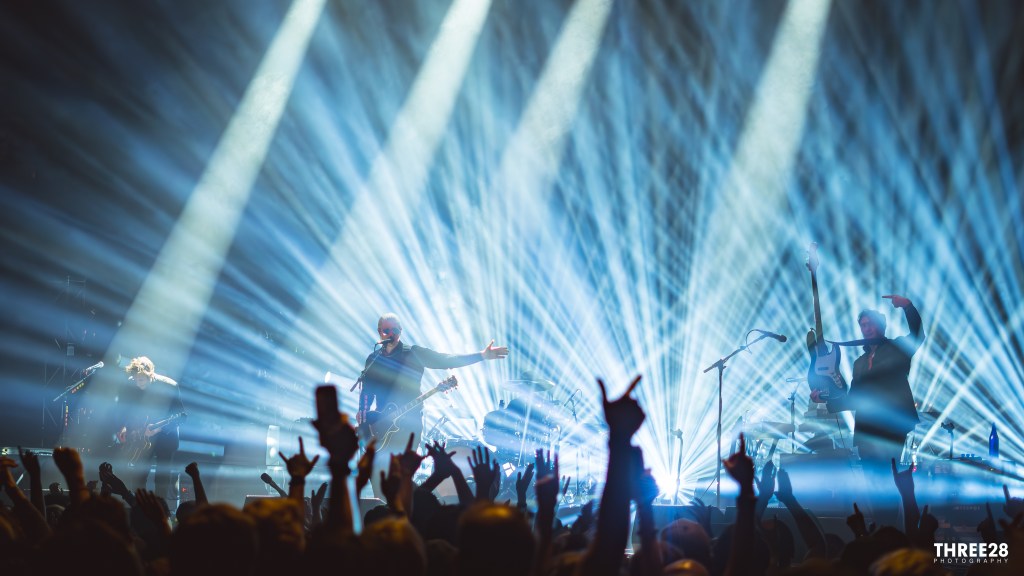
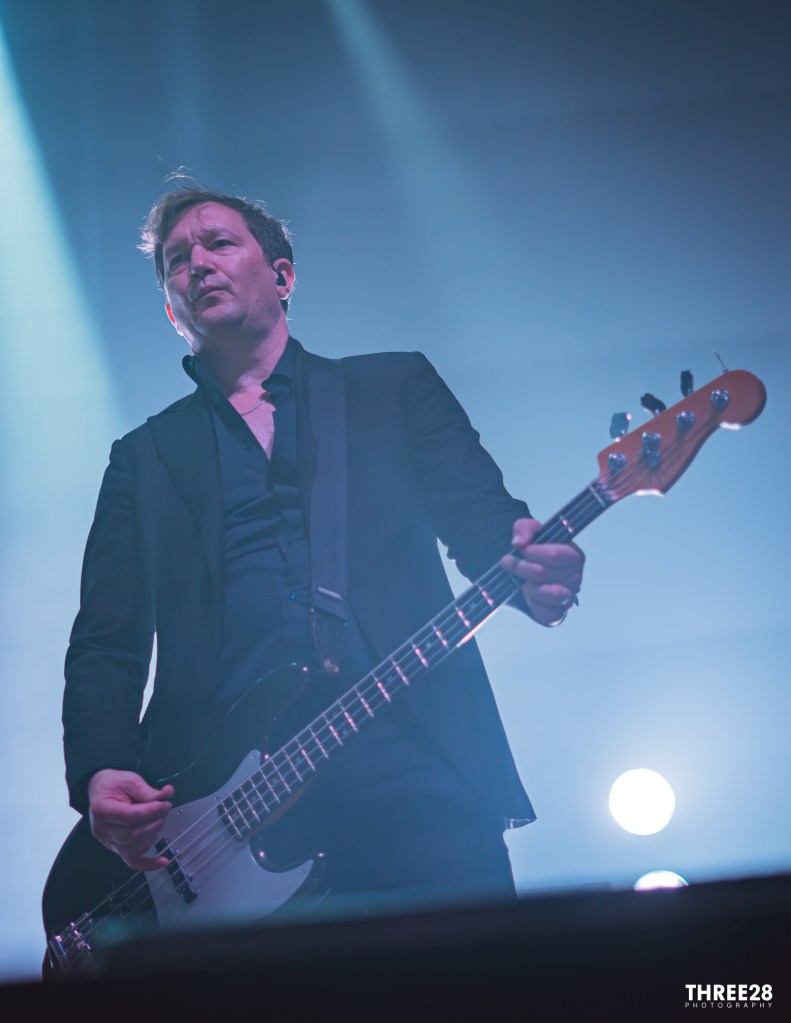
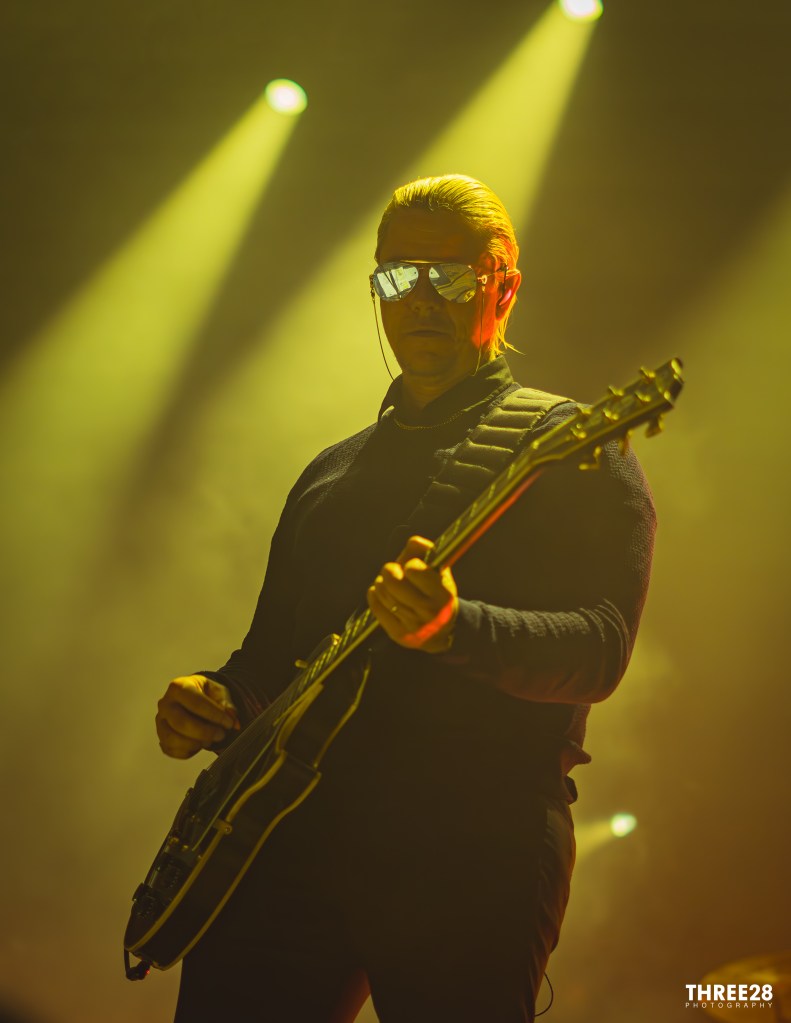
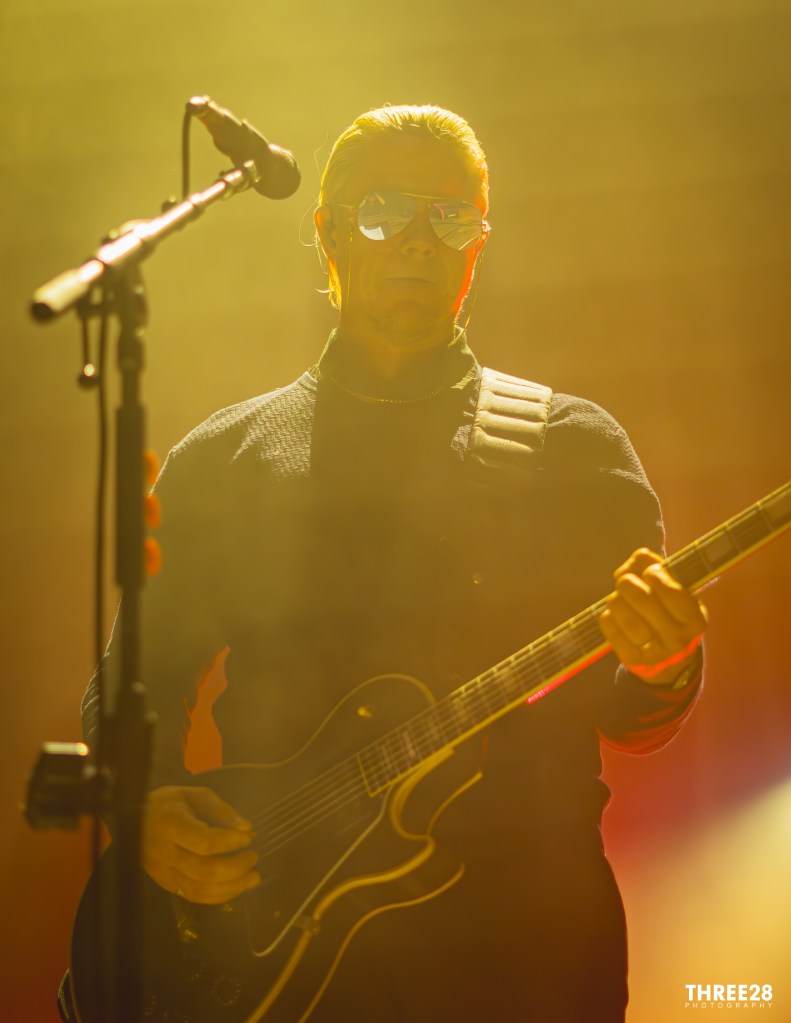
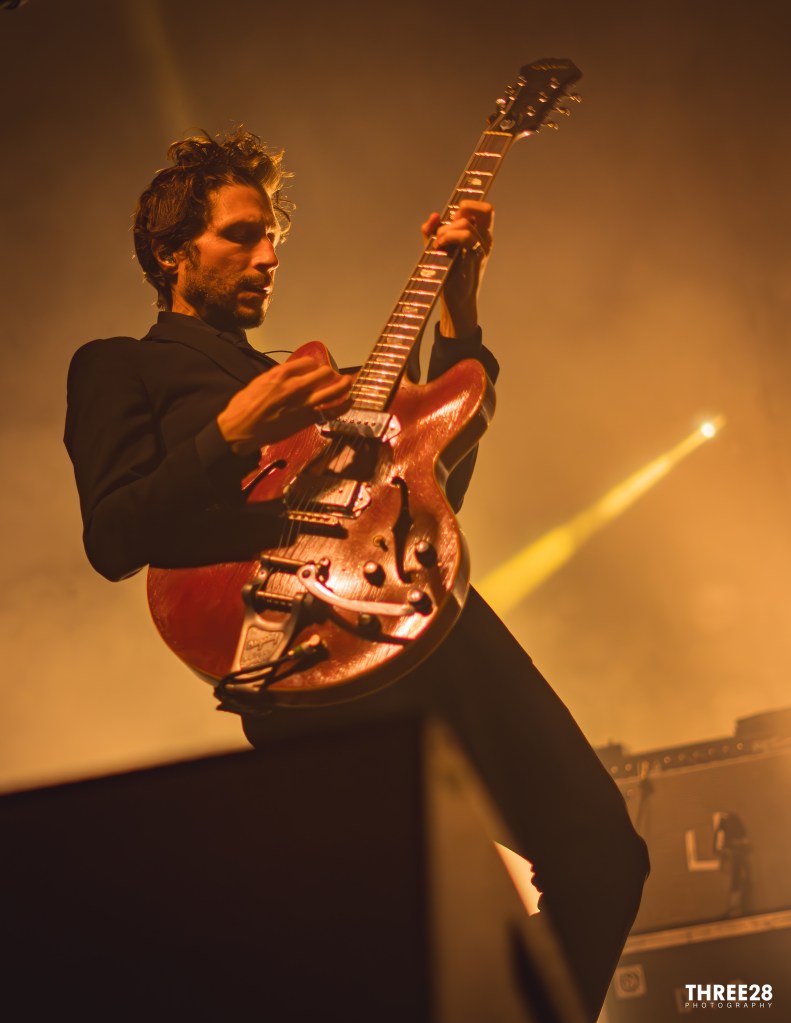
Visually, the band appeared to have reached a unanimous agreement with the night itself: black attire, dark silhouettes, and not a stray burst of sartorial optimism in sight. Paul Banks commanded the center in his signature aviator sunglasses, looking inscrutable even as his vocals cut through the room with measured urgency. His brown, alligator-like shoes supplied a sly flash of personality beneath the otherwise monochromatic uniform, a reminder that even the most severe aesthetic can accommodate a little reptilian flair. Daniel Kessler worked the guitar with his characteristic precision, weaving bright, needling figures around Banks’s rhythmic foundation and supplying the melodic friction that makes Interpol instantly recognizable. Brad Truax anchored the low end with muscular restraint, while Brandon Curtis added keyboards and backing vocals that widened the sonic frame without softening its edges. Behind the drums, Matt Barrick provided the propulsion, balancing crisp accents with a steady, physical pulse. Together, the musicians made discipline feel exhilarating rather than clinical; every part had a purpose, and every pause seemed deliberately placed.
The evening’s most arresting co-star, however, was the lighting design. Rather than simply illuminating the musicians, it behaved like another instrument, continually reshaping the architecture of the performance. At points, beams projected upward from floor-level lights onto disco balls, scattering reflections into the room like fragments of a shattered mirror. Elsewhere, horizontal bars of light stretched across the stage in a formation that resembled an imaginary security barrier, separating performer from audience while paradoxically intensifying their connection. The most inventive sequences sent narrow beams darting in intersecting directions, conjuring the laser-grid obstacles of a heist film: one could almost picture a thief contorting toward a diamond while trying not to trip an alarm. The effect was theatrical without becoming gratuitous, perfectly suited to a band whose music has always thrived on concealment, revelation, and the space between the two. If the album title suggested a mirror burdened with meaning, the lighting supplied an ever-changing set of reflections.
That visual ingenuity never distracted from the music itself. “C’mere” and “Narc” drew listeners into Interpol’s particular blend of romantic unease and propulsive guitar work, while newer material such as “See Out Loud,” “Wings on Fire,” and “Iron City” demonstrated how the band can expand its palette without abandoning its austere foundations. Then came “Obstacle 1,” the mid-set banger that remains one of the group’s most potent calling cards. Its serrated guitar lines and urgent rhythm prompted an unmistakable surge from the crowd, with voices rising to meet Banks’s delivery. The song sounded neither preserved under glass nor reduced to a greatest-hits obligation; it was a living, breathing reminder of why Interpol mattered in the first place. Their best songs do not simply build toward a chorus. They create a pressure system, hold it there, and let the audience decide when to exhale.
As the set moved toward its conclusion, “PDA” delivered the kind of closing statement that makes leaving a venue feel almost impolite. Its hypnotic bass line, climbing guitars, and explosive release transformed the sold-out room into one collective pulse, with longtime devotees singing as though the song had been waiting years for this precise moment. The performance distilled everything that made the evening work: musicianship without showboating, atmosphere without affectation, and a visual production imaginative enough to rival the songs it framed. Interpol have spent nearly three decades perfecting the art of making darkness compelling, and the second night at The Eastern showed that their shadow still has plenty of depth. The band may deal in tension, but the connection was anything but strained. Under those shifting beams, Interpol did not merely reflect their legacy; they gave it another sharp, beautifully distorted edge.


Leave a Reply