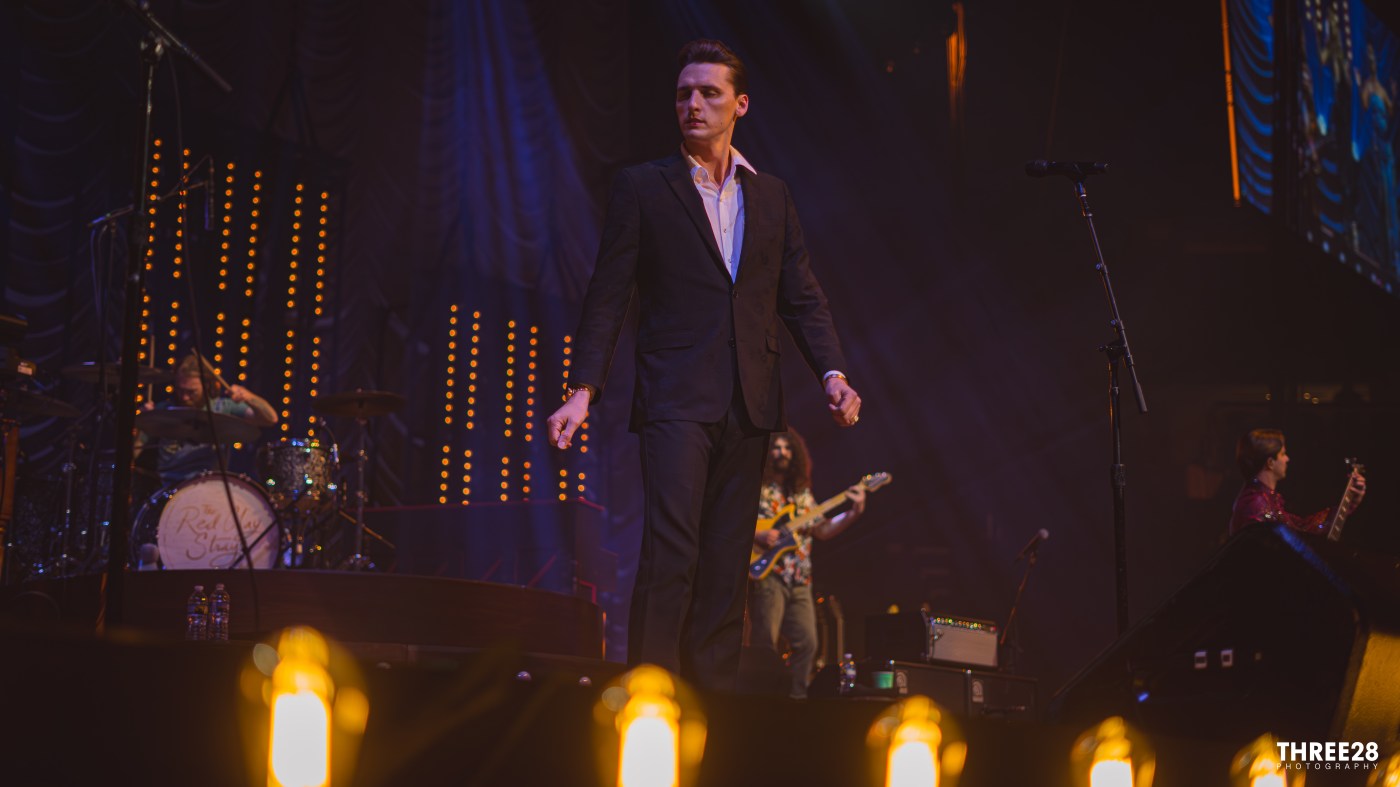
There is something particularly satisfying about watching a band outgrow the rooms that once accommodated its ambitions. For The Red Clay Strays, Atlanta has been a familiar stop for years, although the geography of those engagements has changed rather dramatically. There were the intimate confines of Eddie’s Attic and the wonderfully unpretentious surroundings of Smith’s Olde Bar, where success was measured in attentive faces, crowded corners, and the occasional enthusiastic spill of beer. Fast-forward to November 2026, and the Mobile, Alabama, quintet found itself commanding a sold-out State Farm Arena on the Grateful Tour. The contrast was not lost on the musicians, who acknowledged just how surreal the occasion felt. Nor should it have been. Formed in 2016, the group spent years grinding through Gulf Coast venues before “Wondering Why” introduced them to an altogether larger audience. Independent releases, relentless touring, a major-label partnership, and an increasingly devoted following have since transformed that slow-burning ascent into something resembling a Southern rock phenomenon. Yet the appeal is not merely nostalgic, nor is this some museum-piece exercise in resurrecting the glory days. Their particular achievement is making country, gospel, blues, and electric rock coexist without sounding like a committee meeting. In a contemporary landscape often preoccupied with tidy genre boundaries, The Red Clay Strays have arrived carrying a rather convincing argument for musical lawlessness.
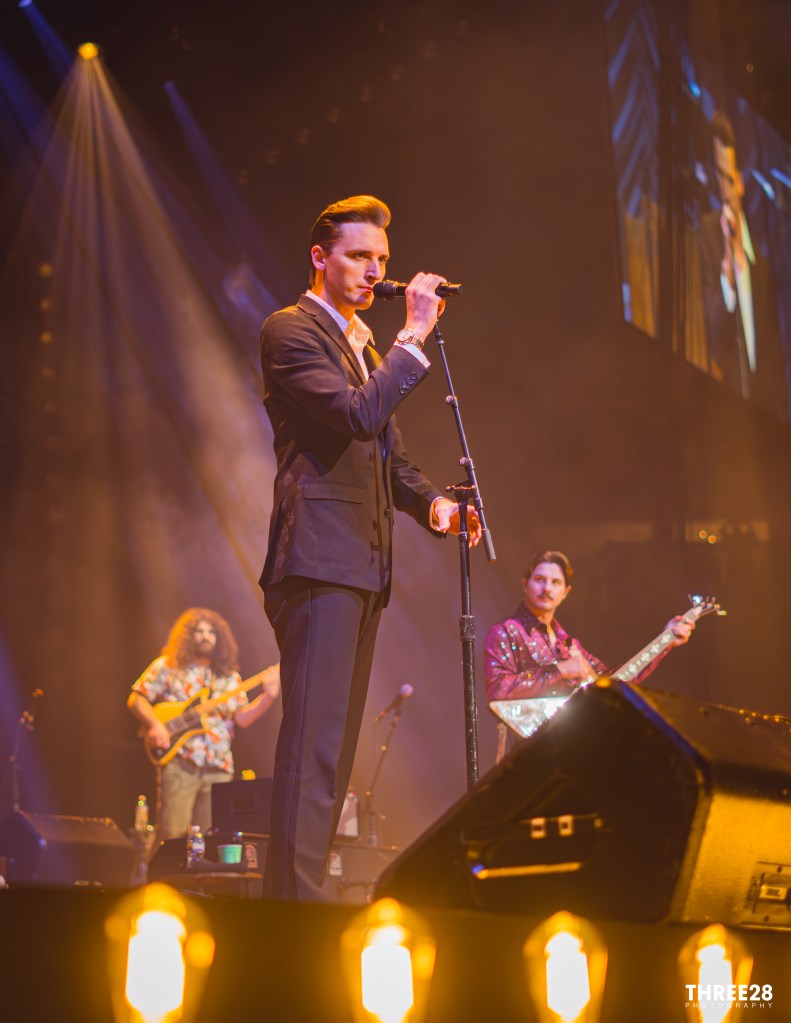
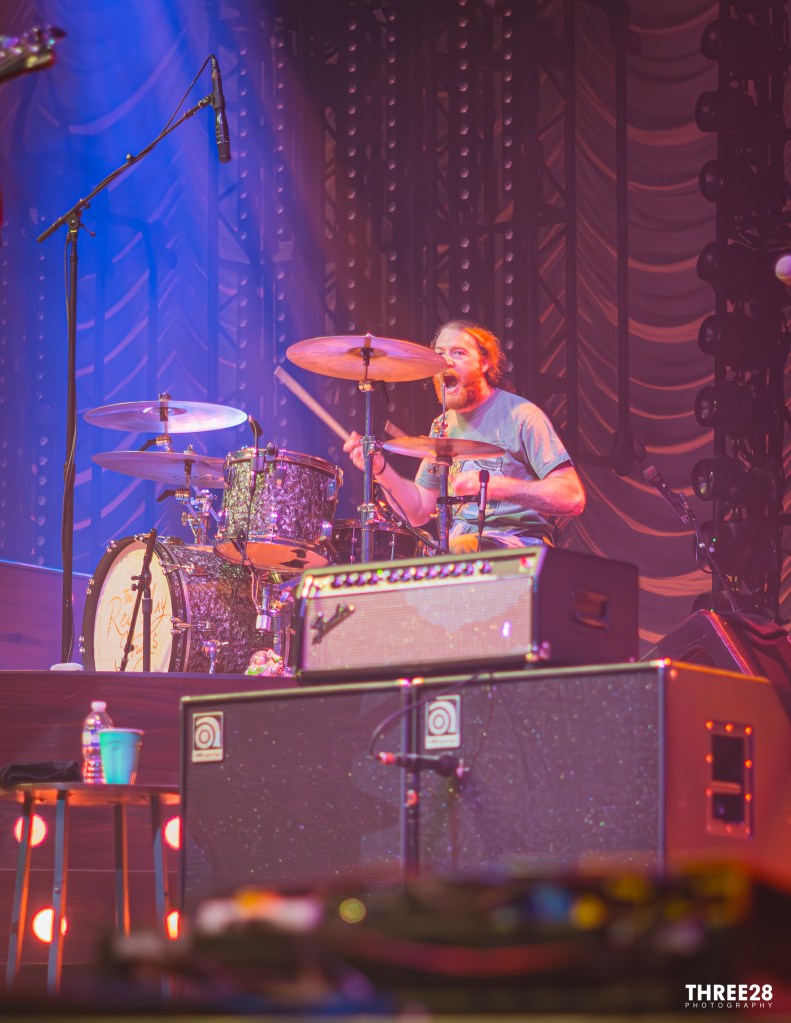
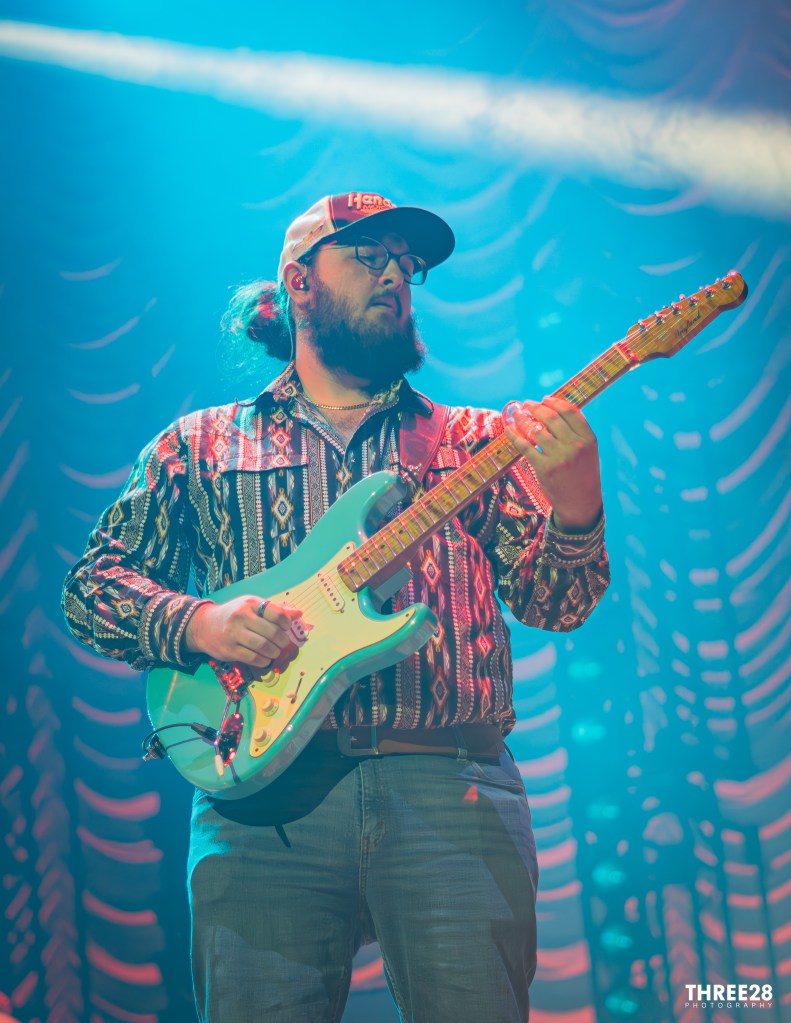
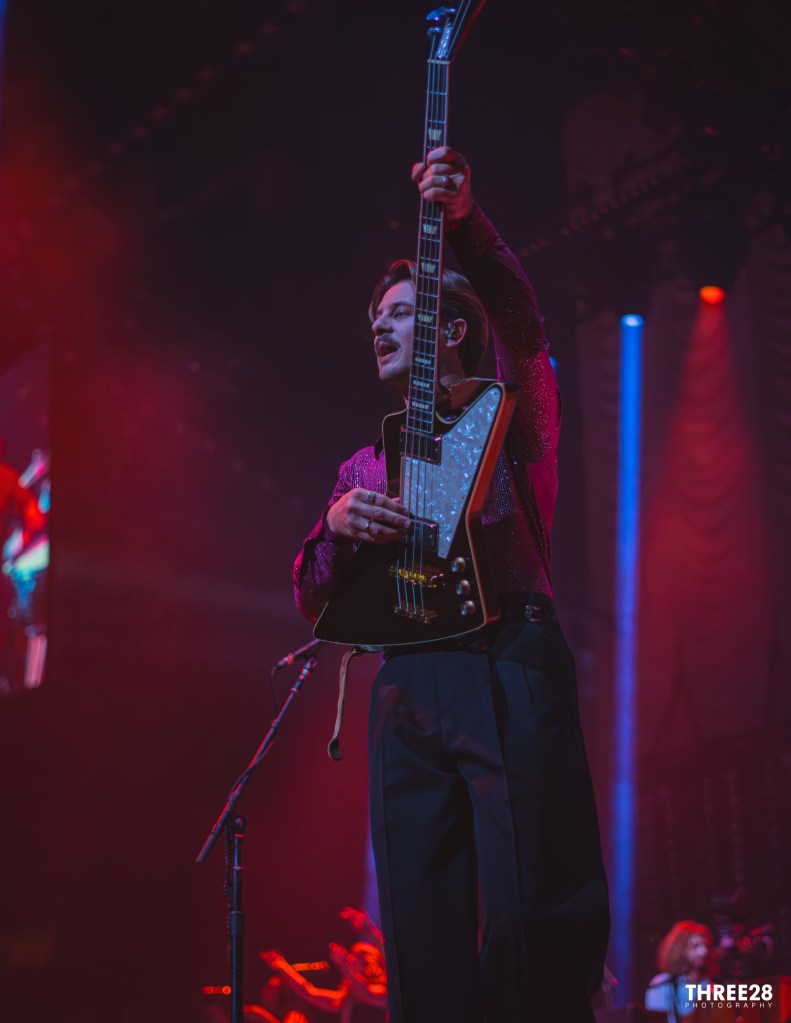
The opening salvo, “Demons In Your Choir,” established the evening’s temperament with an appropriately mischievous mixture of grit and grandeur. What followed was a generous demonstration of the group’s chemistry, but also an entertaining study in individual personalities. Look across the lineup and there is an almost accidental Village People quality to the proceedings, albeit without the costumes, choreography, or questionable occupational symbolism. Everyone appears to have wandered in from a different corner of the American musical imagination, dressed perfectly normally and somehow making the arrangement work. Brandon Coleman occupies the center with the unmistakable bearing of a frontman who does not need to beg for attention. Drew Nix supplies a restless, versatile presence, moving between guitar, harmonica, and vocals with the instincts of a seasoned road musician. Zach Rishel provides the sharper electric-guitar punctuation, adding muscular flourishes and melodic bite without overcrowding the arrangements. Andrew Bishop anchors the operation on bass, giving the more flamboyant passages their necessary foundation. Behind them, John Hall handles percussion with the steady authority that keeps the entire enterprise from wandering too far into beautiful chaos. Keyboardist Sevans Henderson adds another layer of color, filling out the arrangements with atmospheric touches and harmonic depth. Nobody seems particularly interested in competing for the spotlight, which is precisely why the collective personality feels so convincing.
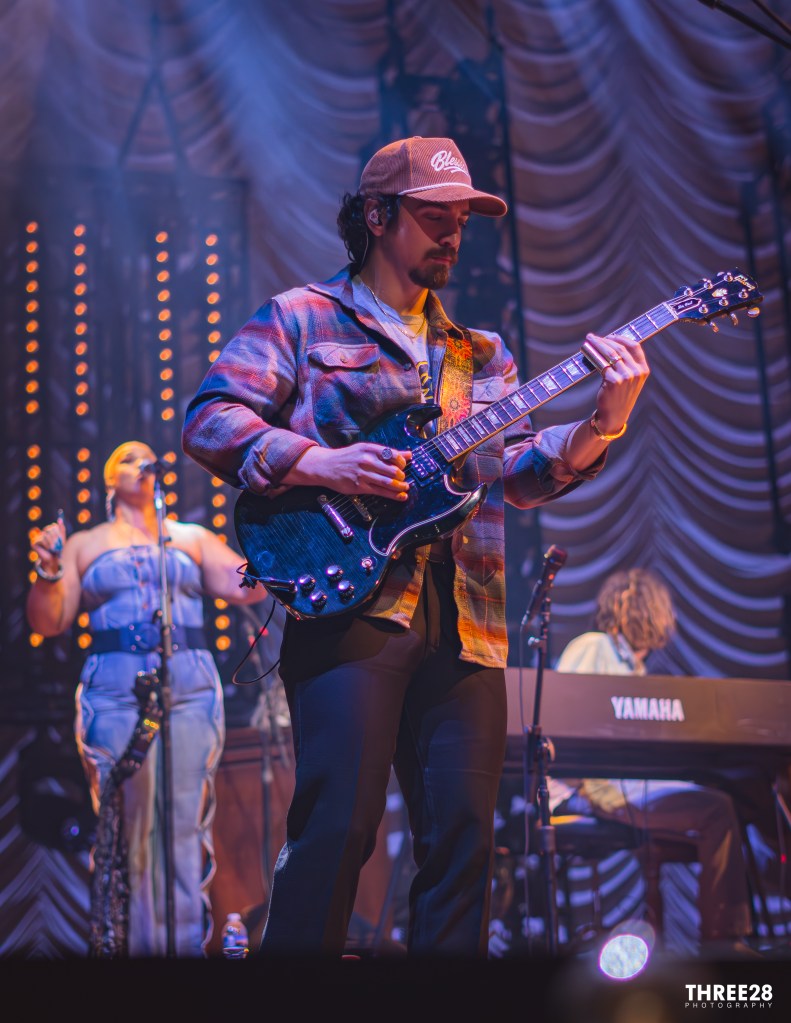
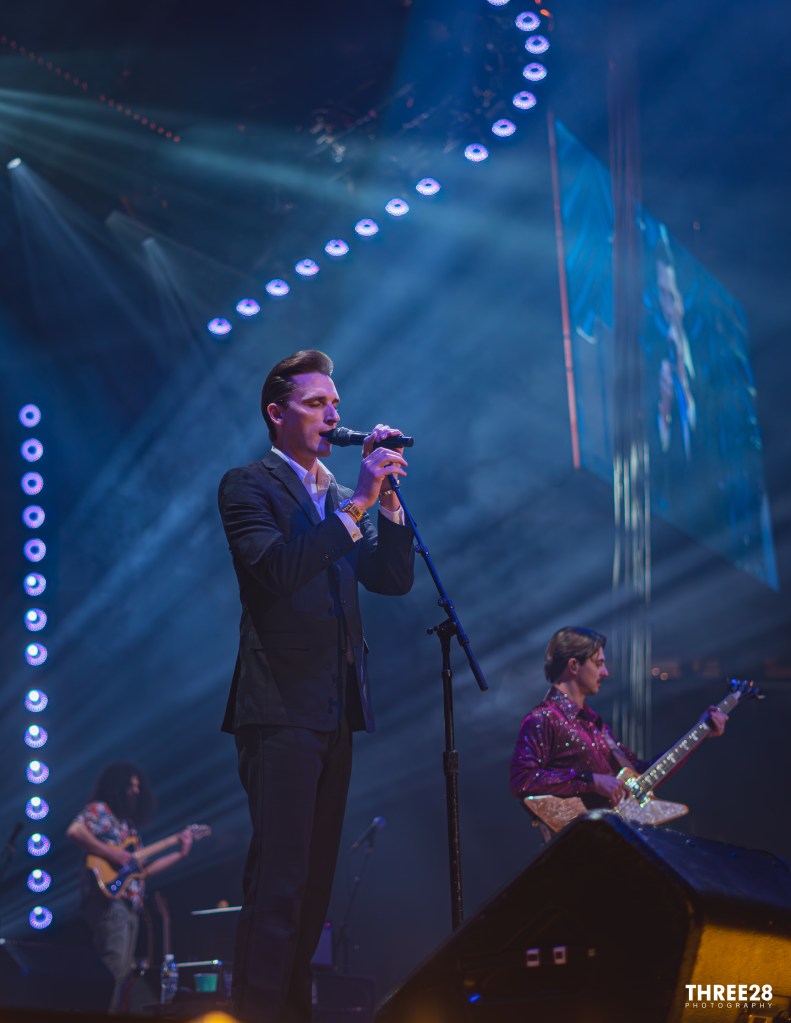
The production deserves considerable credit for understanding that spectacle need not mean excess. Rather than burying the musicians beneath an unnecessarily complicated visual apparatus, the stage was arranged across several tiers, giving the front four a prominent platform while Hall and the backing vocalists occupied the rear, occasionally roaming and contributing movement to the broader picture. The result was an unusually handsome composition, allowing the audience to appreciate individual performances without sacrificing the impression of a unified outfit. Lighting proved equally inspired. Conventional theatrical fixtures were complemented by what seemed like hundreds of exposed bulbs, creating a warm, almost vintage-industrial aesthetic that suited the group’s Southern sensibilities beautifully. At various moments, an enormous illuminated sign bearing the band’s name emerged as a commanding visual centerpiece. It was a tasteful marriage of old-fashioned showmanship and contemporary arena production, neither overly polished nor artificially rustic. There was an inviting warmth to the entire arrangement, as though somebody had taken the atmosphere of a beloved roadside dancehall and given it an exceptionally generous architectural budget. Most importantly, the visual treatment never distracted from the music. Instead, it framed the performances, lending each transition a little more drama and making the enormous room feel considerably more intimate than its dimensions suggested.
Of course, any discussion of this outfit eventually circles back to Coleman, whose voice is arguably the most distinctive instrument in the entire operation. It possesses a rough-edged authority, a remarkable lower register, and the ability to move from restrained crooning into full-throated conviction without sounding theatrical for its own sake. There is an almost cinematic quality to his delivery, reminiscent of the voice one might imagine steering the soundtrack of an especially peculiar Quentin Tarantino production: part roadside confession, part dusty outlaw ballad, with the faint suggestion that something wonderfully questionable is about to happen. He does not simply sing a melody; he inhabits it, allowing certain syllables to hang in the air while others arrive with the force of an emphatic closing argument. The effect is especially potent when the arrangements open up around him. The Lynyrd Skynyrd cover “Swamp Music,” featuring fellow Alabamian Brent Cobb, offered a particularly satisfying excursion into familiar Southern territory. Rather than treating the selection as an obligatory exercise in regional reverence, the musicians attacked it with infectious enthusiasm, giving the number a celebratory looseness that felt entirely appropriate. Later, the appearance of Travis Tritt for “Uncloudy Day” provided another memorable connection to the musical lineage that helped shape these performers. Such collaborations were not merely celebrity decorations; they illustrated the living conversation between generations of Southern musicians.
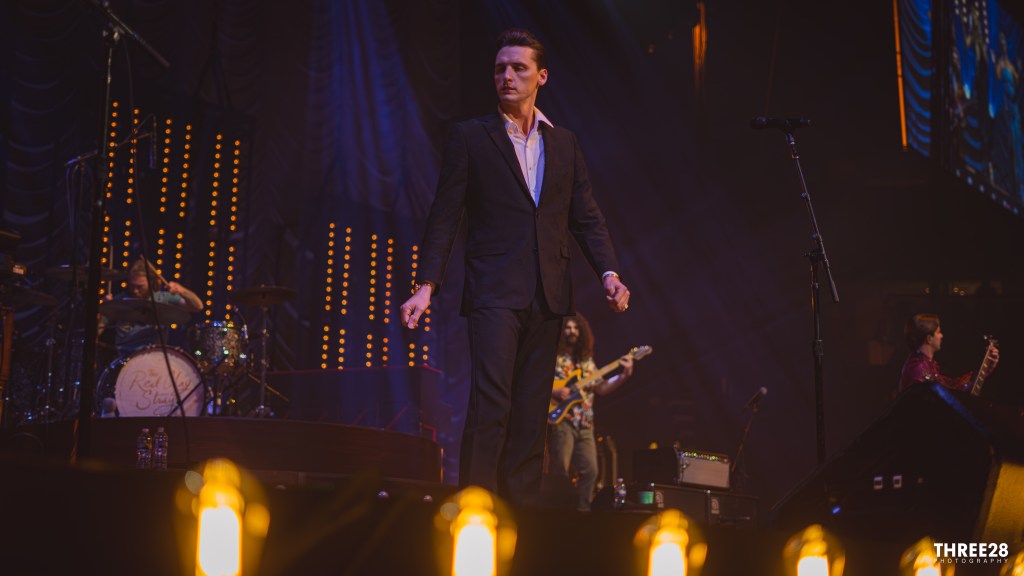
What makes The Red Clay Strays particularly consequential is their ability to make traditional influences feel like active ingredients rather than borrowed accessories. Their music carries the spiritual urgency of gospel, the storytelling instincts of country, the swagger of classic rock, and the emotional directness of soul. Those elements are not arranged into separate compartments; they collide, overlap, and occasionally catch fire. That distinction matters in a genre increasingly divided between immaculate commercial country and the independent Americana circuit. The Strays occupy an appealing middle ground, attracting listeners who appreciate muscular instrumentation as much as an affecting lyric. Their rise has also arrived at a moment when audiences seem especially receptive to performers who sound like actual musicians rather than carefully assembled products. The set moved comfortably between the reflective passages of “Ghosts,” the familiar pull of “Wondering Why,” and the more assertive material from their recent catalogue. There was no sense of a group frantically trying to justify its arena-sized surroundings. Instead, the musicians seemed entirely comfortable with the scale, delivering an extended performance that balanced emotional vulnerability with good old-fashioned volume. By the time “Fool’s Gold” brought the main set to its conclusion, the evening had established something more substantial than a successful tour appearance: these performers had earned their place on this stage through years of work, not merely a fortunate algorithm.
The encore, featuring “God Does,” “Wanna Be Loved,” and “No One Else Like Me,” provided a fitting final chapter to an evening that understood both its roots and its possibilities. There was an unmistakable sense of occasion in the building, but little evidence of a group becoming intoxicated by its own upward trajectory. Perhaps that is the most encouraging aspect of The Red Clay Strays’ evolution: the surroundings have become considerably grander, yet the musical instincts remain refreshingly grounded. One can still hear the Alabama barroom circuit in the guitar interplay, the church pews in the vocal harmonies, and the long miles between engagements in the confidence of the arrangements. Atlanta has witnessed earlier chapters of this story, from modest club appearances to the sort of night that requires an arena-sized production and a sold-out sign. Seeing the same musicians make that journey is a reminder that success is most satisfying when it has a discernible history behind it. The Red Clay Strays are no longer simply a promising Southern outfit enjoying an unusually good run. They are becoming an important voice in the continuing evolution of American roots music, and their latest chapter suggests that the ceiling is nowhere in sight. They may have started out as strays, but judging by the reception in Atlanta, they have found exactly where they belong.


Leave a Reply